
A Costa Rica destination wedding sounds simple from the outside (pick a beach resort on the Pacific, get on a plane, say your vows at sunset) and the legal side genuinely is: no residency requirement, no blood tests, and no waiting period. What makes Costa Rica different from the rest of Latin America is everything around the ceremony. Rainforest meeting shoreline, volcanoes an hour inland, sloths in the canopy, and the pura vida ethos that shapes how the whole week feels.
But the destination wedding planning has more moving pieces than couples typically expect: choosing between the Pacific coast and the interior, deciding between an all-inclusive resort and a private villa, getting documents apostilled, and understanding that Costa Rica’s legal ceremony runs through a lawyer rather than a government office.
This guide walks you through every step, in order, so you know exactly what’s coming and when. Our Certified Destination Wedding Specialist can help you decide which one fits your timeline and priorities.
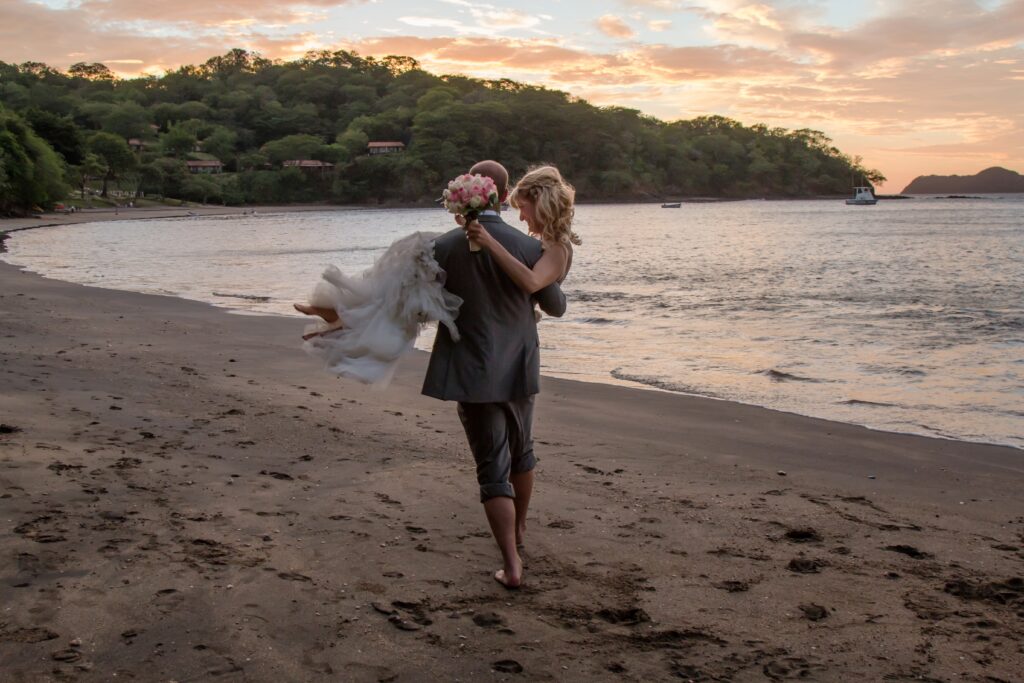
The Costa Rica Wedding Process at a Glance
Most Costa Rica weddings follow the same path. The total planning timeline runs roughly 12 to 18 months from “we’re getting married in Costa Rica” to the wedding day itself. Here’s the broad shape:
- Months 12 to 18 out: Decide on a legal or symbolic ceremony, set a budget, choose a date around the dry season, pick your region, connect with a Certified Destination Wedding Specialist, book your venue.
- Months 6 to 12 out: Lock in your room block, customize your package, send save-the-dates, start the apostille process if you’re marrying legally.
- Months 2 to 6 out: Send formal invitations, finalize vendors, plan group activities (zip-lining, volcano hot springs, catamaran sunset sails, wildlife tours), and confirm details with your coordinator.
- Wedding week: Arrive, meet your officiating attorney, host welcome events, and exchange vows.
- After the wedding: Wait for the Civil Registry to issue your marriage certificate, then apostille it and file at home.
For the destination-feel breakdown of Costa Rica itself, see our Costa Rica travel guide. This piece focuses on the how.
The Full Step-by-Step Costa Rica Wedding Planning Process
Phase 1: Decisions Before You Book
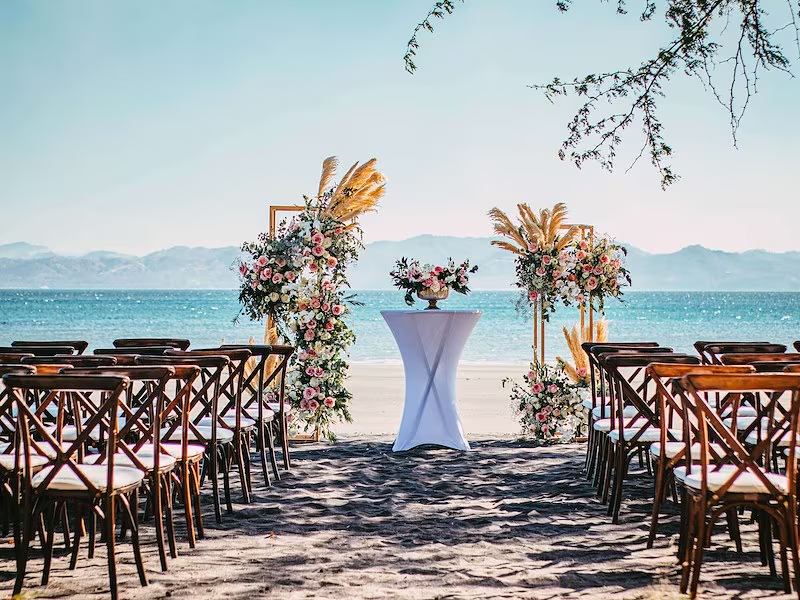
Step 1: Choose Between a Legal and a Symbolic Ceremony
Costa Rica is one of the friendliest countries in the region for a legally binding destination wedding. There’s no residency requirement, no waiting period, and no medical testing. A legal civil ceremony is performed by a Costa Rican attorney who holds notary authority, and that attorney also registers the marriage with the national Civil Registry afterward. You’ll need apostilled documents and two witnesses who aren’t immediate family.
A symbolic ceremony skips the paperwork entirely and moves the legal filing home. Both are common here, and because the legal route asks so little of your travel schedule, plenty of couples go that way.
Step 2: Set Your Budget
Based on our own couple spend data, a Costa Rica destination wedding averages $10,025 all-in for the couple, covering the wedding package, accommodations, airfare, and add-ons. Hotel costs run about $340 per person per night, roughly $3,392 for a couple across a typical five-night stay, and airfare lands between $600 and $1,400 per couple depending on your departure city.
Our Costa Rica couples average 24 guests. One thing to know going in: Costa Rica has fewer all-inclusive resorts than Mexico or the Caribbean, and a private villa or rainforest lodge wedding works on a different model, with separate vendor contracts and planner fees rather than a bundled package. That route generally runs higher. Decide which model you want before you fall for a specific property.
Step 3: Pick Your Wedding Date
Costa Rica runs on two seasons rather than four. The dry season, which locals call verano, runs December through April and delivers the reliable sunshine most couples want for an outdoor ceremony. It’s also peak season, so rates and lead times climb. The green season runs May through November, when the landscape turns genuinely spectacular, and rates drop, though September and October are the wettest months on the Pacific side.
May and November are the shoulder months worth targeting for the balance of good weather and better value. Rain in the green season usually arrives as an afternoon downpour rather than an all-day event, so a morning or late-afternoon ceremony with a covered backup often works fine.
Step 4: Decide on Your Costa Rica Region
Costa Rica is small on a map and slow to drive, so your region choice matters more than the distances suggest.
Guanacaste, on the northern Pacific coast, is the wedding hub: the driest weather in the country, the largest concentration of resorts, and the Liberia airport right there. Within it, the Papagayo peninsula holds the upscale properties, and Tamarindo brings a livelier surf-town feel.
The Central Pacific, around Manuel Antonio and Jaco, pairs beaches with rainforest and national park wildlife, reached from the San Jose airport.
Arenal and La Fortuna, inland, put a volcano and hot springs in your backdrop instead of an ocean.
The Central Valley around San Jose is where guests land and rarely stay. Guanacaste for beach weddings and easy logistics, the Central Pacific for wildlife, Arenal for something entirely different.
Phase 2: Booking and Planning
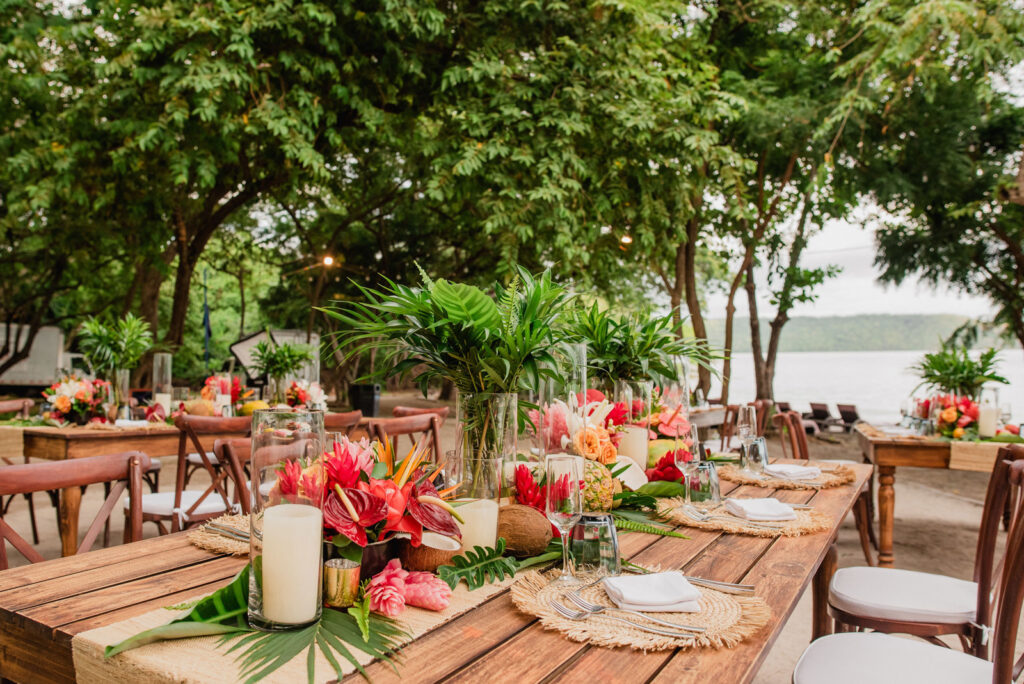
Step 5: Connect with a Certified Destination Wedding Specialist
Working with a Certified Destination Wedding Specialist is free for the couple, since they are paid by the resort partners. In Costa Rica, that guidance earns its keep, because the inventory is more varied than in a typical beach destination: all-inclusive resorts, boutique eco-lodges, and private villas all behave differently on pricing, capacity, and what’s included.
A DW Specialist can also steer you around the country’s real logistical trap, which is booking a venue two airports and four hours of mountain road away from where your guests are landing. Plan for 12 to 18 months of lead time for dry-season dates.
Step 6: Choose Your Resort and Ceremony Venue
Match your resort to your guest count, your budget, and whether you want ocean or rainforest as the backdrop. Costa Rica’s all-inclusive resorts cluster in Guanacaste, and most offer beachfront, garden, and terrace ceremony settings with indoor backup.
Popular Costa Rica wedding anchors include:
Secrets Papagayo Costa Rica
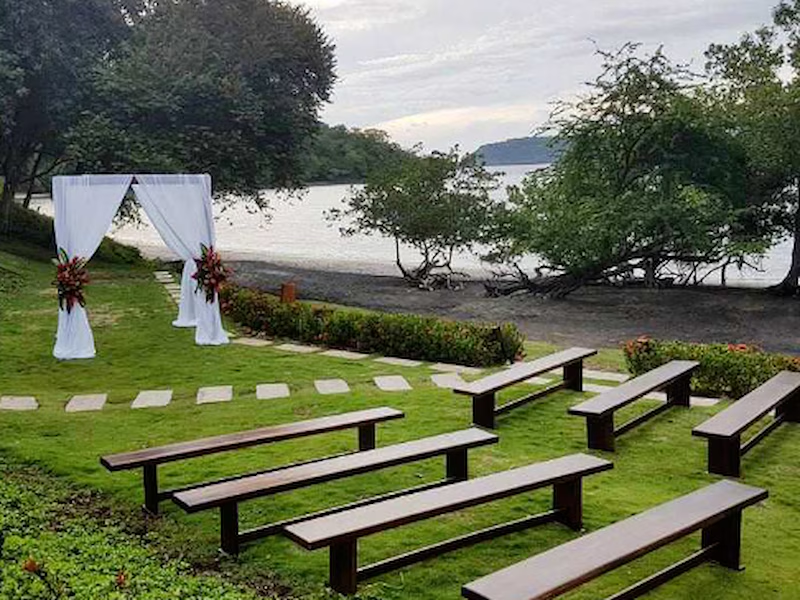
An adults-only luxury resort on the Papagayo peninsula, set in a protected cove with forested hills running down to the water. Secrets Papagayo supports South Asian, symbolic, and legal ceremonies, and it’s the most refined all-inclusive option in the country’s main wedding region.
Learn more about Secrets Papagayo Costa Rica and get a free quote today >>
Riu Palace Costa Rica
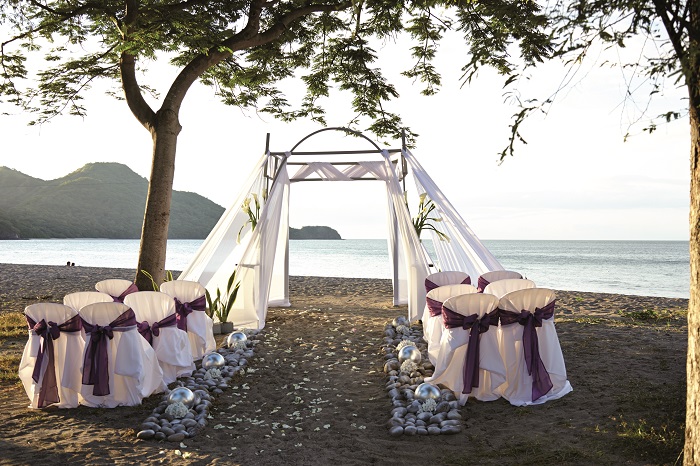
A large family-friendly all-inclusive in Guanacaste with strong value pricing and the capacity to handle bigger guest lists comfortably. Riu Palace Costa Rica hosts symbolic and legal ceremonies and works well when you’re bringing a larger group and want predictable per-person costs.
Learn more about Riu Palace Costa Rica and get a free quote today >>
Planet Hollywood Costa Rica by Royalton
A family-friendly resort in Guanacaste with a playful, entertainment-forward atmosphere and modern rooms. Planet Hollywood Costa Rica supports symbolic and legal ceremonies, and it’s a good fit for multi-generational groups who want plenty happening on property between wedding events.
Learn more about Planet Hollywood Costa Rica by Royalton and get a free quote today >>
Occidental Papagayo
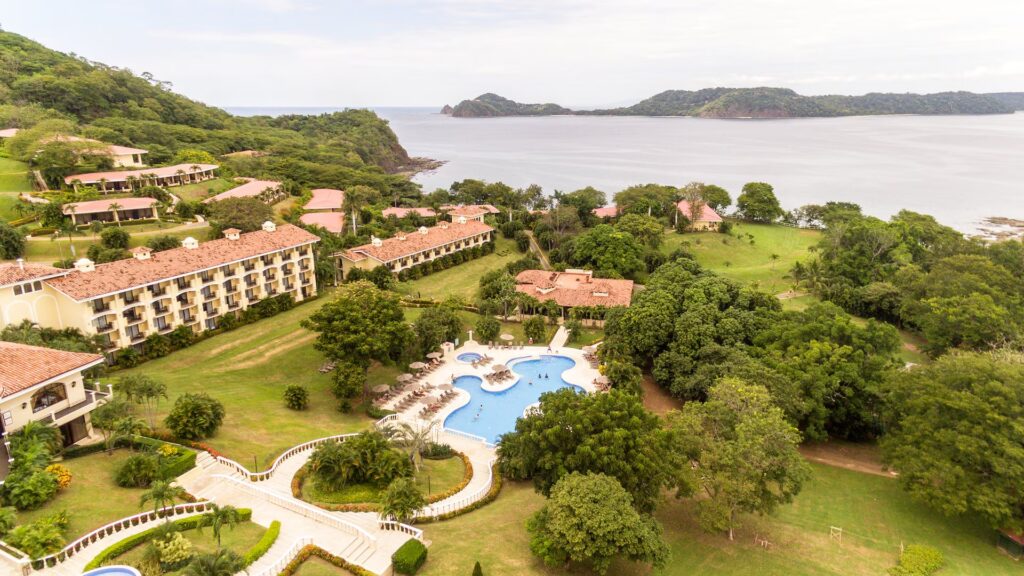
An adults-only resort on a hillside above Culebra Bay, with an accessible price point and sweeping water views from the property. Occidental Papagayo handles South Asian, symbolic, and legal ceremonies, and it’s a strong option for couples wanting an adults-only celebration without a luxury-tier budget.
Learn more about Occidental Papagayo and get a free quote today >>
Occidental Tamarindo
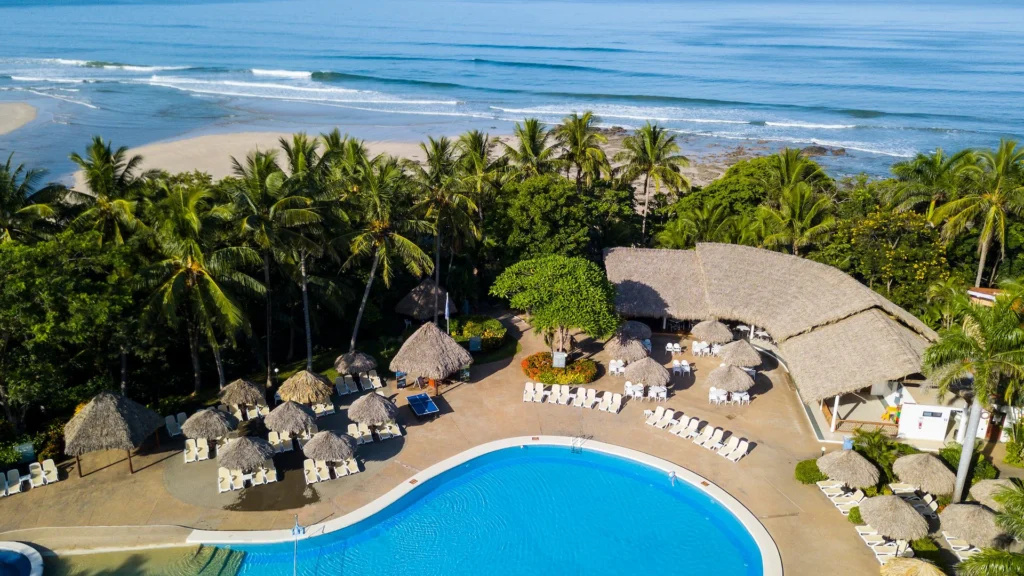
A family-friendly resort near Tamarindo, the liveliest beach town on the Guanacaste coast, with surf breaks, restaurants, and nightlife a short drive away. Occidental Tamarindo supports symbolic and legal ceremonies and suits couples who want their guests to be able to leave the property and find something going on.
Learn more about Occidental Tamarindo and get a free quote today >>

Step 7: Lock In Your Room Block
A room block holds rooms at a negotiated group rate for your guests. Costa Rica’s all-inclusive resorts follow the familiar pattern: hitting a qualifying number of rooms or room nights unlocks a complimentary wedding package, with perks scaling as the block grows. Villa and eco-lodge weddings work differently, and smaller properties may ask for a full buyout instead, which changes the math substantially. Confirm which model applies before you sign, and expect deposits 30 to 60 days after contracting.
Step 8: Customize Your Wedding Package
Your on-site coordinator handles ceremony setup, florals, music, photography, dinner, and bar service. Costa Rica packages start complimentary with a qualifying room block, then run roughly $800 to $3,500 at the entry tier, $4,000 to $5,500 in the middle, and $9,000 to $11,000 and up for full productions.
The local add-ons are what make a Costa Rica wedding feel like Costa Rica: a marimba trio, a coffee bar pouring beans from the Central Valley, guaro cocktails at the welcome party, tropical florals grown locally, and group excursions built into the week. If any of that belongs in your vision, book it here.
Phase 3: Pre-Travel Prep

Step 9: Gather Legal Documents (If You’re Having a Civil Ceremony)
Start this 3 to 4 months before travel, because the apostille step is the slow part. You’ll need valid passports, apostilled birth certificates, and apostilled sworn statements of single status confirming you’re both free to marry. If either of you was previously married, add apostilled divorce decrees or a death certificate.
You’ll also need two witnesses aged 18 or older who aren’t immediate family, and your resort or attorney can usually provide them. Documents not in Spanish require official translation. Your officiating attorney handles the rest, including filing with the Civil Registry after the ceremony.
Legal requirements do change, so confirm the current list with the Costa Rican consulate or embassy in your home country before finalizing anything.
Step 10: Send Invitations and Coordinate Guest Logistics
Send save-the-dates 9 to 12 months out and formal invitations 3 to 4 months before the wedding, with the room-block deadline noted. Airport guidance matters here more than in most wedding destinations, so be explicit: guests heading to Guanacaste should fly into Liberia, which puts most resorts within 30 to 60 minutes. Guests heading to Manuel Antonio, Arenal, or the Central Valley fly into San Jose, with longer ground transfers from there.
Booking the wrong airport is the single most common guest mistake in Costa Rica. Include suggested attire, and flag the group excursions that make this country worth the trip: zip-lining through the canopy, hot springs at the base of Arenal, catamaran sunset sails, and wildlife walks. Our RSVP and guest communication timeline maps out when to send what.
Step 11: Finalize the Details
Two to four months out, finalize ceremony scripting, florals, photography and videography, music, hair and makeup, attire, welcome bags, and the day-of timeline with your coordinator. Costa Rica is humid, and if you’re inland it can be genuinely cool in the evenings, so plan attire for the specific region rather than for a generic beach. Confirm your officiating attorney and your witnesses now, and book the excursions your group will want before those calendars fill.
Phase 4: In Destination
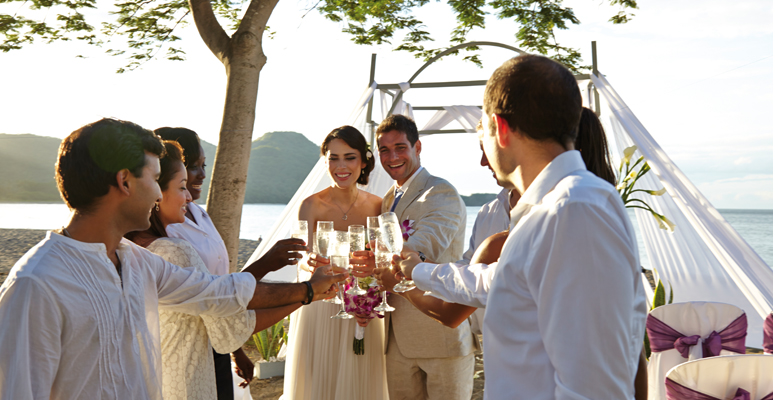
Step 12: Arrive in Costa Rica
There’s no residency requirement, so legally you could arrive the day before and marry. In practice, most couples land three to four days early to host welcome events, meet the coordinator and the officiating attorney in person, and leave room for flight delays. If your venue is inland, build in extra time for the drive, since Costa Rican roads are slower than the distances imply.
Step 13: The Ceremony
Your coordinator runs the day-of timeline. A legal ceremony is performed by your Costa Rican attorney, who can conduct it in English or bilingually, with your two witnesses signing alongside you. It’s brief, usually 15 to 20 minutes, and often folded into a longer personalized ceremony so it doesn’t feel administrative.
A symbolic ceremony is led by the resort officiant or a celebrant you choose. The reception follows: dinner, toasts, first dance, and dancing, frequently under string lights with the sound of the forest behind the music.
Phase 5: After the Wedding
Step 14: Register Your Marriage at Home
Your attorney files the marriage with Costa Rica’s Civil Registry after the ceremony, and the official certificate takes some weeks to be issued rather than being handed to you on the day. Once it’s ready, have it apostilled in Costa Rica, then translated into English by a certified translator and filed with your county clerk or vital records office at home. Your attorney can usually manage the apostille and mail the documents to you.
Keep several certified copies for name changes, taxes, and immigration paperwork. Our wedding paperwork checklist covers what to hold onto.
Ceremony Options in Costa Rica
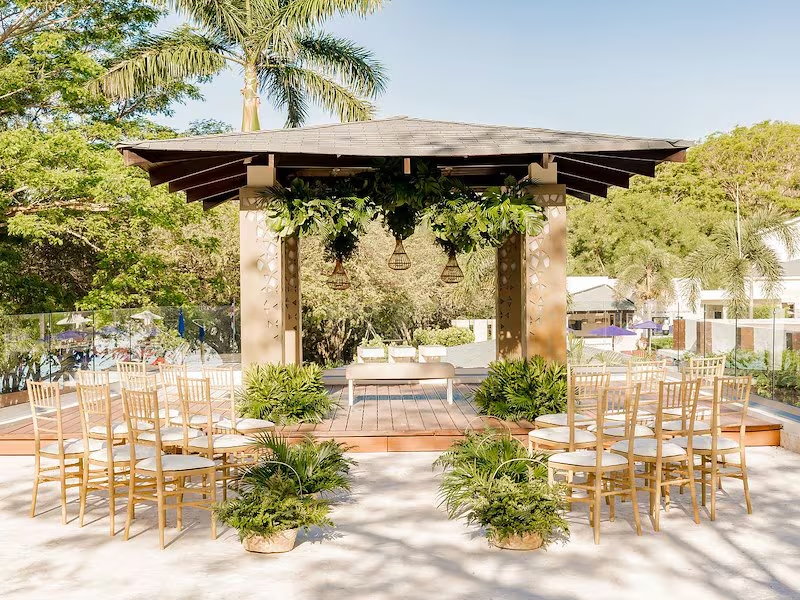
There are three ways to say “I do” in Costa Rica. Two of them can be legally binding, which gives you more flexibility than most destinations in the region.
Civil Ceremony (Legally Binding)
A civil ceremony performed by a licensed Costa Rican attorney with notary authority is legally binding and internationally recognized once apostilled. It requires apostilled birth certificates and single-status affidavits, valid passports, and two non-family witnesses. There’s no residency requirement, no waiting period, and no medical testing, which makes Costa Rica one of the easiest countries in Latin America for foreign couples to marry legally.
Catholic Ceremony (Also Legally Binding)
Costa Rica is one of the few wedding destinations where a Catholic ceremony carries legal weight on its own, because the Catholic Church holds official standing in the country. That means a Catholic wedding here can be both sacramental and legally binding in a single service. It requires paperwork routed through your home parish and coordination with the local diocese, so start early. Other religious ceremonies aren’t legally binding by themselves and need a civil ceremony alongside them.
Symbolic Ceremony
A symbolic ceremony carries no legal weight, and you complete the filing at home before or after the trip. It’s the right call if you want a ceremony written entirely on your own terms, if the apostille timeline is too tight, or if you want to marry somewhere a lawyer can’t easily reach, like a remote rainforest clearing or a beach inside a national park. Same-sex marriage has been legal in Costa Rica since 2020, so same-sex couples can choose either route here.

Costa Rica Wedding Planning FAQs
How long does the entire Costa Rica wedding planning process take?
Plan for 12 to 18 months, especially for dry-season dates between December and April. The apostille process for your documents needs 3 to 4 months on its own, so build that in. Green-season dates can often come together in 9 to 12 months, and smaller weddings sometimes work in 6.
Do we have to be in Costa Rica before our wedding?
No. Costa Rica has no residency or waiting-period requirement for foreign couples, which is unusual in the region. You could legally arrive the day before. Most couples still come three to four days early for welcome events, coordinator meetings, and travel buffer.
Do we need blood tests to get married in Costa Rica?
No. Costa Rica requires no blood tests or medical exams. The paperwork burden is entirely in the apostille process for your birth certificates and single-status affidavits, which you handle at home before you travel.
How much should we expect to spend on a Costa Rica wedding?
Our couples spend an average of $10,025 all-in for a Costa Rica wedding, covering the wedding package, accommodations, airfare, and add-ons. The package alone runs from complimentary with a qualifying room block up through $11,000 and beyond for a full production, with most couples landing between $4,000 and $5,500. Hotel costs average $340 per person per night. A private villa or lodge wedding with independent vendors typically runs higher than an all-inclusive package.
Which airport should our guests fly into?
It depends entirely on your region. Liberia serves Guanacaste and the northern Pacific coast, where most resort weddings happen, and puts guests within 30 to 60 minutes of their hotel. San Jose serves the Central Valley, Arenal, and the Central Pacific, with longer drives from there. Tell guests the correct airport explicitly in your invitations, because booking the wrong one costs them hours.
Should we get married on the coast or inland?
Guanacaste’s Pacific coast gives you the most reliable dry-season weather, the deepest resort inventory, and the shortest transfers, which is why most Costa Rica weddings happen there. Inland at Arenal, you trade the ocean for a volcano, hot springs, and cloud forest, with cooler evenings and a more adventurous feel. The Central Pacific around Manuel Antonio splits the difference, pairing beach with genuine rainforest wildlife.
Is same-sex marriage legal in Costa Rica?
Yes. Costa Rica legalized same-sex marriage in 2020, and same-sex couples can hold legally binding civil ceremonies under the same requirements as anyone else. It was the first country in Central America to do so, and resorts here host same-sex weddings routinely.
Start Planning Your Costa Rica Wedding Today
Costa Rica gives you something the standard beach destination can’t: a wedding week where guests come back from a morning walk talking about the sloth they saw, where the ceremony backdrop might be a volcano instead of a shoreline, and where the legal process asks almost nothing of your schedule. Pura vida isn’t a marketing line here; it’s genuinely how the week feels.
The 14-step path above is the same one our Certified Destination Wedding Specialists walk every couple through, and the heavy lifting is on us.
Fill out our online wedding planning form and we’ll match you with a DW Specialist who knows this country inside and out!

About the Author

Maggie Sabin
Maggie started as the SEO Manager at DestinationWeddings.com in 2024, where she works to drive organic traffic and conversions while creating meaningful, SEO-optimized content for the website. Previously, Maggie's career spanned from Human Resources & Recruitment to teaching at international schools for almost 10 years. Maggie spends her free time traveling, learning new languages, reading non-fiction books, working out, going to the beach and spending time cuddling her dog, Lola!