
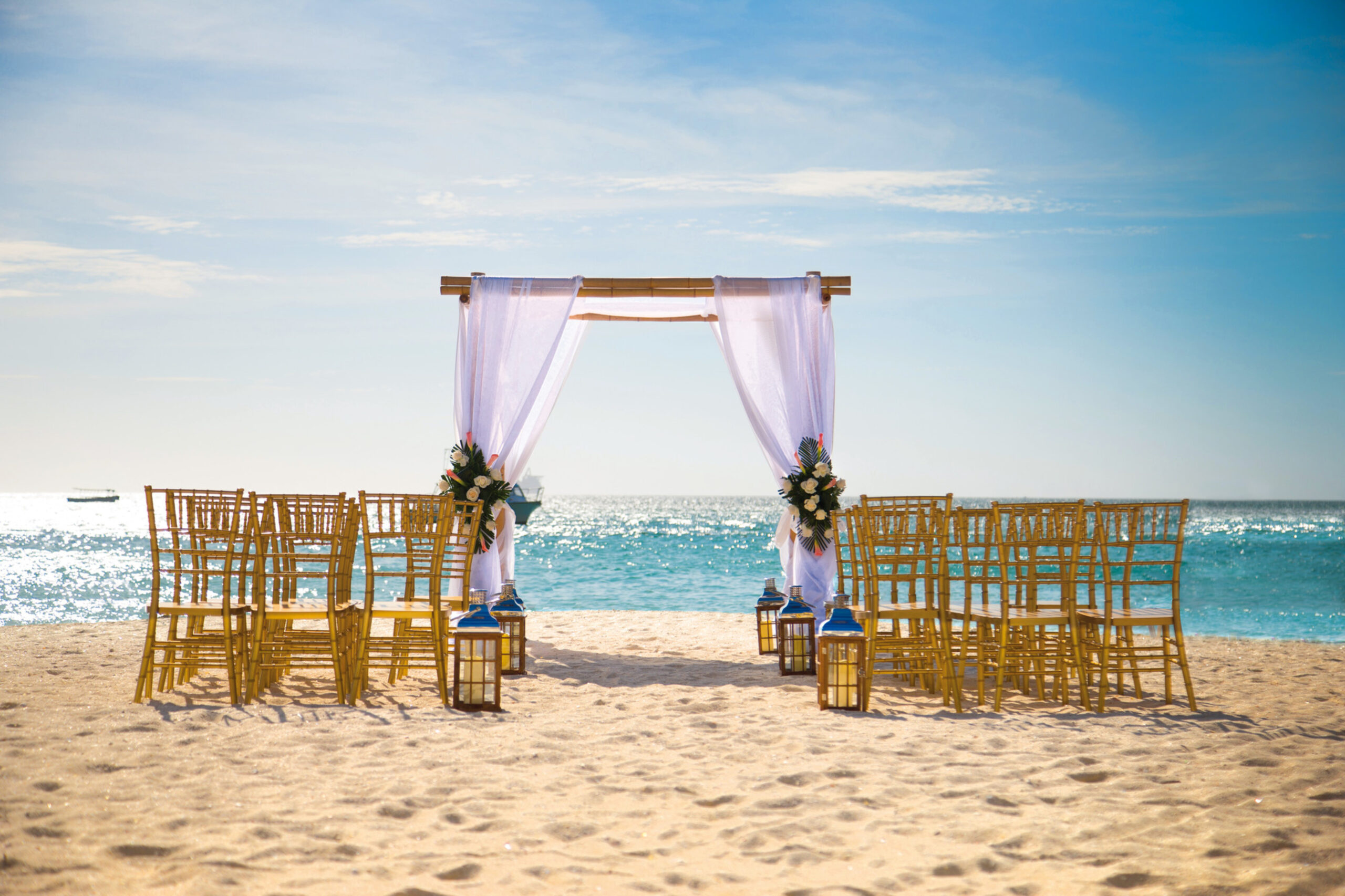
A destination wedding in Aruba sounds simple from the outside (pick a beach on the west coast, get on a plane, say your vows in front of the water) and in most respects it is.
Aruba sits far enough south to be outside the hurricane belt, which means the weather is genuinely dependable in months when the rest of the Caribbean isn’t. Add constant trade winds, some of the widest white-sand beaches in the region, and a Dutch-Caribbean culture that’s as safe and easygoing as anywhere you’ll travel.
The one place Aruba asks more of you than its neighbors is paperwork. Because it’s a constituent country of the Netherlands, a legal marriage here runs through the Civil Registry in Oranjestad and requires documents submitted well in advance.
This guide walks you through every step, in order, so you know exactly what’s coming and when. Our Certified Destination Wedding Specialist can help you decide which one fits your timeline and priorities.
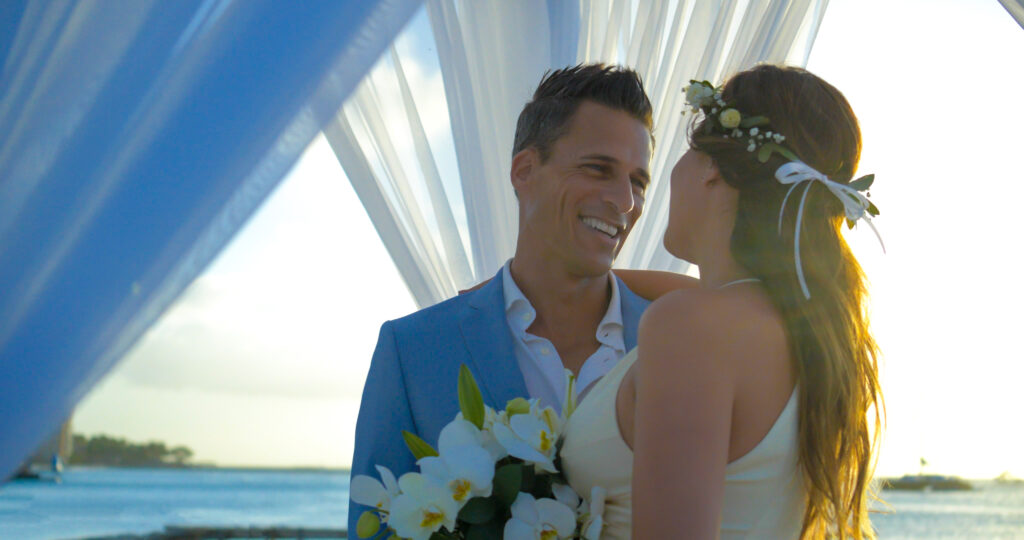
The Aruba Wedding Process at a Glance
Most Aruba weddings follow the same path. The total planning timeline runs roughly 12 to 18 months from “we’re getting married in Aruba” to the wedding day itself. Here’s the broad shape:
- Months 12 to 18 out: Decide on a legal or symbolic ceremony, set a budget, choose a date, pick your beach, connect with a Certified Destination Wedding Specialist, choose your resort.
- Months 6 to 12 out: Lock in your room block, customize your package, send save-the-dates, begin the apostille process if you’re marrying legally.
- Months 2 to 6 out: Submit your documents to the Civil Registry, send formal invitations, finalize vendors, plan group activities (Arikok National Park, a catamaran snorkel sail, the Natural Pool), and confirm details with your coordinator.
- Wedding week: Arrive, host welcome events, and exchange vows.
- After the wedding: Collect your marriage certificate, have it apostilled, and file it at home.
For the full legal detail, see our Aruba legal wedding guide. If you’re still deciding on the island itself, our roundup of the top reasons to have an Aruba destination wedding makes the case.
The Full Step-by-Step Aruba Wedding Planning Process
Phase 1: Decisions Before You Book
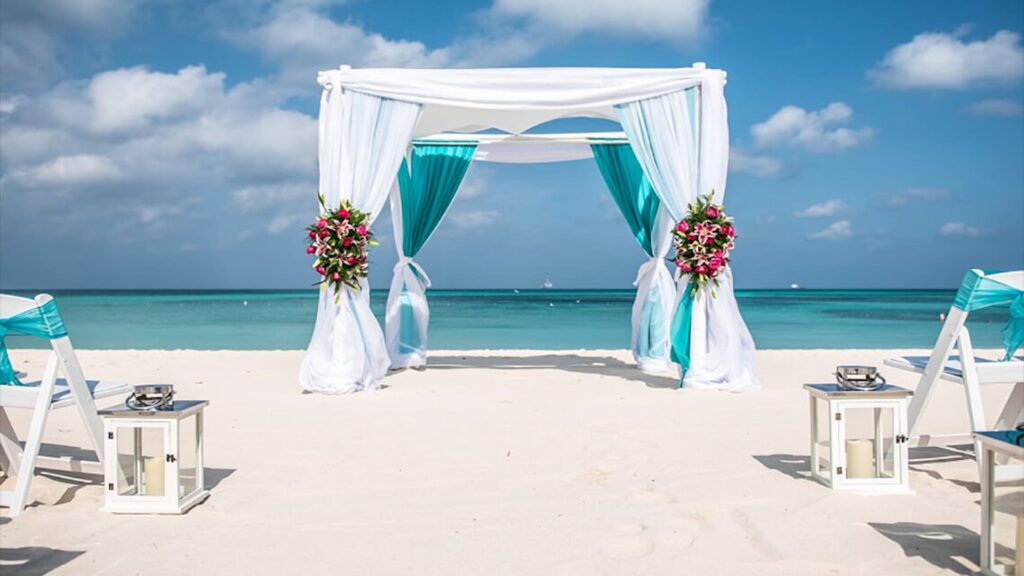
Step 1: Choose Between a Legal and a Symbolic Ceremony
This decision matters more in Aruba than in most Caribbean destinations, because the legal route has a real lead time.
A civil marriage in Aruba is performed by a registrar from the Civil Registry, and your documents have to be submitted and approved well in advance of your date, typically a couple of months ahead. The legal ceremony itself takes place at the Town Hall in Oranjestad or at an officially approved location, and many couples pair a short legal ceremony there with a full beach ceremony at their resort later the same day.
A symbolic ceremony skips the paperwork entirely and moves the legal filing home, which is why a good share of Aruba couples choose it. Decide early, because the legal path shapes your calendar.
Step 2: Set Your Budget
Based on our own couple spend data, an Aruba destination wedding averages $11,812 all-in for the couple, covering the wedding package, accommodations, airfare, and add-ons. Hotel costs run about $465 per person per night, roughly $4,654 for a couple across a typical five-night stay, and airfare lands between $1,000 and $1,200 per couple.
Here’s the number that tells you the most about Aruba, though: our couples marrying here average just 7 guests. Aruba skews heavily toward elopements and micro weddings, and the island is set up for exactly that. If that’s the direction you’re heading, our guide to elopements versus micro weddings is worth a read before you book.
Step 3: Pick Your Wedding Date
Aruba has the most forgiving calendar in the Caribbean, and it’s the island’s single biggest advantage. It sits outside the hurricane belt, rainfall is low year-round, and the trade winds keep things comfortable even at the height of summer. That means September and October, the two months couples avoid everywhere else in the region, are perfectly viable here and come with softer rates. January through March is peak season with the highest prices and the biggest crowds.
One date to plan around: Carnival, which builds through January and peaks just before Lent, fills hotels and brings road closures and parades to Oranjestad.
For the regional picture, see our guide to the best time to get married in the Caribbean.
Step 4: Decide on Your Beach
Aruba’s resort scene concentrates along the calm west coast, and the two main stretches feel quite different.
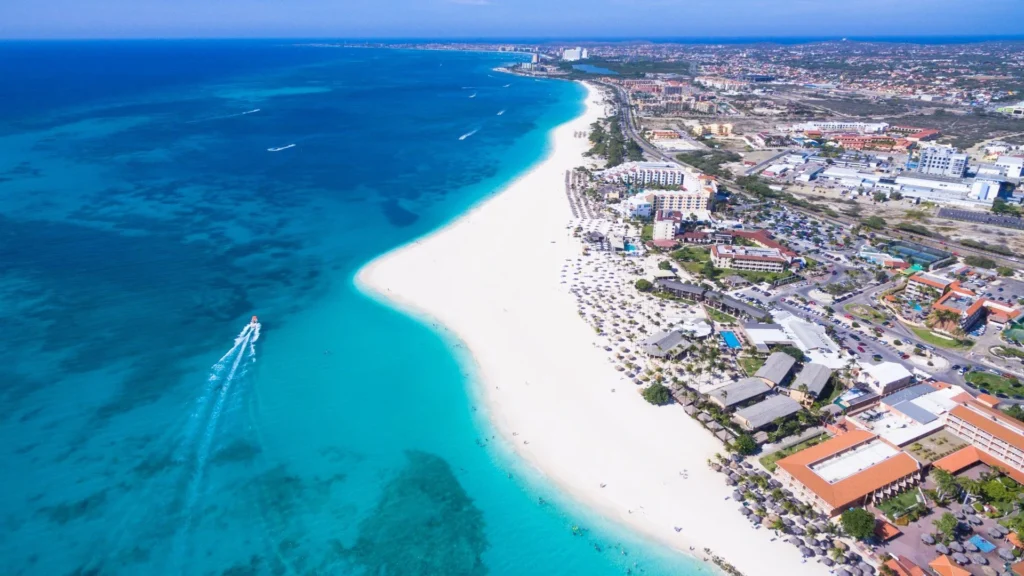
Palm Beach is the high-rise strip: bigger resorts, casinos, restaurants, water sports, and the most activity within walking distance.
Eagle Beach is the low-rise stretch just south, consistently ranked among the best beaches in the world, wider and quieter, with the island’s iconic wind-bent divi-divi trees leaning over the sand.
Oranjestad, the capital, brings Dutch colonial architecture in pastel colors and is where the Town Hall sits.
Further out, Baby Beach in the southeast is a shallow protected lagoon, and Arikok National Park covers the rugged windward interior. Palm Beach for energy, Eagle Beach for the beach itself.
Phase 2: Booking and Planning
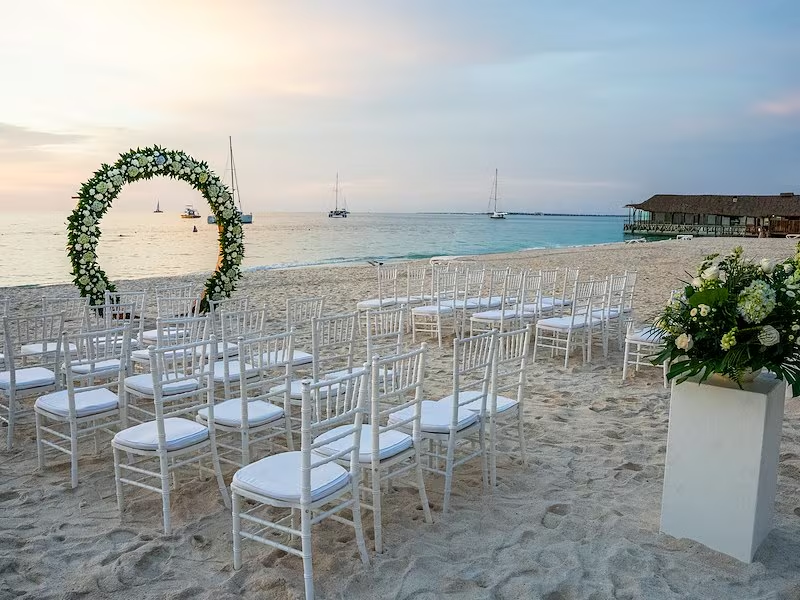
Step 5: Connect with a Certified Destination Wedding Specialist
Working with a Certified Destination Wedding Specialist is free for the couple, since they are paid by the resort partners. In Aruba, the practical value is mostly in two places: navigating the Civil Registry timeline so your documents land when they need to, and matching you to a property that fits a small guest count well, since most Aruba weddings are intimate and a big resort ballroom is rarely the right answer. Plan for 12 to 18 months of lead time for peak-season dates.
Step 6: Choose Your Resort and Ceremony Venue
Match your resort to your guest count, your beach preference, and the atmosphere you want. Most Aruba resorts offer beachfront and terrace ceremony settings, and the trade winds mean you’ll want to ask about wind protection.
Popular Aruba wedding anchors include:
JOIA Aruba by Iberostar
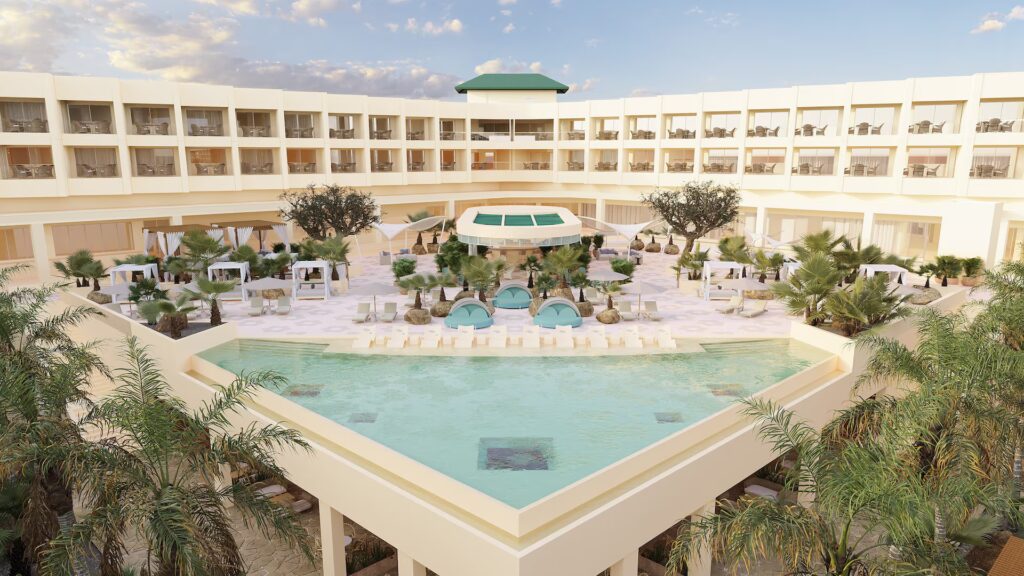
A family-friendly all-inclusive on Palm Beach with a contemporary build and a strong wellness focus. JOIA Aruba is one of the newer properties on the island and one of the more straightforward all-inclusive options, which matters in Aruba where many hotels operate on a European plan instead.
Learn more about JOIA Aruba by Iberostar and get a free quote today >>
Secrets Baby Beach Aruba
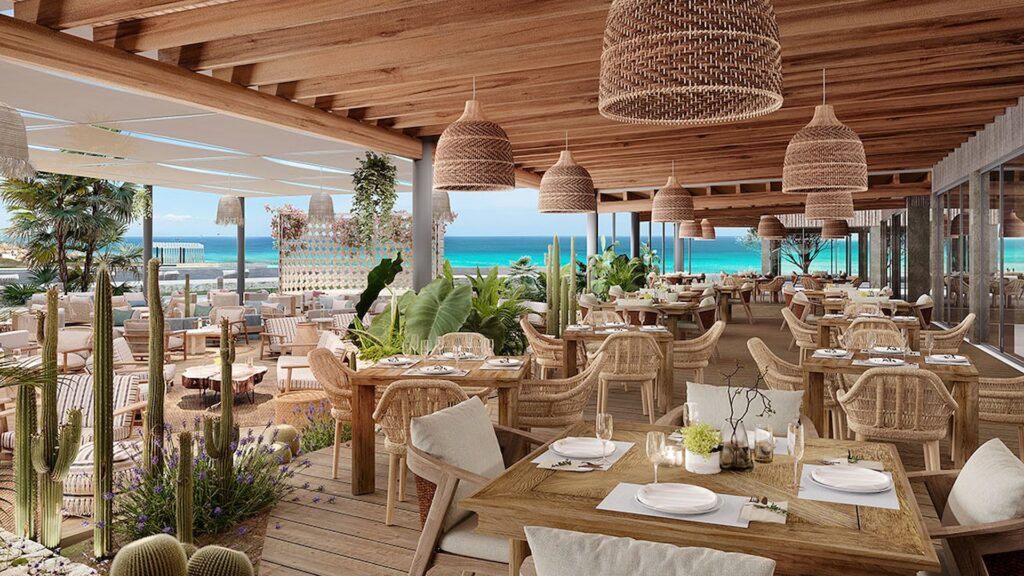
An adults-only luxury resort at the island’s southeastern tip, overlooking the shallow turquoise lagoon that gives Baby Beach its name. Secrets Baby Beach sits well away from the resort strip, which makes it the pick for couples who want a quieter, more private wedding week.
Learn more about Secrets Baby Beach Aruba and get a free quote today >>
Riu Palace Antillas
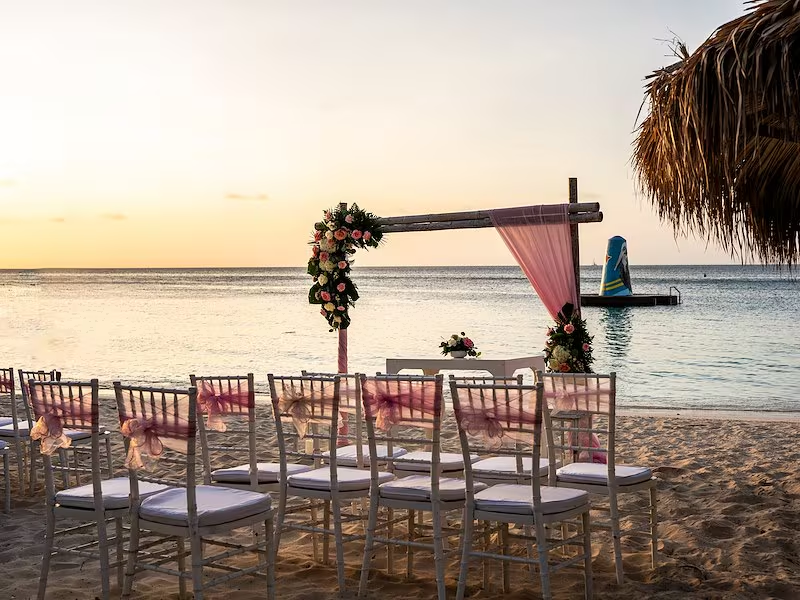
An adults-only all-inclusive on Palm Beach with good value pricing and direct access to the liveliest stretch of coast on the island. Riu Palace Antillas works well for couples who want an adults-only celebration with restaurants, casinos, and nightlife within walking distance for guests.
Learn more about Riu Palace Antillas and get a free quote today >>
Barcelo Aruba
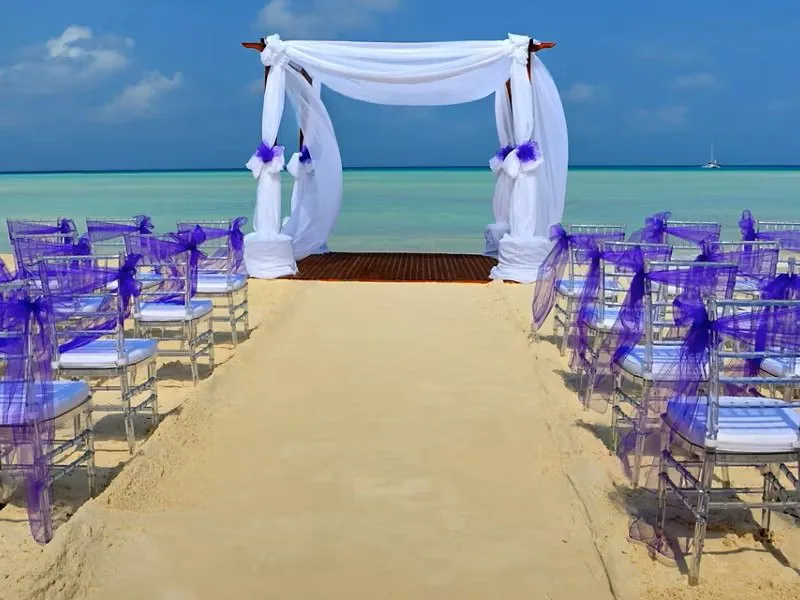
A family-friendly all-inclusive on Palm Beach with a casino, multiple pools, and a broad activity program. Barcelo Aruba suits multi-generational groups who want plenty happening on property between wedding events, with the beach and the strip right outside.
Learn more about Barcelo Aruba and get a free quote today >>
Bucuti & Tara Beach Resort
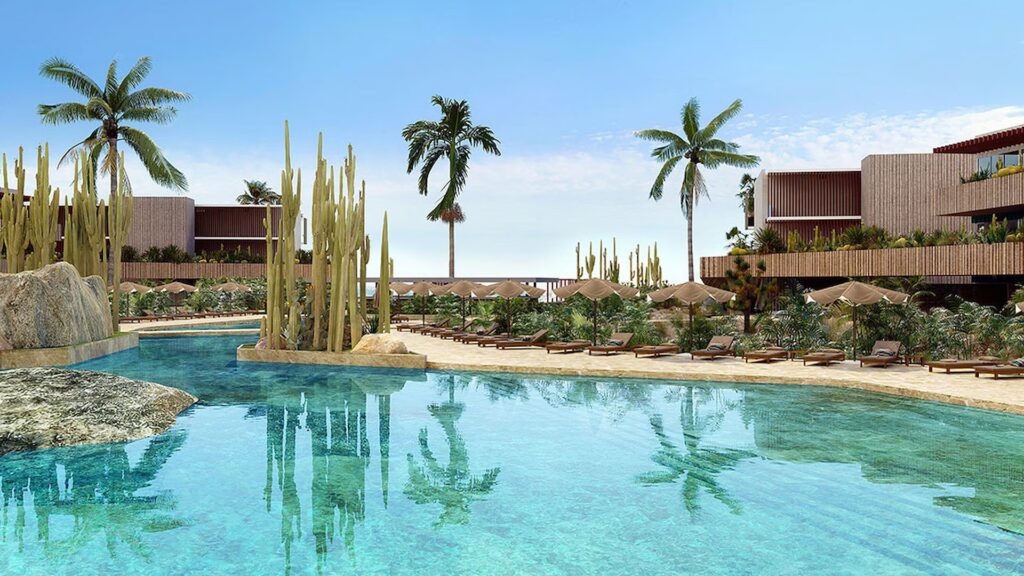
An adults-only boutique property on Eagle Beach, widely recognized for its sustainability work and for a level of personal service that larger resorts can’t match. Bucuti & Tara is a natural fit for Aruba’s typical intimate guest count, and for couples who want their wedding on the beach the island is famous for.
Learn more about Bucuti & Tara Beach Resort and get a free quote today >>

Step 7: Lock In Your Room Block
A room block holds rooms at a negotiated group rate for your guests. Aruba works a little differently from the big all-inclusive markets: a meaningful share of the island’s hotels operate on a room-only or European plan, meaning your stay includes accommodations only, with meals, drinks, and activities available at an additional cost, rather than all-inclusive, so compare what’s actually bundled before you compare rates.
Where all-inclusive packages do exist, the familiar pattern applies and a qualifying number of rooms or room nights unlocks wedding-package perks. Given the small average guest count here, blocks tend to be modest, so confirm the minimum required to trigger any complimentary benefits before you count on them.
Step 8: Customize Your Wedding Package
Your on-site coordinator handles ceremony setup, florals, music, photography, dinner, and bar service. Aruba packages run roughly $850 to $4,000 at the entry tier, $4,500 to $7,000 in the middle, and $7,500 to $12,500 and up for full productions. Local add-ons worth considering include a steel pan or tumba band, Aruban cuisine on the reception menu with its Dutch and Latin influences, aloe-based spa treatments drawn from the island’s long aloe-growing history, and a sunset catamaran for the welcome party.
If you’re planning around the wind, ask your coordinator about sheltered ceremony sites and weighted decor now rather than later.
Phase 3: Pre-Travel Prep

Step 9: Submit Your Documents to the Civil Registry
This is the step that makes Aruba different, and it needs the most lead time. If you’re marrying legally, plan to have documents submitted to the Civil Registry in Oranjestad roughly two months before your wedding date, which means starting the apostille process several months before that.
You’ll typically need apostilled birth certificates, apostilled declarations of single status or non-marriage, valid passports, and a completed marriage request form, plus apostilled divorce decrees or a death certificate if either of you was previously married. Documents not in Dutch, English, or Spanish generally need certified translation. You’ll also need witnesses, usually two to four, with valid identification.
Most resort coordinators and local wedding planners handle the submission on your behalf, and this is genuinely worth delegating. Legal requirements do change, so confirm the current list with the Aruban or Dutch consulate or embassy in your home country before you finalize anything.
Step 10: Send Invitations and Coordinate Guest Logistics
Send save-the-dates 9 to 12 months out and formal invitations 3 to 4 months before the wedding, with the room-block deadline noted. Guests fly into Queen Beatrix International Airport just outside Oranjestad, with transfers of 10 to 20 minutes to the Palm Beach and Eagle Beach resorts.
Direct service runs from a wide range of US hubs, and there’s a genuinely useful quirk worth telling guests about: Aruba has US pre-clearance, so travelers clear US customs and immigration before they board the flight home and land domestically. Include group excursion ideas: a catamaran snorkel sail to the Antilla shipwreck, a jeep tour through Arikok National Park to the Natural Pool, the California Lighthouse at sunset, and the butterfly farm near Palm Beach.
Our RSVP and guest communication timeline maps out when to send what.
Step 11: Finalize the Details
Two to four months out, finalize ceremony scripting, florals, photography and videography, music, hair and makeup, attire, welcome bags, and the day-of timeline with your coordinator. Aruba’s trade winds are constant and strong, and they will affect a veil, an unweighted arch, loose petals, and anyone’s hair, so plan for wind rather than hoping around it. Confirm your Civil Registry appointment and your witnesses now if you’re marrying legally.
Phase 4: In Destination
Step 12: Arrive in Aruba
Because the legal work happens before you travel, Aruba doesn’t require a long pre-wedding stay the way Mexico or the Dominican Republic do. Most couples arrive two to three days early for welcome events, a coordinator meeting, and travel buffer. If you’re having a civil ceremony at the Town Hall, your appointment time will be fixed well in advance, so build the day around it.
Step 13: The Ceremony
Your coordinator runs the day-of timeline. A civil ceremony in Aruba is performed by a registrar, either at the Town Hall in Oranjestad or at an officially approved location, and it’s brief and formal. Many couples treat that as the legal formality and hold their real ceremony on the beach afterward, with their own officiant and their own script.
A purely symbolic ceremony is led by the resort officiant or a celebrant you choose. Late afternoon is the best time for both comfort and light, and Aruba’s sunsets over the west coast are as good as the island’s reputation suggests.
Phase 5: After the Wedding
Step 14: Register Your Marriage at Home
Your marriage is recorded by the Aruban Civil Registry, and you’ll receive a marriage certificate or an extract from the register. Have it apostilled in Aruba before you leave, which your coordinator or planner can usually arrange, then file it with your county clerk or vital records office at home. If the certificate is issued in Dutch, you’ll need a certified English translation.
Keep several certified copies for name changes, taxes, and immigration paperwork. Our wedding paperwork checklist covers what to hold onto.
Ceremony Options in Aruba
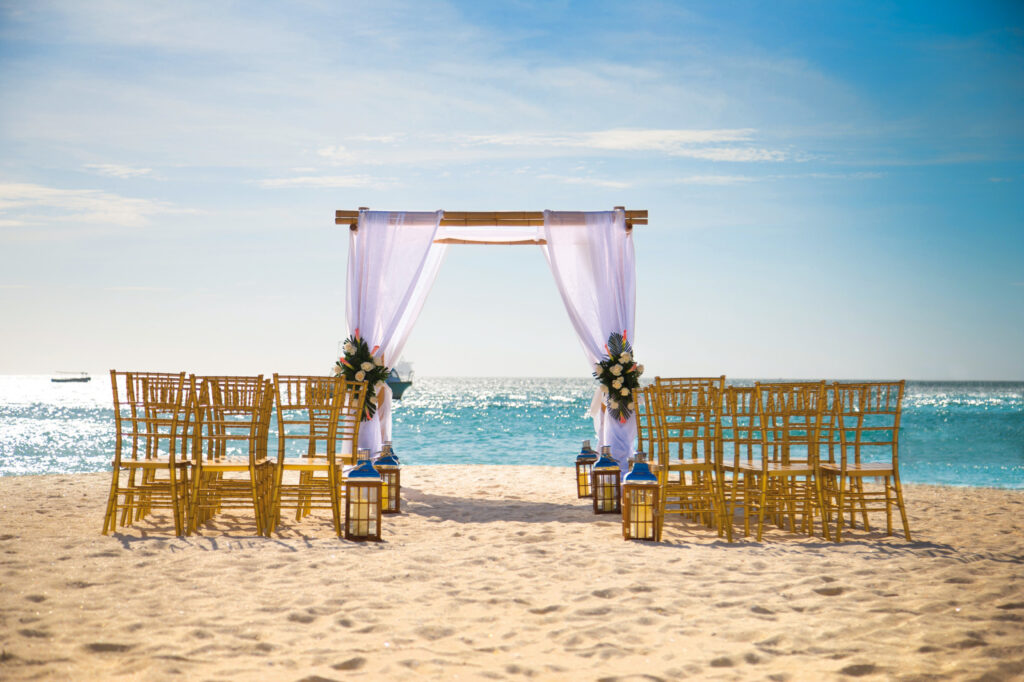
There are three ways to say “I do” in Aruba. Only the civil ceremony is legally binding, and it works differently here than on most Caribbean islands.
Civil Ceremony (Legally Binding)
A civil ceremony in Aruba performed by a registrar from the Aruban Civil Registry is the only legally binding option. It happens at the Town Hall in Oranjestad or at an officially approved location, and it requires apostilled documents submitted roughly two months in advance plus witnesses with valid identification.
The ceremony itself is short and formal. Plenty of couples pair it with a full beach ceremony at their resort the same day, which gives them both the legal record and the wedding they actually pictured.
Symbolic Ceremony
A symbolic ceremony carries no legal weight, and you complete the filing at home before or after the trip. Given Aruba’s advance-submission requirement, this is a popular route, especially for the elopements and micro weddings that make up much of the island’s wedding business. It also frees you to marry anywhere, including spots the Civil Registry won’t travel to, and to write the ceremony entirely on your own terms.
Religious Ceremony
Religious ceremonies aren’t legally binding on their own in Aruba and need a civil ceremony alongside them. The island has a strong Catholic tradition and several historic churches, including the pink Alto Vista Chapel on the northern coast, which is one of the most photographed wedding settings in Aruba. Church ceremonies require coordination with the parish and longer lead times, so raise this early.

Aruba Wedding Planning FAQs
How long does the entire Aruba wedding planning process take?
Plan for 12 to 18 months. The legal paperwork is the pacing item rather than the resort: documents need to reach the Civil Registry around two months before your date, and getting birth certificates and single-status declarations apostilled at home can take several months on its own. Start the document work far earlier than you think you need to.
Do we have to be in Aruba before our wedding?
Aruba doesn’t impose a long residency window the way Mexico or the Dominican Republic do, because the paperwork is handled in advance rather than on arrival. Most couples come two to three days early for welcome events and travel buffer. Your Town Hall appointment, if you’re marrying civilly, is scheduled ahead of time.
Is Aruba really outside the hurricane belt?
Yes, and it’s the island’s biggest practical advantage for weddings. Aruba sits in the southern Caribbean, well below the track most Atlantic storms follow, so September and October are viable wedding months here when they’d be a real gamble almost anywhere else in the region. Rainfall is low year-round, and the trade winds keep temperatures comfortable.
How much should we expect to spend on an Aruba wedding?
Our couples spend an average of $11,812 all-in for an Aruba wedding, covering the wedding package, accommodations, airfare, and add-ons. The package alone runs roughly $850 to $4,000 at the entry tier, $4,500 to $7,000 in the middle, and up to $12,500 and beyond for a full production. Hotel costs average $465 per person per night, which is on the higher side for the Caribbean and reflects Aruba’s year-round demand.
What’s the difference between Eagle Beach and Palm Beach?
Palm Beach is the high-rise strip: larger resorts, casinos, restaurants, water sports, and the most going on within walking distance. Eagle Beach is the low-rise stretch just south, wider and quieter, regularly ranked among the world’s best beaches, with the wind-bent divi-divi trees that show up in every Aruba photograph. Palm Beach if guests want activity, Eagle Beach if the beach itself is the point.
Why do so few guests come to Aruba weddings?
Our Aruba couples average about 7 guests, the smallest of any wedding destination we book. Part of it is the island’s cost per night, part is the advance paperwork, and part is simply that Aruba has become a favorite for elopements and micro weddings. If you’re planning a larger celebration, it’s entirely doable here, but be aware you’ll be doing something less typical for the island.
Is same-sex marriage legal in Aruba?
Yes. Following a 2024 ruling by the Supreme Court of the Netherlands, same-sex couples can legally marry in Aruba. Aruba has long been one of the most welcoming destinations in the Caribbean for LGBTQ+ travelers. As with all legal requirements, confirm the current process with the Aruban or Dutch consulate in your home country, since implementation details can evolve.
Start Planning Your Aruba Wedding Today
Aruba earns its “One Happy Island” reputation. Weather you can actually count on in months when the rest of the Caribbean is holding its breath, beaches that regularly top world rankings, a genuinely safe and walkable island, and a warmth in the culture that guests notice within an hour of landing. Get the paperwork started early and the rest of it is as easy as a destination wedding gets.
The 14-step path above is the same one our Certified Destination Wedding Specialists walk every couple through, and the heavy lifting is on us.
Fill out our online wedding planning form and we’ll match you with a DW Specialist who knows this island inside and out!

About the Author

Maggie Sabin
Maggie started as the SEO Manager at DestinationWeddings.com in 2024, where she works to drive organic traffic and conversions while creating meaningful, SEO-optimized content for the website. Previously, Maggie's career spanned from Human Resources & Recruitment to teaching at international schools for almost 10 years. Maggie spends her free time traveling, learning new languages, reading non-fiction books, working out, going to the beach and spending time cuddling her dog, Lola!