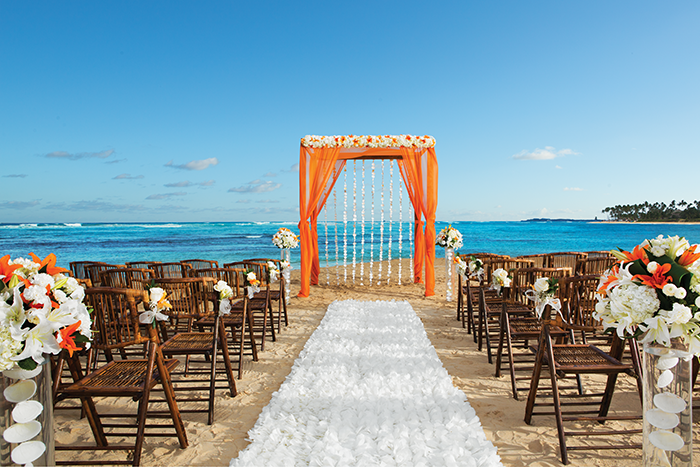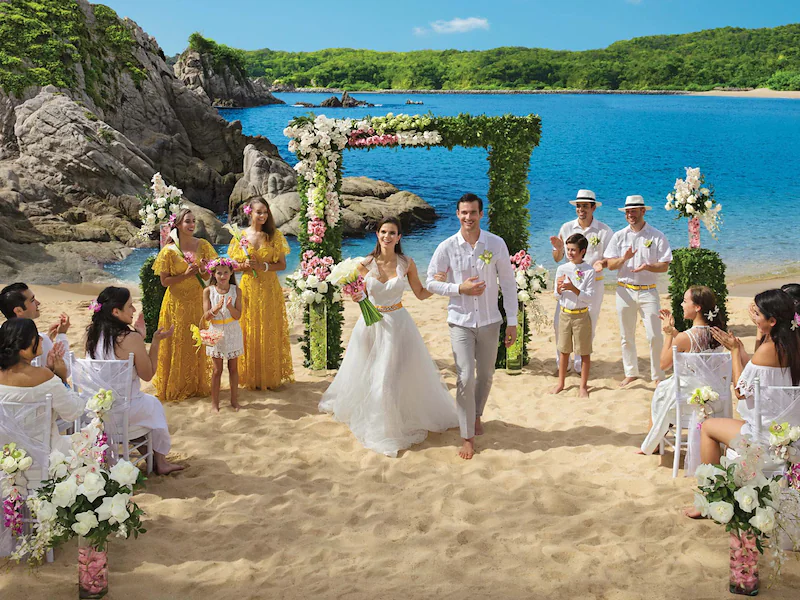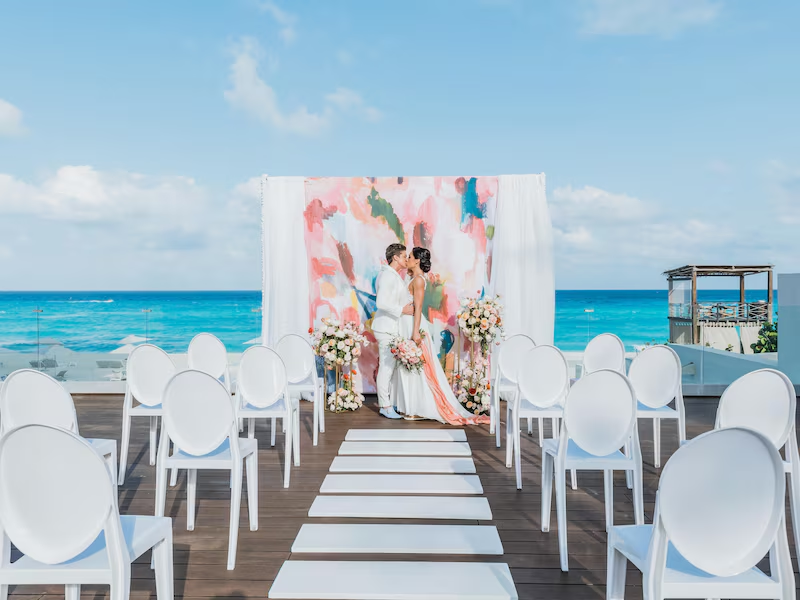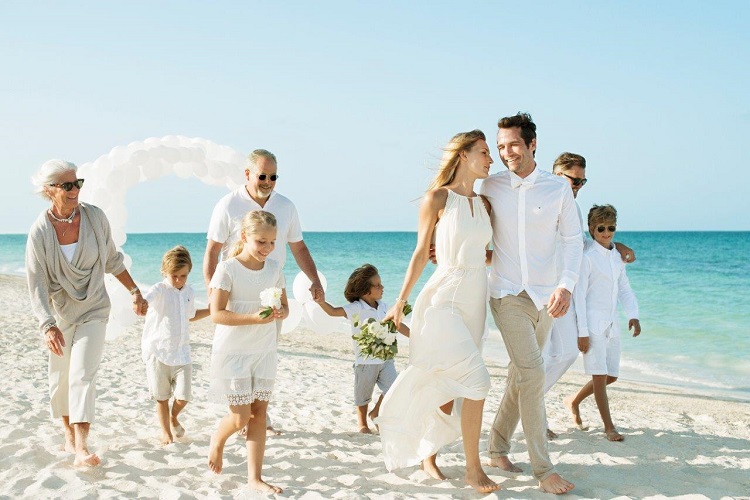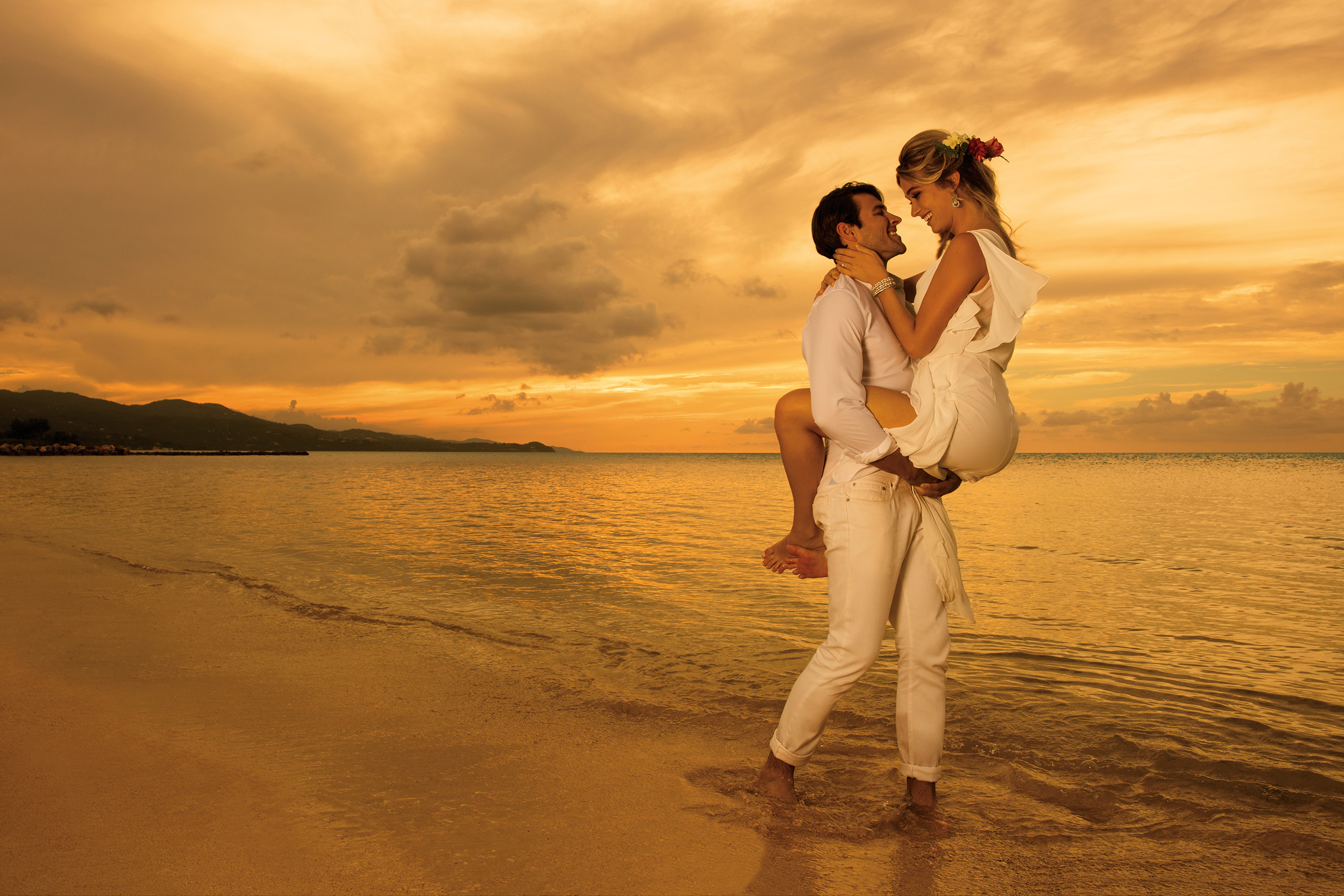

Not every destination wedding ceremony is the same. Some are legally binding at the wedding destination, while others are symbolic. Some layer in religious or cultural traditions. Some blend two heritages into one shared ceremony. Choosing the right ceremony type shapes your paperwork, your budget, and the experience your guests remember.
Here’s how our Certified Destination Wedding Specialists walk couples through the decision-making process.
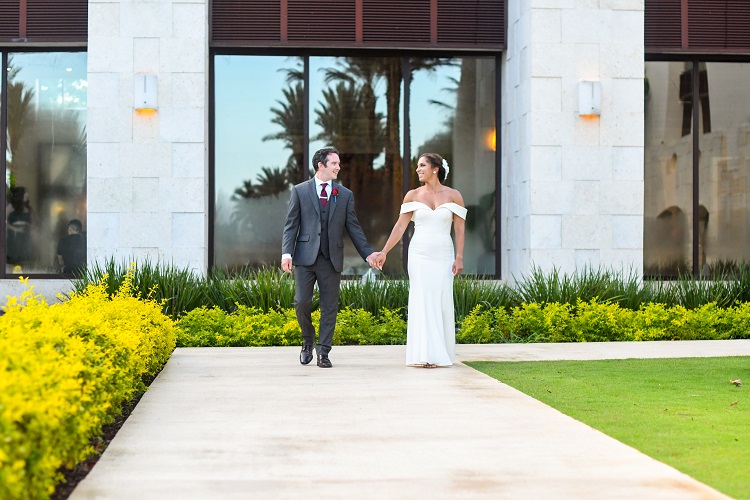
The Main Wedding Ceremony Types to Choose From
Destination wedding ceremonies fall into a few broad categories. Most couples pick one, and some blend elements from more than one.
Legal (Civil) Ceremony
A legal ceremony is officiated by someone recognized by the destination’s government (a judge, a civil officiant, or a resort-provided officiant with legal authority). The paperwork you sign is filed with the destination country and, in most cases, recognized back home in the U.S.
Trade-offs to know:
- Requires apostille paperwork (for international destinations) and sometimes translation.
- May require blood tests or waiting periods at some destinations.
- Ceremony wording follows the destination’s civil ceremony format, which is often more formal than U.S. wedding tradition.
Symbolic Ceremony
A symbolic ceremony looks and feels identical to a legal ceremony but isn’t legally binding at the wedding destination. You and your partner exchange vows and rings, an officiant leads the ceremony, and guests witness the moment. Legally, though, you’re already married (or getting married later) via a courthouse in your home state.
Most couples our Certified Destination Wedding Specialists work with choose this option. It skips the paperwork hurdles entirely. Get legally married at home first with a quick courthouse visit, then have your “real” wedding at the destination.
Religious Ceremony
A religious ceremony follows the traditions of your faith and is officiated by a clergy member. Some destinations have local clergy who can perform Catholic, Protestant, Jewish, Hindu, or other religious ceremonies. In other cases, you can bring your own clergy from home (this may involve a small fee).
Religious ceremonies may or may not be legally binding at the destination, depending on local recognition rules and the specific faith tradition. Check with your Certified Destination Wedding Specialist and resort coordinator well in advance.

Interfaith or Multicultural Ceremony
For couples with different religious or cultural backgrounds, an interfaith or multicultural ceremony blends elements from both traditions. Popular formats include a co-officiated ceremony with two clergy members, a symbolic ceremony with cultural rituals woven in, or a two-part ceremony that honors each tradition separately.
Kahu Ceremony (Hawaii)
Specific to Hawaiian destination weddings, a Kahu ceremony is led by a Hawaiian minister (Kahu) and incorporates traditional Hawaiian blessing rituals: pule (prayer), lei exchange, sand ceremony, or ti-leaf blessings. Kahu ceremonies can be legal, religious, or symbolic depending on how they’re structured.
Vow Renewal
For couples already legally married (some for years, some for a week), a vow renewal ceremony celebrates the marriage in a destination setting. There’s no legal paperwork involved. Just the ceremony, the vows, and the celebration.
Legal vs Symbolic: The Big Decision
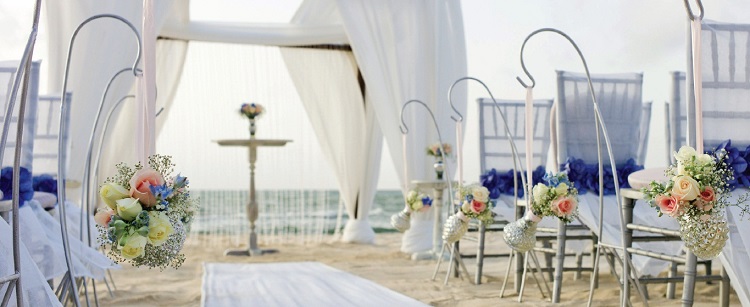
The single biggest ceremony-type decision for most couples is legal vs symbolic. Our Certified Destination Wedding Specialists‘ consensus:
- Choose legal at the destination if the paperwork matters to you culturally, symbolically, or for practical reasons (like local citizenship benefits). Also, if the wedding destination has a simple legal process (Jamaica, U.S. destinations like Hawaii and Puerto Rico).
- Choose symbolic (with legal at home) if you want to skip apostille paperwork, translation fees, blood tests, waiting periods, and international marriage license processes. Most couples pick this route.
Destination-Specific Considerations
Some wedding destinations make legal ceremonies easier than others:
- Easy legal process: Jamaica (24-hour residency, no apostille), U.S. Hawaii (no residency, single in-person license), Puerto Rico (U.S. domestic).
- Moderate legal process: Dominican Republic (apostille required), Mexico (apostille + translation, blood tests at some venues).
- Complex legal process: some Caribbean islands with residency requirements or clergy restrictions.
Your Certified Destination Wedding Specialist can walk you through the specific legal process for your chosen destination.
Adding Personal Touches to Any Ceremony
Whatever ceremony type you choose, you can layer in personal touches:
- Sand ceremony (blending two colors of sand into one vessel).
- Unity candle lighting.
- Handfasting (a Celtic tradition of binding hands with cloth).
- Ring warming (guests hold the rings and imbue them with well-wishes before the exchange).
- Personal vow reading in addition to the officiant’s structured wording.
- Cultural rituals honoring family heritage.

Destination Wedding Ceremony Type FAQs
Do most couples get legally married at the destination or at home?
Most couples our DW Specialists work with get legally married at home first (a quick courthouse visit) and have a symbolic ceremony at the destination. It skips the apostille paperwork, translation fees, and any residency or blood-test requirements while delivering an identical guest experience.
Is a symbolic ceremony less meaningful than a legal one?
No. A symbolic ceremony looks and feels identical to a legal ceremony from the guest’s perspective. Same vows, same rings, same officiant, same emotional weight. The only difference is what happens on paper afterward.
Which destinations have the easiest legal marriage process?
Jamaica has one of the simplest processes (24 hours of in-country residency, no apostille or translation). Hawaii and Puerto Rico are also simple because they’re U.S. jurisdictions with no residency requirement. The Dominican Republic and Mexico locations require apostille paperwork.
Can we do a religious ceremony at a destination wedding?
Yes. Most wedding destinations can accommodate Catholic, Protestant, Jewish, Hindu, and other religious ceremonies. You can also bring your own clergy from home. Confirm with your Certified Destination Wedding Specialist and resort coordinator well in advance, since some faith traditions require additional preparation.
Start Planning Your Destination Wedding Today!
The right ceremony type depends on your paperwork tolerance, your faith background, and what feels most meaningful for your day. Our DW Specialists have helped couples navigate every ceremony format across every major destination.
Fill out our online wedding planning form, and one of our Certified Destination Wedding Specialists will help you pick the ceremony type that fits your vision.

About the Author

Maggie Sabin
Maggie started as the SEO Manager at DestinationWeddings.com in 2024, where she works to drive organic traffic and conversions while creating meaningful, SEO-optimized content for the website. Previously, Maggie's career spanned from Human Resources & Recruitment to teaching at international schools for almost 10 years. Maggie spends her free time traveling, learning new languages, reading non-fiction books, working out, going to the beach and spending time cuddling her dog, Lola!