
There’s a decision early in booking a destination wedding that most couples don’t realize they’re making, largely because it happens by default if you do nothing.
You either let everyone book their own room whenever they get round to it, or you sign a group contract with the resort. The first costs you nothing and requires nothing. The second involves a contract, a deposit, and some obligations, and it’s almost always the better deal.
Here’s what it actually gets you, and what it asks of you in return.

The Two Options, Compared
| Everyone Books Individually | Group Contract | |
|---|---|---|
| The rate | Whatever is showing the day each guest books | Locked for everyone, negotiated below public rates |
| Availability | First come, first served, and it can sell out | Rooms held for your guests until a set release date |
| Resort concessions | None | Unlocked by room-night thresholds |
| Guest payments | Usually in full at booking | Often payable over time, ahead of set deadlines |
| Where guests stay | Scattered across the property | Resort tries to place the group together |
| Your commitment | None | A deposit, a group minimum and deadlines to manage |
The Rate Stops Moving
This is the main event. A group contract fixes what your guests pay, at a rate negotiated below what the resort is advertising publicly.
Without one, every guest pays whatever the resort happens to be charging the day they book. Your organized aunt who books in January gets one price. Your cousin who books in August, as your date moves into high season and availability tightens, pays considerably more for the same room. Wedding resort pricing moves constantly, and it generally moves upward as a date approaches.
With a contract, everyone pays the same locked figure regardless of when they commit. It also means you can tell people what the trip will cost and be right, which matters when guests are deciding whether they can afford to come.
The Rooms Are Actually Held
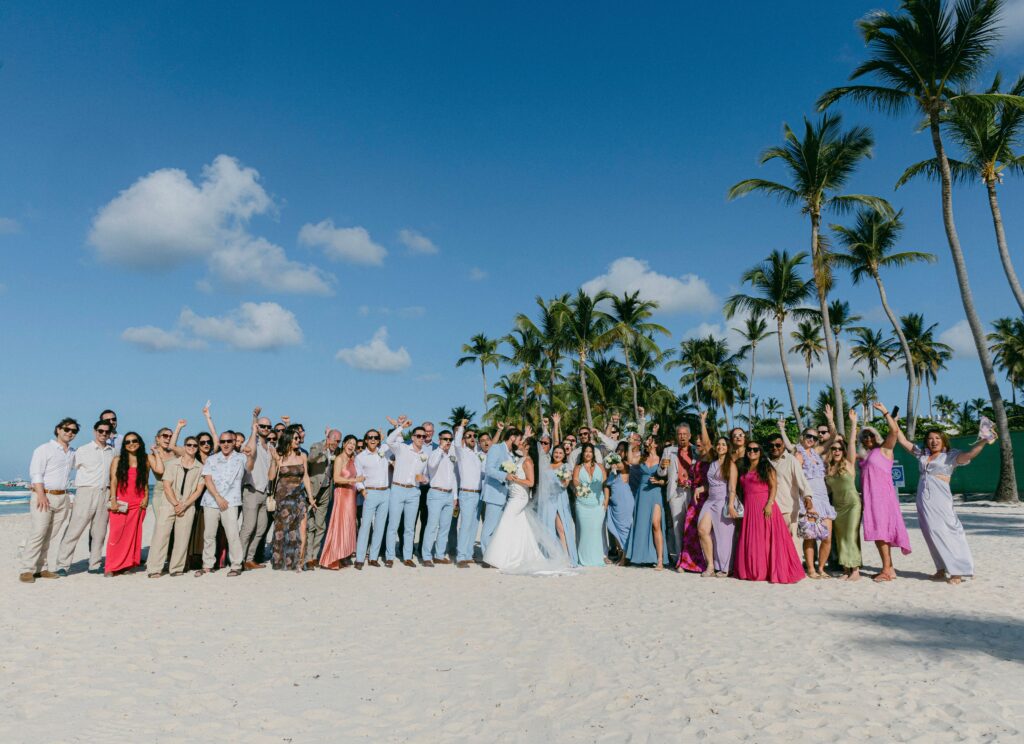
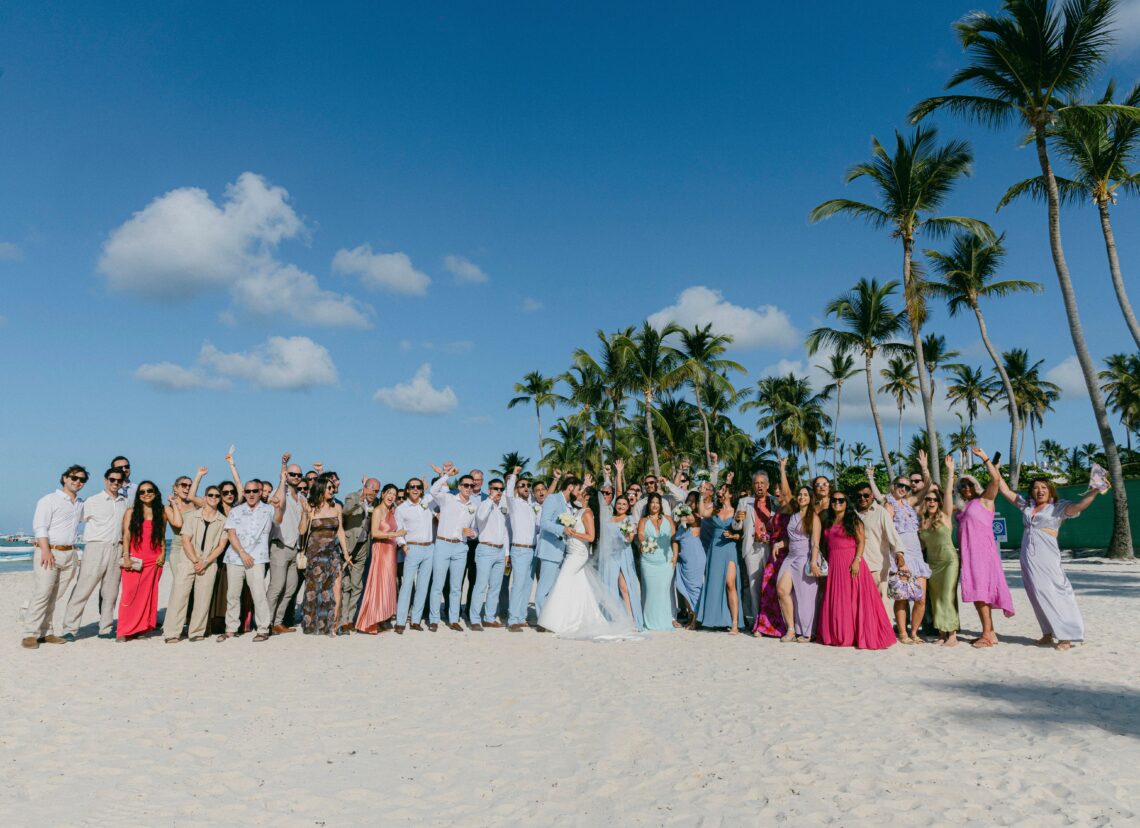
A group contract reserves a block of rooms for your guests, so they’re there when people are ready to book rather than subject to whatever the resort has left.
This matters more than couples expect, particularly for popular resorts on peak-season weekends. Guests put off booking. They always do, no matter how clearly you ask. Without held inventory, late bookers find the property sold out or only the most expensive room category available, and you end up with people staying somewhere else entirely, which changes the whole shape of the week.
Concessions You Can’t Get Any Other Way
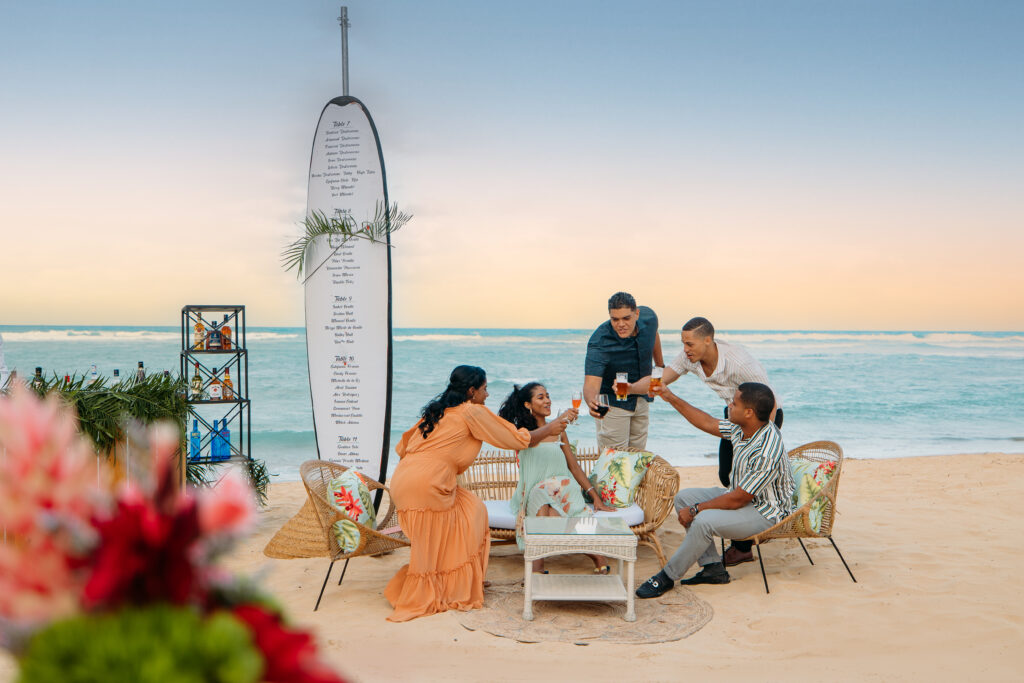
Wedding resorts reward volume, and a group contract is how that volume gets counted. Once your block hits certain room-night thresholds, concessions unlock.
Depending on the property and the numbers, that can mean a complimentary wedding package, upgraded room categories, comped nights, a private function, or credits toward the celebration. These are negotiated, they’re tied to the contract, and they are not available to couples whose guests book individually.
It’s worth understanding what that’s worth in cash terms. An entry-tier wedding package that would otherwise cost $1,299 to $1,800 becoming complimentary is, on its own, usually more than any other saving available to you in the entire planning process.
Your Guests Can Pay Over Time
An underrated advantage, and the one guests themselves appreciate most.
Booking independently generally means paying for the whole stay up front. Inside a group contract, guests can usually put down a deposit and pay the balance off gradually ahead of set deadlines, and those who add Travel Protection at the time of booking can often split payments into installments.
For a guest weighing up whether they can afford your destination wedding, the difference between one large payment now and smaller amounts over several months is frequently the difference between yes and no. Say it explicitly in your invitation, because people assume the worst.

Everyone in One Place, and One Person to Ask
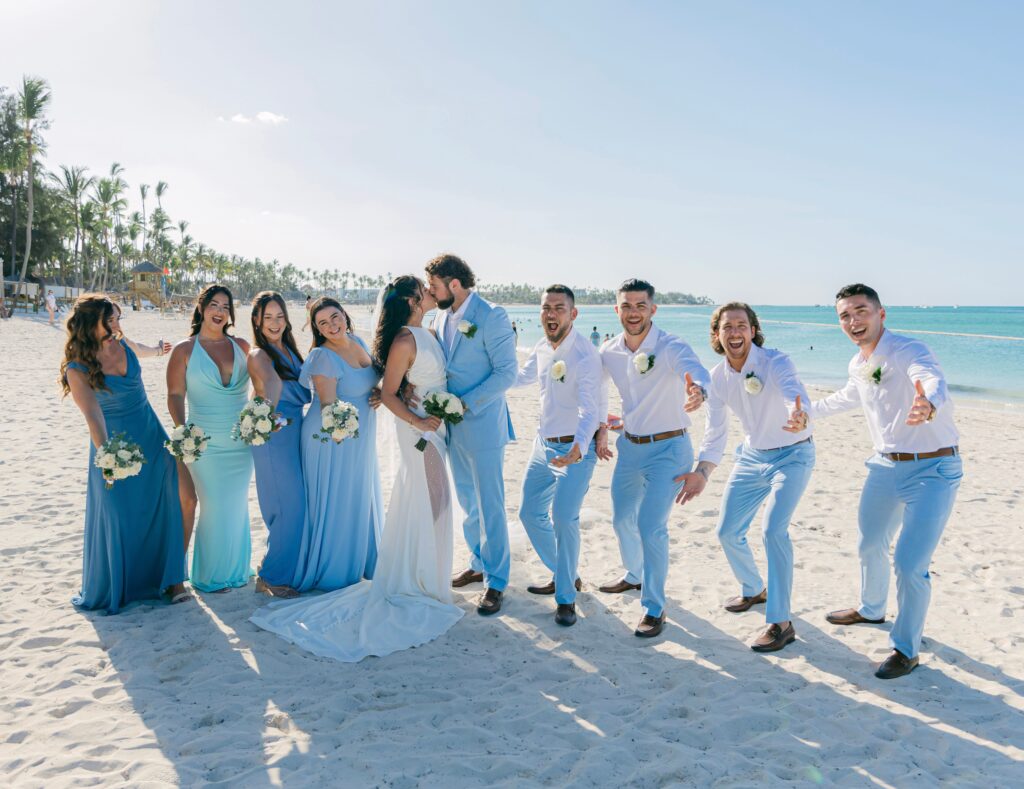
Resorts generally try to place group bookings near each other. It sounds minor until you’ve spent a wedding week walking twenty minutes across a property to find your own family.
A group booking also gives you one point of contact instead of forty. Your Certified Destination Wedding Specialist holds the whole picture, so when a guest has a question about transfers or deadlines or room categories, they go there rather than to you. That’s a genuine amount of your attention handed back during the months when you need it most.
What a Group Contract Asks of You
It’s a contract, so there are obligations. None are onerous, and all of them are easier to manage than discovered.
- A deposit, due by a set date. Amounts vary by resort and block size, and here’s the part couples don’t expect: your guests’ bookings count toward it. If enough guests book by the deadline, you may pay nothing out of pocket. If they don’t, you can either cover the difference or reduce the rooms you’re holding to match what’s been booked.
- A group minimum. A set number of rooms must stay booked to keep group status, the contracted rate, and the concessions. Fall below it, and those can be lost.
- A reduction deadline. You can cut rooms from the block without penalty up to a certain date. After it, reductions may carry a charge, which is why the block should be sized realistically at the start rather than optimistically. Your Certified Destination Wedding Specialist will do that with you.
- Payment deadlines and automatic cancellation. Rooms not paid by their deadline are released the following day. It’s automatic, not a warning, and a cancelled room usually can’t be recovered at the group rate.
- Late additions at current rates. Rooms can generally be added later subject to availability, but they may be priced at the resort’s prevailing rate rather than your contracted one, and may not count toward your concession thresholds.
When It’s Worth It
Roughly ten rooms is where a group contract starts to make clear sense. Below that, there’s usually not enough volume to unlock meaningful concessions, and booking individually is perfectly sensible.
Above it, the maths moves quickly. Locked rates across twenty rooms, held inventory, a complimentary wedding package and flexible guest payments add up to real money and a considerably calmer year.

Destination Wedding Group Contract FAQs
What is a group contract for a destination wedding?
An agreement with the resort that holds a block of rooms for your guests at a fixed, negotiated rate. It locks pricing, guarantees availability until a release date, and unlocks concessions such as a complimentary wedding package once room-night thresholds are met.
How many rooms do you need for a group contract?
Around ten rooms is the usual starting point, though thresholds vary by resort and season. Concession levels step up from there, so a larger block unlocks more. Your Certified Destination Wedding Specialist will tell you exactly where the thresholds sit at the properties you’re considering.
Do you have to pay for your guests’ rooms with a group contract?
No. Guests book and pay for their own rooms as they would anyway. There is a group deposit, but guest bookings count toward it, so if enough guests book by the deadline, you may pay nothing yourself. If they don’t, you can cover the shortfall or reduce the block instead.
What happens if not enough guests book?
You can reduce the block ahead of the reduction deadline without penalty. If the group falls below the contracted minimum, group status, rates and concessions may be lost, and bookings could convert to individual reservations at different rates. Keeping your Certified Destination Wedding Specialist updated on numbers avoids this entirely.
Is a group rate cheaper than booking directly?
Generally yes, because group rates are negotiated below public pricing and then locked, while public rates climb as a date approaches. The gap tends to be widest for guests who book late, who would otherwise pay peak pricing for whatever room category is left.
Lock It In Before Your Guests Start Booking
A group contract is the difference between forty people paying forty different prices and everyone paying one you negotiated, with rooms held and the wedding package potentially free on top.
Fill out our online wedding planning form, and one of our Certified Destination Wedding Specialists will size the block properly and tell you exactly what your numbers unlock!

About the Author

Maggie Sabin
Maggie started as the SEO Manager at DestinationWeddings.com in 2024, where she works to drive organic traffic and conversions while creating meaningful, SEO-optimized content for the website. Previously, Maggie's career spanned from Human Resources & Recruitment to teaching at international schools for almost 10 years. Maggie spends her free time traveling, learning new languages, reading non-fiction books, working out, going to the beach and spending time cuddling her dog, Lola!