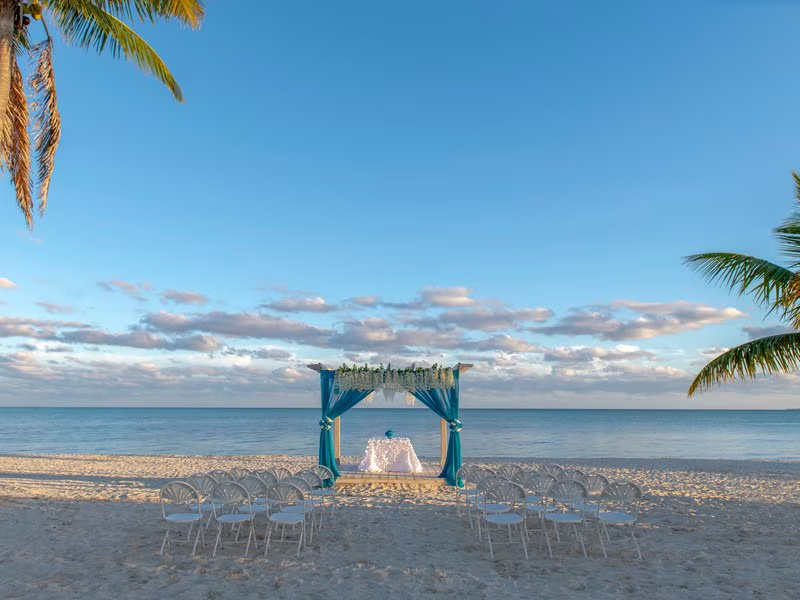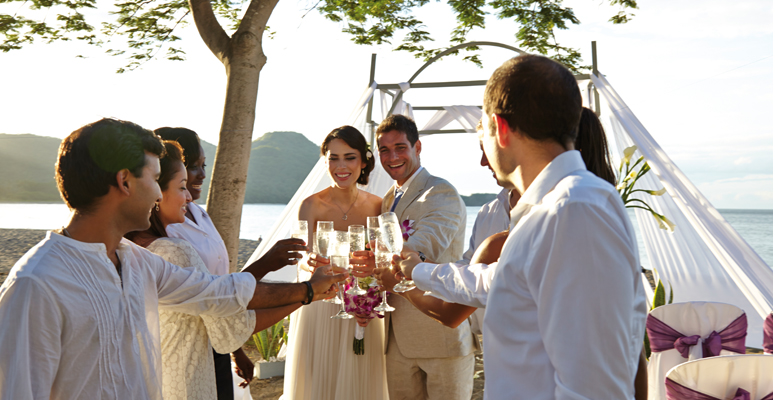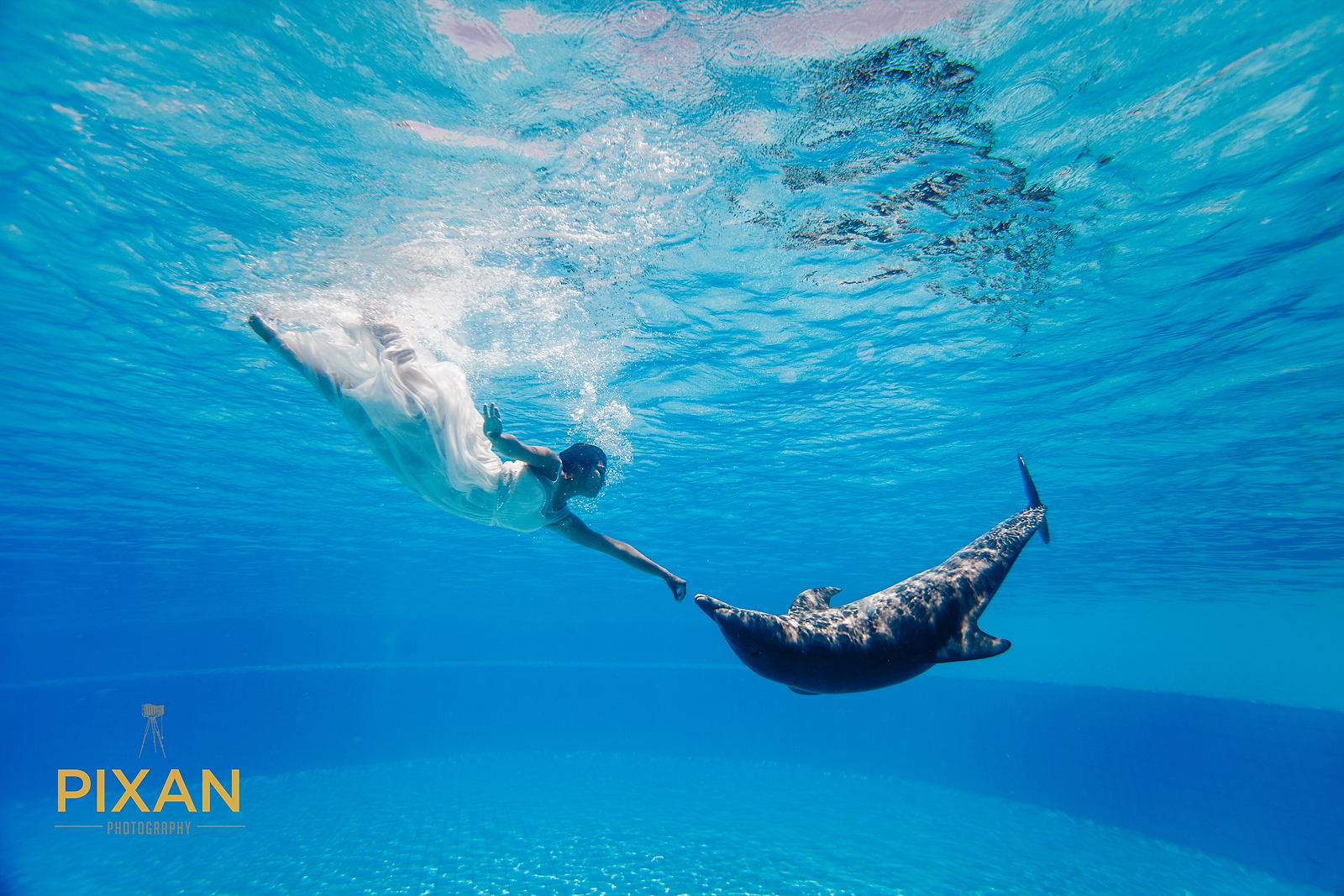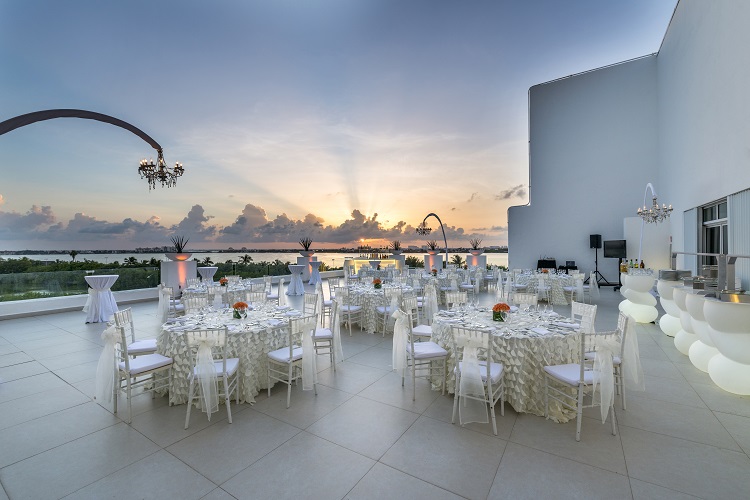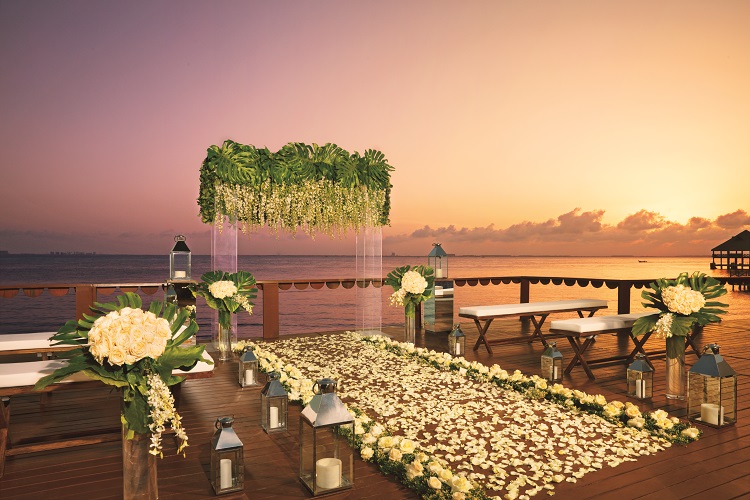

A destination wedding in Costa Rica sits in a different category from the typical Caribbean beach celebration. The country pairs Pacific shoreline with rainforest at one end of a wedding-week itinerary, cloud-forest peaks reaching above 10,000 feet inland, sloths in the canopy, humpback whales offshore, and the country’s signature pura vida (“pure life”) cultural ethos woven through every interaction. Where Mexico is mariachi-and-margaritas and Jamaica is reggae-and-jerk, Costa Rica is sloths-and-volcanoes, with the eco-luxury polish to match.
This guide walks through what to do, where to do it, and how to plan a Costa Rica destination wedding week that your guests will remember. Our Certified Destination Wedding Specialists can help you tie it all together.
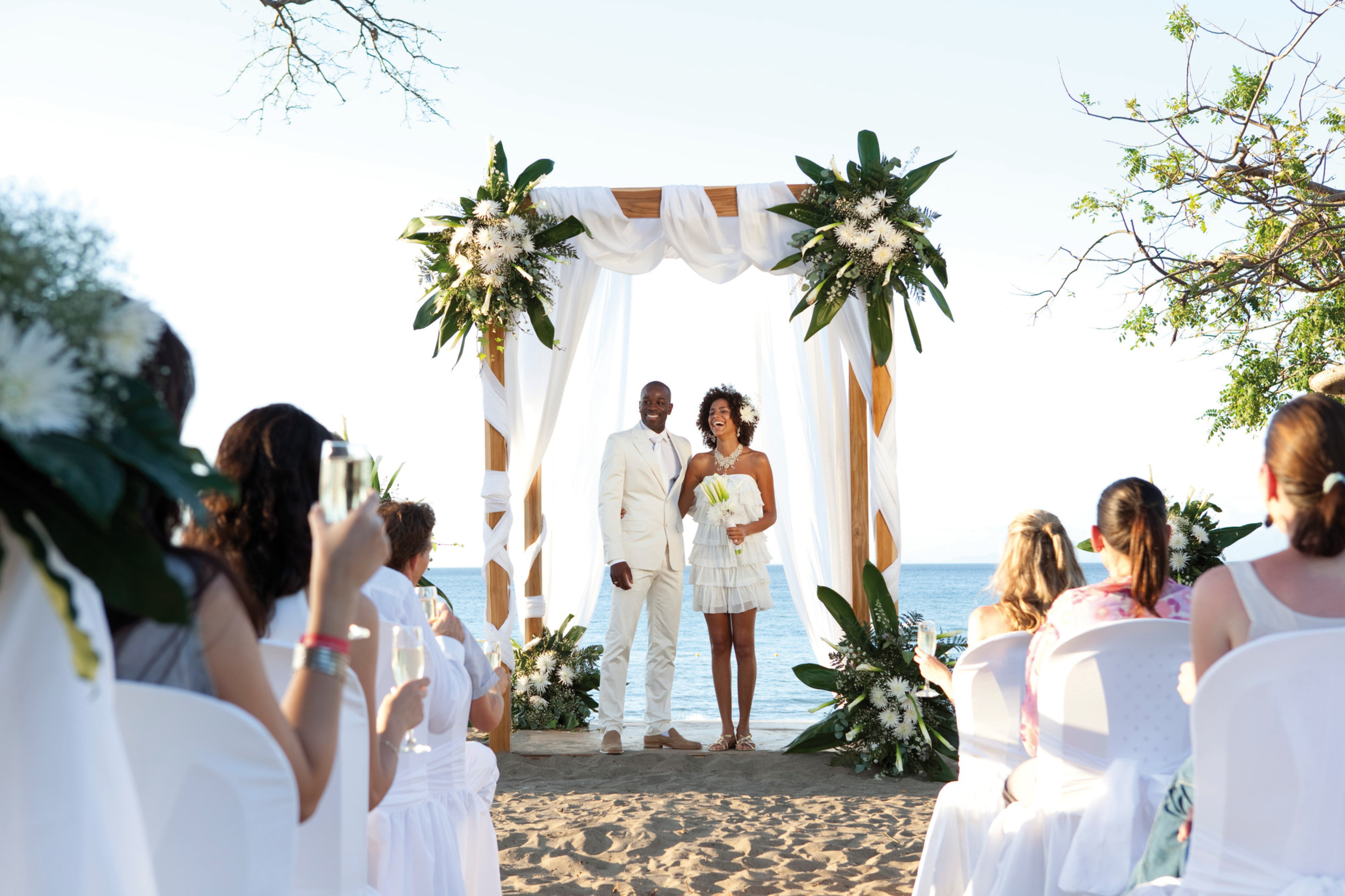
Costa Rica Wedding Trip at a Glance
| Details | |
|---|---|
| Best for | Couples wanting eco-luxury, rainforest-meets-beach scenery, wildlife encounters, and the most distinctive Central American wedding setting |
| Vibe | Pura vida, eco-conscious, adventure-leaning, with deep rainforest and Pacific-coast variety |
| Average wedding budget (couple) | $8,000 to $18,000+ all-in |
| Direct US flights | Liberia (LIR) for Guanacaste and the Papagayo Peninsula; San José (SJO) for inland and central Pacific resorts |
| Currency | Costa Rican colón (CRC); US dollars are widely accepted at resorts |
| Language | Spanish (English is widely spoken at resorts and tourist zones) |
| Best months | Mid-December through April (Pacific dry season) |
These averages reflect real spend data from couples who booked their Costa Rica destination wedding with our Certified Destination Wedding Specialists.
Where to Get Married in Costa Rica
Costa Rica’s wedding scene spans across three distinct regions, each with its own personality and climate calendar.
Guanacaste and the Papagayo Peninsula (Northern Pacific Coast)
Costa Rica’s largest wedding hub by volume. The Papagayo Peninsula’s luxury anchors (Four Seasons, Andaz, Secrets Papagayo, Planet Hollywood by Royalton), the surfing-and-yoga energy of Tamarindo, and the quieter boutique scene around Nosara all sit on the dry, sunny northern Pacific. Guanacaste’s tropical dry forest climate means less rain than the rest of the Pacific, even in the green season.
Best for resort-style weddings with reliable weather and the country’s most polished wedding-coordination infrastructure.
Manuel Antonio and the Central Pacific Coast
Lush rainforest meeting white-sand beach, with Manuel Antonio National Park as the resort district’s backdrop. Sloths visible from resort balconies, dramatic Pacific sunsets, and a more rainforest-y feel than Guanacaste. The boutique Si Como No resort and the cliff-top Arenas del Mar anchor the lineup.
Best for couples wanting the rainforest-meets-Pacific aesthetic and deeper wildlife encounters built into the wedding week.
Arenal Volcano (Inland)
The country’s most active volcano, with hot-springs resorts at its base (Tabacón Thermal Resort, Nayara Springs, The Springs Resort). Cooler year-round temperatures (60s and 70s), with rainforest weather, meaning rain is possible in most months.
Best as a pre- or post-wedding adventure extension rather than a primary ceremony location, though smaller weddings at hot-springs venues happen.
The Caribbean Coast (Limon Province)
Costa Rica’s quieter, more Afro-Caribbean coast. Limon, Cahuita, and Puerto Viejo offer black-sand beaches, reggae-soaked culture, and a wedding-week vibe unlike anywhere else in the country. Runs on an opposite-ish weather calendar from the Pacific: driest in September and October, wettest November through January.
Best for adventurous couples wanting something completely off the typical Costa Rica wedding path.
Top Experiences for Your Wedding Week
Cultural and Historic Sites
San José’s Pre-Columbian Gold Museum and the National Theater anchor the country’s cultural depth. The town of Sarchi is the traditional Costa Rican oxcart-painting capital, with artisan workshops. Coffee plantation tours (Doka Estate, Hacienda Alsacia at Starbucks’s farm) offer the country’s quietest cultural experience. The colonial town of Heredia (near San José) hosts a working farmers’ market that’s worth a half-day visit for foodie couples.
Beaches and the Pacific
Playa Conchal in Guanacaste is the country’s most famous beach, with crushed-shell sand that glows white under the Pacific sun. Tamarindo Beach is the surf town’s wide, swimmable beachfront. Manuel Antonio Beach combines a rainforest backdrop with calm Pacific water. Playa Hermosa, Playa Flamingo, and Playa del Coco round out Guanacaste’s best beaches. The Caribbean coast’s Playa Cocles and Punta Uva (in the Puerto Viejo area) offer black-and-gold sand alternatives.
Adventure and Wildlife
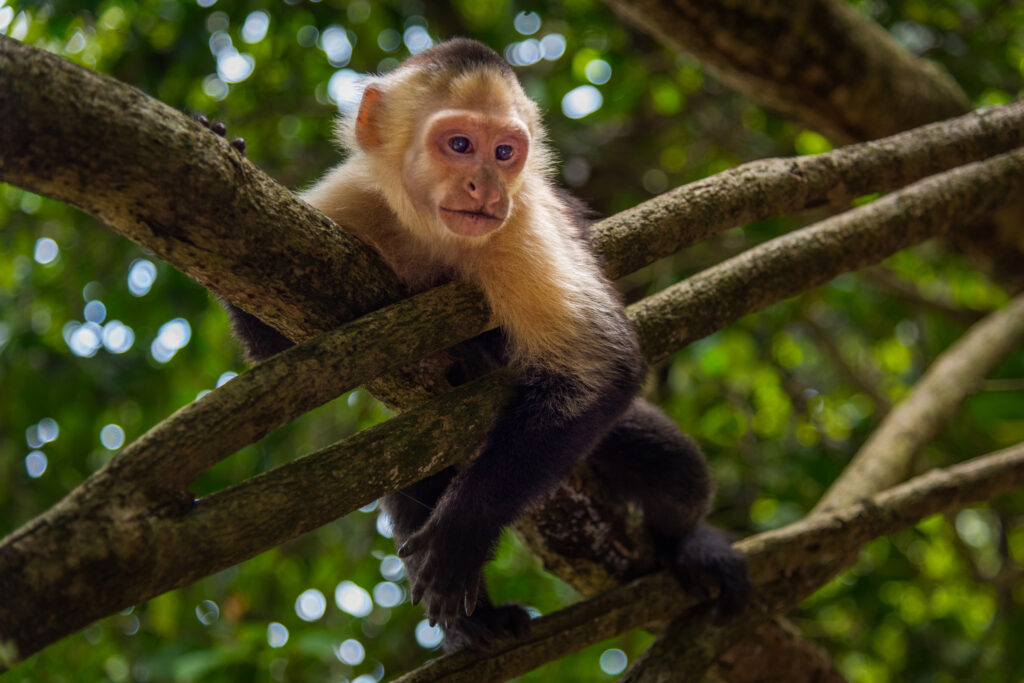
Costa Rica is one of the world’s premier biodiversity destinations, home to about 5% of the world’s species despite being smaller than West Virginia. Sloths and toucans are at Manuel Antonio National Park year-round. Humpback whales off the Pacific coast (North Pacific season December through March, South Pacific season July through October). Sea turtle nesting at Ostional (August through December) and Tortuguero (July through October). Active Arenal Volcano viewing with hot springs soaks. White-water rafting on the Pacuare and Sarapiqui rivers. Zip-lining at Monteverde and Arenal. Quetzal viewing in the cloud forests (December through April).
Nightlife and Local Culture
Costa Rica’s nightlife runs quieter and more low-key than the Caribbean. Tamarindo’s surf-town bars (El Vaquero, Sharky’s, Crazy Monkey) anchor the most active scene. San José’s Barrio Escalante neighborhood holds the country’s deepest craft-beer and chef-driven dining scene. Pura vida culture skews early-to-bed and early-to-rise; most resort entertainment ends by 10 or 11 p.m.

Costa Rica Food and Drink Highlights
Costa Rican cuisine is simpler and more vegetable-forward than typical Latin American cooking, with rice, beans, and plantains anchoring most meals. A few things to plan around:
- Gallo pinto: the national breakfast dish of rice, black beans, cilantro, and onion. Best at a casual local soda (the Costa Rican equivalent of a diner) rather than the resort buffet.
- Casado: the lunch staple of rice, beans, plantains, salad, and a protein (chicken, beef, fish, or pork). Most authentic at a soda; resort buffet versions tend to be Americanized.
- Ceviche: typically made with corvina (white sea bass) or shrimp, lime, cilantro, and onion. Most coastal restaurants serve a solid version.
- Costa Rican coffee: one of the world’s premier coffee origins, particularly from the Tarrazú and Central Valley regions. Doka Estate and Hacienda Alsacia (Starbucks’s farm) offer worthwhile coffee tours. Welcome bags with Costa Rican coffee beans are popular.
- Imperial and Pilsen beer: the country’s two main domestic lagers, both light and crisp.
- Tropical fruits: mango, papaya, pineapple, guava, and the local cas (a tart fruit used for juice) all show up in resort breakfast spreads. The Friday morning farmers’ market in Heredia is a deeper experience.
Wedding-Week Excursion Ideas
Manuel Antonio National Park Wildlife Tour
A half-day guided wildlife tour through Manuel Antonio National Park, with sloths, toucans, monkeys, and beach time built in. The country’s most-visited national park and a strong fit for any wedding party based on the central Pacific coast.
Arenal Volcano and Hot Springs
A full-day excursion from Guanacaste or the central Pacific to Arenal Volcano (one of the country’s most active volcanoes until 2010 and still the most visually dramatic). Cap the day with a soak in the volcanic hot springs at Tabacón or Baldi. Worth a 1-night extension if you have time.
Monteverde Cloud Forest
A guided tour through the Monteverde Cloud Forest Biological Reserve, with zip-lining, hanging-bridge walks, and quetzal sightings (December through April). The country’s most distinctive ecosystem experience.
White-Water Rafting
A half-day or full-day rafting trip on the Pacuare River (Class III and IV), the Sarapiqui (Class II and III), or the Tenorio for a calmer ride. Strong fit for adventurous wedding parties wanting an adrenaline-filled day.
Humpback Whale Watching
From the Pacific coast, half-day catamaran charters deliver close encounters with humpback whales. The North Pacific season runs from December through March (from Guanacaste); the South Pacific season runs from July through October (from Manuel Antonio south). Costa Rica is one of the few wedding destinations in the world offering two distinct whale seasons.
Coffee Plantation Tour
A half-day visit to a working coffee plantation (Doka Estate near San José, Hacienda Alsacia at Starbucks’s farm) with bean-to-cup tasting, harvesting demonstrations, and plantation walks. Strong fit for foodie wedding parties and a quieter alternative to adrenaline activities.
Sea Turtle Nesting (Ostional or Tortuguero)
In season (August through December at Ostional, July through October at Tortuguero), guided night beach walks bring you within feet of nesting olive ridley or green sea turtles. One of the country’s most distinctive wildlife experiences and a rare opportunity worldwide.
Surf Lesson in Tamarindo
A group surf lesson at Tamarindo, one of the world’s most beginner-friendly surf breaks. Most wedding parties book a 2-hour group lesson with multiple instructors for the wedding party. Strong fit for active couples and groups.
Sample 5-Day Wedding-Week Itinerary
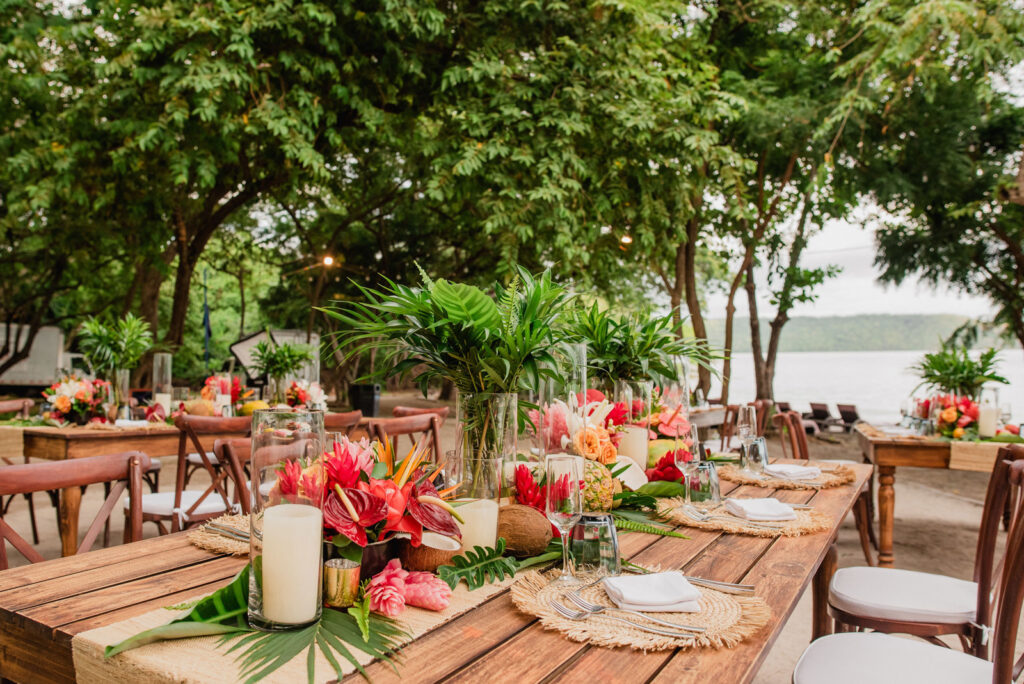
This sample assumes a Guanacaste or Papagayo Peninsula base for a Friday wedding.
Day 1 (Wednesday): Arrival
- Morning: guests arrive throughout the day at LIR; resort transfers handle the 30 to 45-minute drive
- Afternoon: welcome bags handed out at the resort with Costa Rican coffee samples
- Evening: welcome dinner at the resort with a Costa Rican folkloric performance
Day 2 (Thursday): Excursion Day
- Morning: humpback whale-watching catamaran (December through March) or wildlife sanctuary tour
- Afternoon: beach time, pool, or spa
- Evening: rehearsal dinner with the wedding party (resort dining or a casual soda in town)
Day 3 (Friday): Wedding Day
- Morning: spa, hair, and makeup
- Afternoon: ceremony 1 to 2 hours before sunset, beachfront or terrace
- Evening: cocktail hour, reception, dancing
Day 4 (Saturday): Recovery and Adventure
- Morning: breakfast in bed for the couple, late brunch for the group
- Afternoon: zip-lining, surf lesson at Tamarindo, or coffee plantation tour
- Evening: casual group dinner at a beach club or soda
Day 5 (Sunday): Brunch and Departure
- Morning: farewell brunch at the resort with gallo pinto and Costa Rican coffee
- Afternoon: departures throughout the day (or 1- to 2-night Arenal Volcano or Monteverde extension)
Plan Your Wedding-Week Trip to Costa Rica
When to Visit
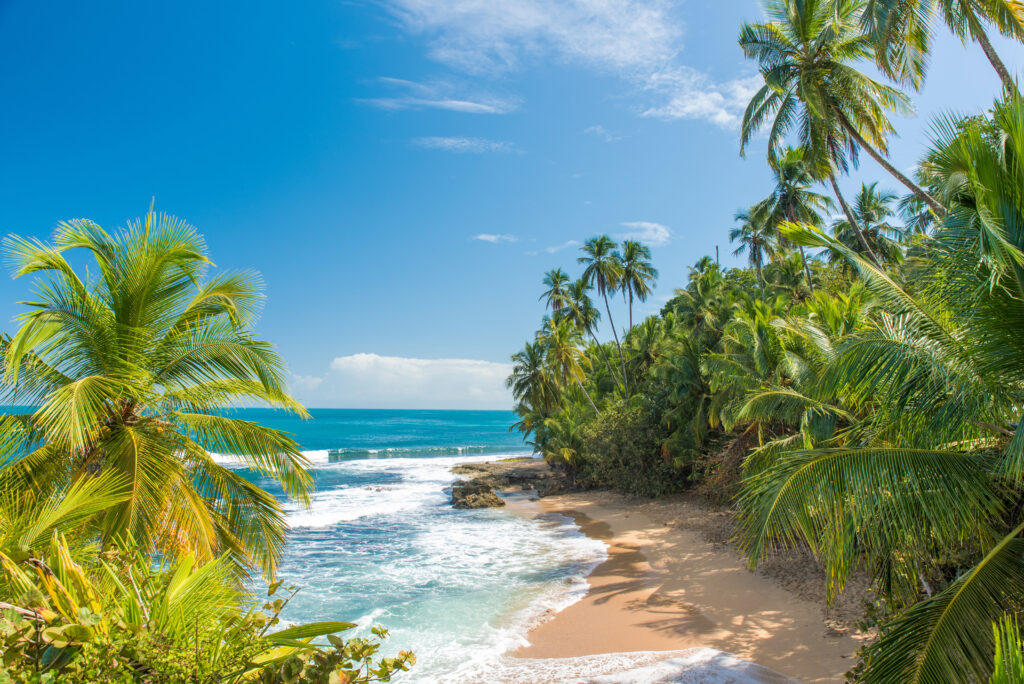
Mid-December through April delivers Costa Rica’s best wedding weather on the Pacific coast: dry, warm sunshine, and stable outdoor ceremony conditions. Late November is a strong shoulder pick. May through November is the “green season,” with daily afternoon rain showers, lush rainforest, and the lowest rates of the year. Costa Rica sits south of the major hurricane belts, so direct hurricane impact is statistically rare. For the full month-by-month breakdown, see our Best Time to Get Married in Costa Rica guide.
Travel Logistics
Airports
Liberia (LIR) is the closest airport to Guanacaste and the Papagayo Peninsula (the country’s largest wedding hub), with growing direct US flight service. San José (SJO) is the broader international hub, with the most US flight options; resorts in the central Pacific (Manuel Antonio) require a 3-hour transfer south from SJO.
Currency
Costa Rican colón (CRC). US dollars are widely accepted at resorts and tourist zones; colón is more useful for off-resort spending and tipping. ATMs are easy to find at airports and tourist corridors.
Language
Spanish is the national language. English is widely spoken at resorts and major tourist zones, less so in smaller towns or off-resort.
Tipping
10% service charge is included by law in restaurant bills (you don’t need to add more, though 5 to 10% extra for excellent service is appreciated). $5 to $10 per day for housekeeping, $1 to $2 per bag for bellhops, 10 to 15% for guided tours.
Getting Around
Airport transfers through the resort. Within Costa Rica, rental cars are the most flexible option (highways are well-paved, and driving is on the right). Uber operates in San José but less reliably elsewhere; private drivers can be arranged for full-day excursions to Arenal or Monteverde. Domestic flights between SJO, LIR, and smaller airstrips speed up multi-region itineraries.
Safety
Costa Rica is one of the safest Central American countries for tourists. Stick to well-traveled zones, use resort transfers or registered taxis, and don’t display valuables. The US State Department maintains current travel advisories worth checking before booking.
What Your Guests Need to Know
Copy this into your save-the-date or wedding website:
- Passport required, valid for at least 6 months past the travel date.
- No visa required for US, Canadian, and most European citizens for stays under 90 days.
- What to pack: lighter cotton and linen, swimsuits, a light layer for evening (cloud forest can be cool), sturdy walking shoes for wildlife tours, water shoes for waterfalls.
- Reef-safe sunscreen: required at most national parks and marine reserves.
- Mosquito repellent: useful for rainforest excursions, especially at dawn and dusk.
- Water: tap water is generally safe in resort areas (Costa Rica has some of the best municipal water in Latin America); bottled is still widely available.
- Cash and cards: bring some colón for off-resort spending and tipping; major credit cards work at most resorts and restaurants.
- Spanish basics: “gracias,” “por favor,” “pura vida” (the universal Costa Rican greeting and farewell).
- Travel insurance: recommended for any international destination.
Welcome Bag Ideas
Costa Rica-specific touches couples love:
- Costa Rican coffee beans (the country’s signature export, from Tarrazú or Central Valley)
- Local chocolate (Sibu, Britt, or a Caribbean-coast artisan brand)
- Mini bottle of guaro (Costa Rican sugarcane spirit) or Cacique
- Local hot sauce or Salsa Lizano (the iconic Costa Rican condiment)
- Reef-safe sunscreen, aloe, and mosquito repellent
- Reusable water bottle
- Printed wedding-week itinerary with wildlife and excursion recommendations
- Small wooden oxcart keepsake (the traditional Costa Rican artisan craft from Sarchi)
- “Pura vida” T-shirt or wristband

Costa Rica Wedding Trip FAQs
Which region of Costa Rica is best for a wedding?
For most couples, Guanacaste and the Papagayo Peninsula are the default for the deepest resort lineup, easiest direct flights at Liberia (LIR), and the most reliable dry-season weather. Manuel Antonio (central Pacific) suits couples wanting rainforest-meets-beach scenery and built-in wildlife encounters. Arenal Volcano and Monteverde are better as pre- or post-wedding adventure extensions than primary ceremony locations. The Caribbean coast suits adventurous couples wanting something completely off the typical Costa Rica wedding path.
What’s the legal marriage process in Costa Rica?
Costa Rica’s legal-wedding process is moderately complex: civil ceremonies are performed by a Notario Público (notary public, who has marriage-officiant authority here) and require apostilled birth certificates, single-status affidavits, certified Spanish translations, and passport copies. There’s no minimum residency requirement, which simplifies logistics. Same-sex civil marriage has been legal nationwide since 2020. Most couples still choose symbolic ceremonies at the resort and handle the legal piece at home.
Can same-sex couples legally marry in Costa Rica?
Yes. Costa Rica legalized same-sex civil marriage nationwide in May 2020, making it the first Central American country to do so. All major resort wedding programs welcome and host same-sex civil and symbolic ceremonies on equal terms.
How does Costa Rica compare to other Central American destinations for a wedding?
Costa Rica has the deepest tourism infrastructure, the most polished resort lineup, and the strongest English-speaking ease in Central America. It’s pricier than Mexican alternatives (Cancun, Punta Cana, etc.) but delivers a distinctly different experience: rainforest-meets-Pacific instead of Caribbean beach, wildlife encounters built into wedding weeks, and a pura vida cultural ethos that shapes the whole pace of the trip. For couples wanting eco-luxury polish and biodiversity-driven excursions, Costa Rica is unmatched in the region.
How much should we budget for a Costa Rica wedding trip?
The average cost of a Costa Rica destination wedding runs roughly $8,000 to $18,000 all-in for the couple, with the Papagayo Peninsula’s luxury anchors (Four Seasons, Andaz) pushing the higher end. Guests typically budget $2,000 to $4,000 per person for the full wedding trip (flights, all-inclusive room nights, excursions, and incidentals). Resort group discounts drop guest rates significantly when you book a room block.
Start Planning Your Costa Rica Wedding Today
Costa Rica delivers what no Caribbean destination quite matches: rainforest-meets-Pacific scenery, sloths and toucans in the canopy, dual humpback whale seasons, the world’s most polished tropical eco-luxury resort lineup, and the country’s signature pura vida cultural ethos shaping every interaction. For couples wanting a wedding that’s part adventure, part wellness retreat, and part biodiversity tour, this is one of the most distinctive picks in Latin America.
Fill out our online wedding planning form, and we’ll match you with a Certified Destination Wedding Specialist who knows the Costa Rica resort landscape inside and out. The service is free for the couple, and the heavy lifting is on us.

About the Author

Maggie Sabin
Maggie started as the SEO Manager at DestinationWeddings.com in 2024, where she works to drive organic traffic and conversions while creating meaningful, SEO-optimized content for the website. Previously, Maggie's career spanned from Human Resources & Recruitment to teaching at international schools for almost 10 years. Maggie spends her free time traveling, learning new languages, reading non-fiction books, working out, going to the beach and spending time cuddling her dog, Lola!