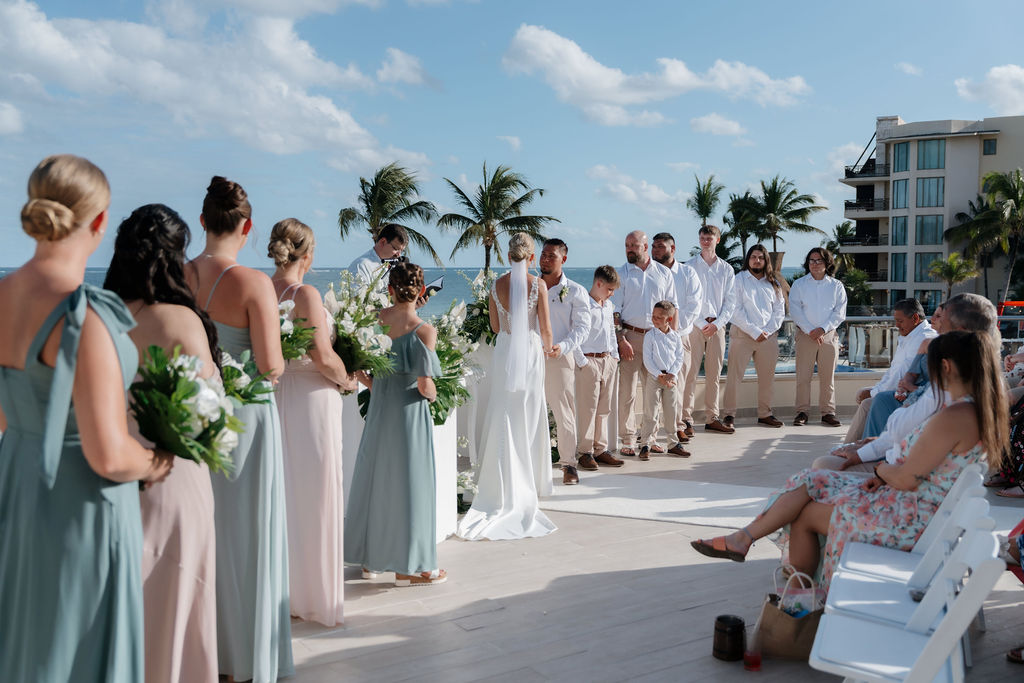

There’s a whole genre dedicated to DIY destination weddings. Sixty seconds of upbeat audio, a couple on a beach: “How I planned my destination wedding by myself for $4,000.” Text overlays counting off the steps. Thousands of comments saying this is the sign they needed.
It looks easy because it’s designed to. Social media is curated by definition, and nobody posts the montage of the eleven things that nearly went wrong. So before you decide whether a DIY destination wedding is possible, it’s worth separating what those videos are actually showing you from what they’re leaving out.
The short answer is that parts of planning a destination wedding solo are very doable, and one part in particular is where couples genuinely come unstuck.

Why It Looks So Easy Online
None of this is a criticism of the people making these videos. Most of them had a lovely destination wedding and are telling the truth about it. The format is what distorts things.
- You only see the ones that worked. Couples whose room block collapsed, whose vendor didn’t show, or who discovered an attrition clause three weeks out don’t make a triumphant recap video. The sample you’re looking at has been filtered down to the successes before you ever see it.
- The edit removes the work. Eight months of emails, time-zone lag, contract revisions, and follow-ups compress into a transition. What took half a year reads as an afternoon. That’s not deception; it’s just what editing does, but it means the effort is invisible by construction.
- A lot of them had help they didn’t mention. This is the big one. Every all-inclusive resort assigns an on-site wedding coordinator, and many of those couples also worked with a travel advisor or a planner. They weren’t hiding it. It simply wasn’t the story they were telling, and “I did this myself” is a cleaner narrative than “I did the decor myself and a coordinator did the rest.”
- Some of them are being paid. Creator partnerships with resorts are common, as are affiliate links and comped or discounted stays. A video praising how straightforward a property was to work with is sometimes a video that was commissioned.
- And the format rewards confidence. “Here’s how easy it was” outperforms “here’s what I’d do differently.” The algorithm isn’t neutral about which version of the story gets made.
What You Genuinely Can Do Yourself
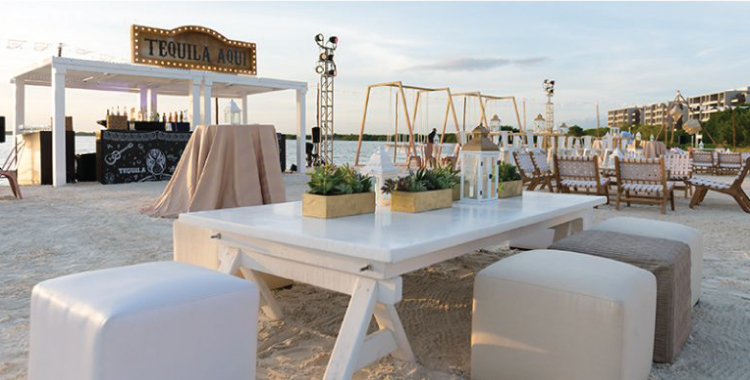
Now the useful part, because plenty of this is real and worth doing.
The rule of thumb is simple: if it packs flat, doesn’t need refrigeration or electricity, and isn’t regulated at a border, you can probably handle it yourself.
Paper goods are the easiest win. Table numbers, place cards, menus, and a flat seating chart all print on heavy cardstock at home and travel in a document folder between layers of clothing. Print spares. They weigh nothing and a bent corner is a real possibility.
Welcome bags work beautifully as long as you assemble them on arrival rather than at home. Pack the totes flat and the contents separately, then put them together in your room the night before. Buy anything heavy or liquid locally, including the water bottles, which is cheaper and saves your baggage allowance.
Small accents travel well. Cocktail picks, ribbon, a cake topper, small signs, favor tags, a guest book. These are the details that make a wedding feel like yours, and they’re genuinely low-risk to handle alone.
Everything that isn’t an object. Your vows, the playlist, the speeches, the wedding website, the schedule you send guests. This is the most underrated DIY category and the one that actually shapes how the day feels.
What Doesn’t Survive the Trip
Some things aren’t a matter of effort. They’re a matter of physics, customs law, or health regulation, and no amount of planning gets around them.
Fresh flowers are the one thing couples try hardest to work around. Most countries restrict bringing plant material across the border, and even where it’s permitted, cut flowers won’t survive a day of travel and a humid climate. Buy locally and ask what’s in season, which costs less and looks better.
Food and cake are governed by local health rules and by your resort’s own catering terms. The kitchen handles this, and that isn’t negotiable at almost any all-inclusive.
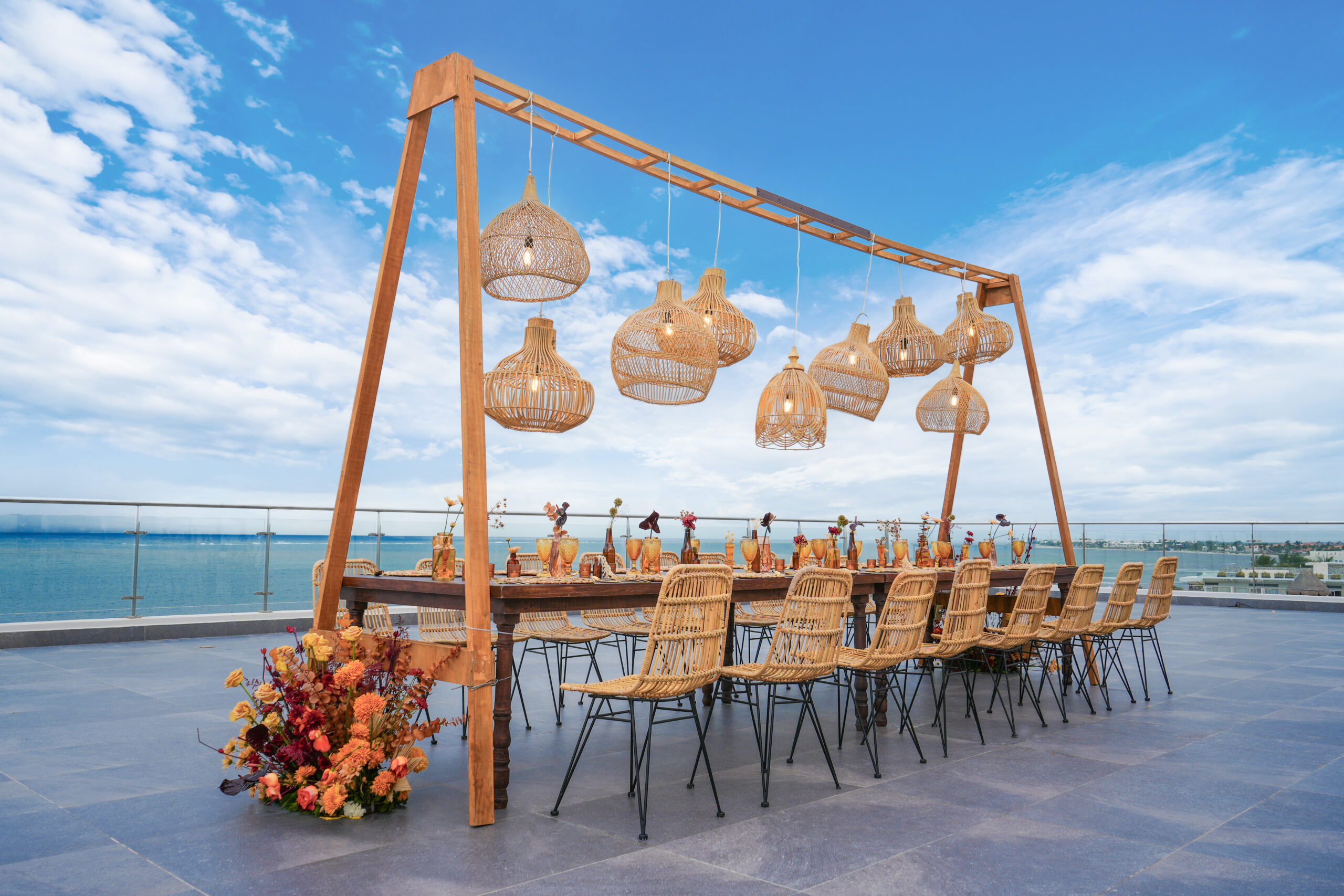
Anything large or heavy. Arches, framed signage, glassware, lanterns. Once you’ve paid oversize baggage both ways, you’ve usually spent more than renting locally would have cost, and you’ve risked it arriving broken.
Open flame and sound equipment. Many wedding resorts and most public beaches restrict candles, and audio gear runs into voltage, plugs, and the fact that resorts generally require their own AV for outdoor events anyway.

The Part That Actually Breaks
Here’s what the videos don’t cover, because it doesn’t film well: it isn’t the crafting that goes wrong. It’s the contracts.

Group rates aren’t published anywhere. You can’t ask for a discount you don’t know exists, and resorts don’t volunteer it. A couple booking directly sees the public rate. That’s it.
Concessions are tied to room-night thresholds. Complimentary rooms, a private function, upgrades, a credit toward the wedding package. These come from hitting counts most couples have never been told about, and they’re worth far more than anything you’ll save making your own place cards.
Room block contracts have teeth. Attrition clauses, release dates, deposit schedules, cut-off dates that fall earlier than guests expect. These documents are written for the trade, not for consumers, and the clause that catches people is usually the one about rooms you held and didn’t fill.
Guests booking individually costs everyone money. When each person books on their own, there’s no group contract, no locked rate, and no protection against price rises or a sold-out property. Your guests pay more, and you lose every concession a block would have earned.
And there’s nobody to call. Something will shift, because something always does. A resort changes a venue, a flight cancels, a vendor goes quiet. Handling that from home across a time zone, in a second language, with no leverage and no relationship, is the part couples describe as genuinely awful.
The Thing People Don’t Realize Is Free
DIY normally means trading your time to save money. You do it yourself, you keep the difference. That’s the whole logic.
With a destination wedding, that trade doesn’t exist. Many planning services, like DestinationWeddings.com, are 100% free. There’s no fee, no retainer, and no percentage, and working with a Certified Destination Wedding Specialist doesn’t raise what you pay for your room.
So planning it alone saves you nothing. You spend the hours, absorb the contract risk, and forgo the group rates, and at the end of it you’ve paid the same or more than you would have with help. It’s the one situation where doing it yourself is strictly worse than not.
That’s not an argument against DIY generally. Make your own place cards. Write your own vows. Just don’t negotiate your own room block contract when someone will do it for free and get you a better rate than you’d have been quoted.
When Planning It Yourself Genuinely Works

There is a version where going it alone is perfectly sensible, and it’s worth being straight about it.
If it’s just the two of you, or a handful of people at most, booking a standard elopement package at an all-inclusive is about as complicated as booking a holiday. No room block, nothing to negotiate, no concessions in play because you’re under every threshold anyway. The resort’s coordinator handles the ceremony. You turn up.
The line is roughly where a group contract starts to make sense, which is usually around ten rooms. Below that, book the package and enjoy yourself. Above it, you’re leaving real money on the table and taking on paperwork written by people who do this professionally.
The couples who struggle are almost always the ones in the middle: thirty guests, a real budget, and a plan they built from short-form videos made by couples who had more help than they mentioned.

DIY Destination Wedding FAQs
Can you plan a destination wedding without a planner?
For an elopement or a very small group booking a standard resort package, yes, comfortably. Once a room block is involved, roughly ten rooms or more, you take on contracts with attrition clauses and release dates, and you lose access to group rates and concessions that aren’t published anywhere.
Is it cheaper to plan a destination wedding yourself?
Usually not. Our planning services are 100% free, so there’s nothing to save by going without them. Planning alone means paying public room rates instead of negotiated group rates and missing concessions tied to room-night counts, so it often costs more.
What can you DIY for a destination wedding?
Anything that packs flat and isn’t regulated: paper goods, place cards, seating charts, small signs, favors, and welcome bag contents assembled on arrival. Vows, playlists, speeches and your wedding website are entirely yours too. Fresh flowers, catering, large decor, and sound equipment aren’t practical to bring.
Why do destination weddings look so easy to plan on social media?
Because you only see the ones that went well, the editing removes months of work, and many of those couples had a resort coordinator or travel advisor they didn’t mention. Some creators also have paid partnerships with the resorts they feature. The content is curated, not representative.
Do the Fun Parts Yourself and Call on Us for the Rest!
Make the place cards. Pack the ribbon. Write vows nobody else could have written. Those are the parts that make a wedding feel like it belongs to you, and they’re genuinely worth the effort.
Then hand over the contracts, the rates, and the three-in-the-morning problem-solving to someone who does it every day and costs you nothing. Fill out our online wedding planning form and one of our Certified Destination Wedding Specialists will show you exactly what your room block should be earning you!

About the Author

Maggie Sabin
Maggie started as the SEO Manager at DestinationWeddings.com in 2024, where she works to drive organic traffic and conversions while creating meaningful, SEO-optimized content for the website. Previously, Maggie's career spanned from Human Resources & Recruitment to teaching at international schools for almost 10 years. Maggie spends her free time traveling, learning new languages, reading non-fiction books, working out, going to the beach and spending time cuddling her dog, Lola!