
Here’s the thing almost nobody says out loud about adults-only weddings abroad: they save you money, and they cost your guests more.
A couple with two small children who are invited to bring them pay for four flights and a family room. The same couple told the wedding is adults-only pay for two flights, a room, and five days of childcare at home. The second version is frequently the more expensive one, which is why “no kids” produces more declines at a destination wedding than it ever does at a wedding down the road.
That doesn’t make adults-only the wrong answer. It’s the right answer for plenty of couples, and there are good reasons for it. But it’s a decision with a real cost attached, and it’s worth making it knowingly rather than because it sounded simpler.
Here are both sides, the middle paths most couples don’t realize exist, and how to tell people.
The Case for Inviting Kids
The strongest argument isn’t sentimental; it’s arithmetical: the parents of young children are usually your siblings and your closest friends. They’re the people at the very top of the list, the ones whose absence would actually change the day.
Exclude the children, and you often exclude them too, because the alternative you’re offering is a week of childcare they may not be able to arrange or afford. That’s a very different trade-off from asking a colleague to come alone.
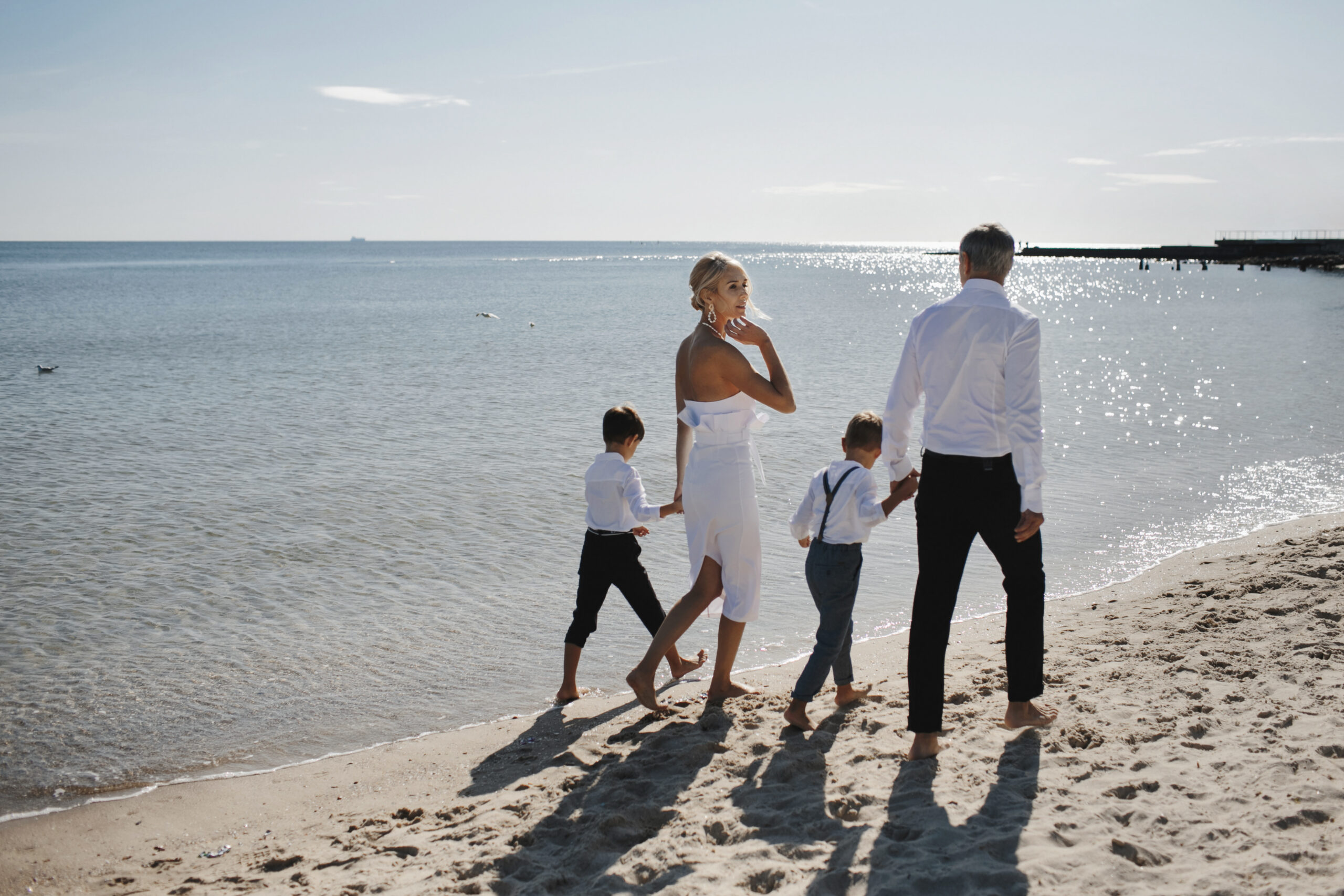
There’s also the fact that an all-inclusive resort is genuinely well suited to this. Most family-friendly properties run supervised kids’ clubs, shallow pools and organized activities, which means children are occupied for large parts of the day without their parents having to do anything. A wedding abroad is one of the few formats where bringing children is easier than it would be at home, rather than harder.
And a destination wedding is a vacation for everybody attending. For families, those few days together are often the trip they’d never otherwise have taken.
The Case for Adults-Only
Equally real, and worth stating properly rather than apologetically.
The evening runs differently. Dinner starts later, the speeches aren’t competing with anyone’s bedtime, and the dancing goes on past ten without half the room leaving. If what you’re picturing is a long, loud, late night, children change that whether anybody intends it or not.
It gives the parents a break, and plenty of them will thank you for it. A child-free trip is a rare thing once you have small children, and some of your guests will treat it as the best gift of the whole wedding.
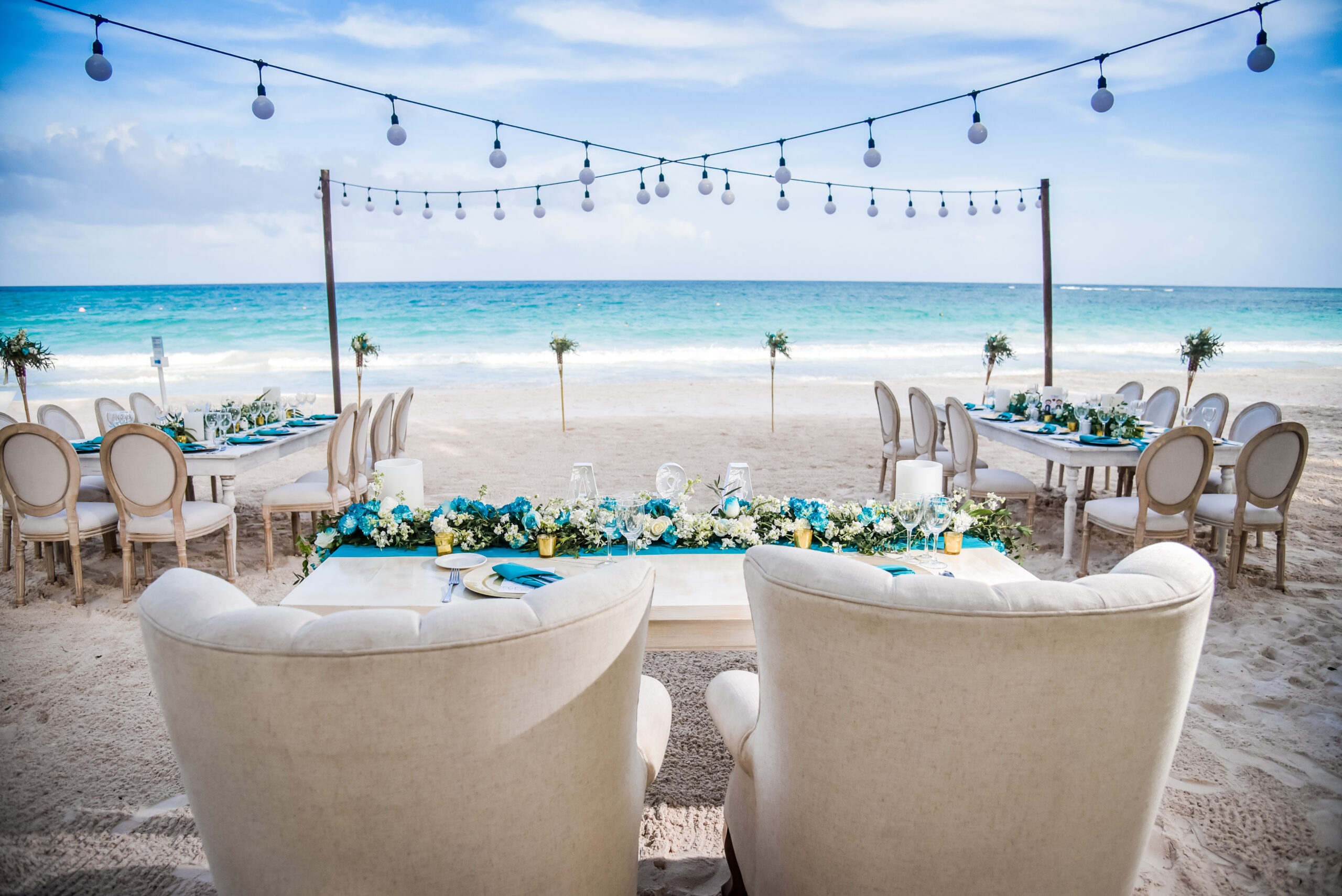
It lowers your headcount, which lowers your cost and opens up venues with hard capacity limits. And some of the most striking resorts and ceremony settings in the Caribbean and Mexico are adults-only properties, so if one of those is where you want to marry, the decision is partly made already.

The Math Parents Are Actually Doing
This is the part that decides most of the yeses and noes, and couples rarely see it.
If the children are invited, a family of four is looking at four flights and usually one larger room rather than two. Children often cost less than adults on the room rate and sometimes stay free depending on age, and at many resorts they’re charged at a reduced rate within the wedding package too. It’s more than a couple traveling alone, but not double.
If the children aren’t invited, that family pays for two flights and a room, and then five days of childcare on top. Depending on where they live and who’s available, that can be the larger number. It also requires someone willing and able to take the children for the better part of a week, which for a lot of families simply doesn’t exist.
So when you set an adults-only rule, understand what you’re actually asking. For a guest without children, it costs nothing. For a guest with two under five, it may be the single biggest reason they decline, and they probably won’t tell you that’s why. If several of your closest people are in that category, it’s worth running the numbers before you commit.
The Resort Decides More Than You Think
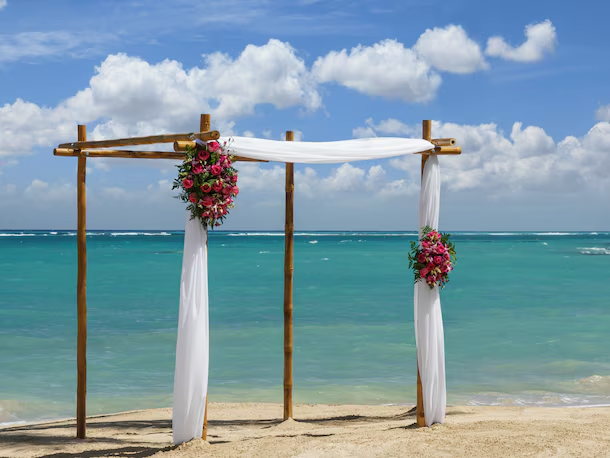
Couples usually treat this as an etiquette decision and then pick a resort. It works better the other way round, because the property can make the decision for you or dissolve it entirely.
Book an adults-only resort and the question is closed. Nobody is bringing a four-year-old, there’s no rule to explain, and no exception to field, and the awkwardness disappears because it isn’t your policy; it’s the building’s. Some couples choose an adults-only property specifically for that reason.
Book a family-friendly resort and the opposite happens. Kids clubs, shallow pools, and children’s menus make it easy, and the parents on your guest list get a genuine holiday rather than five days of managing.
The option most couples don’t know about is the third one. Several resort complexes run an adults-only property and a family property side by side, sharing grounds and often sharing wedding venues. Guests who want quiet stay on one side, families stay on the other, and everybody attends the same ceremony.
If your guest list genuinely splits down the middle, this solves it better than any rule you could write. Our Certified Destination Wedding Specialists can tell you which complexes are set up that way in each destination.
The Middle Paths

It isn’t a binary, and the in-between versions are where most couples land once they’ve thought about it.
Kids at everything except the reception. Children come to the ceremony and the welcome party, then go off with a sitter while the adults eat and dance. You get the photographs with everybody in them and the evening you wanted.
Kids at the daytime events only. A welcome party on the beach and a farewell brunch are easy with children present. The wedding day itself is adults-only. Families still get the trip, and you still get the night.
A supervised room during the reception. Many wedding resorts will arrange babysitting or a staffed kids’ area for the evening, sometimes included and sometimes at a modest cost. Ask early, because it needs booking and the ratios are limited.
Immediate family children only. Nieces, nephews, and the children of siblings, nobody else. This is a category rather than a judgment, which is what makes it survivable. It’s also the version most likely to attract a challenge, so be ready to hold it.
A word on the flower girl and ring bearer. Making an exception for two children at an otherwise adults-only wedding is extremely common, and it does cause friction, because every other parent can see it. If you’re doing it, say so plainly when you announce the rule rather than letting people discover it on the day.
How to Tell People
The mechanics matter more here than with any other guest list decision, because parents need lead time that other guests don’t.
Say it on the save-the-date, not the invitation. Childcare for a week has to be arranged months ahead, and a parent who finds out at the invitation stage has often already made plans on the wrong assumption. This is the single most common mistake we see, and it converts yeses into noes.
Put it on the wedding website as a plain statement of policy, so it reads as a decision about the wedding rather than about anyone’s children. Then address each invitation to exactly the people invited, with names rather than “and family”.
When somebody pushes, and somebody will, state the rule once, express real warmth, and don’t negotiate. The moment you make one individual exception, the rule stops working, because every other parent now has a case and a precedent. The wider framework for holding a line like this is in our guide to cutting a destination wedding guest list.
And if a family declines because of it, accept that gracefully. They’ve done the math we went through above and reached an answer. Making them feel bad about it helps nobody.

Kids at a Destination Wedding FAQs
Should you invite kids to a destination wedding?
It depends on who’s on your list. If several of your closest people have young children, inviting them protects your attendance, because the alternative asks those families to fund a week of childcare on top of the trip. If your list is mostly couples without children, adults-only wedding costs you very little.
Is an adults-only destination wedding cheaper?
Cheaper for you, because your headcount falls. Often more expensive for the parents you’ve invited, who pay for travel and childcare at the same time. That split is the reason adults-only produces more declines abroad than at home.
How do you tell guests a destination wedding is adults-only?
On the save-the-date, not the invitation, and on your wedding website as a plain policy. Parents need months to arrange childcare, so finding out late is what turns an acceptance into a decline.
Can you have an adults-only reception but include kids at the ceremony?
Yes, and it’s one of the most popular arrangements. Children attend the ceremony and the daytime events, then a sitter or a supervised kids’ room covers the evening so the reception stays adult.
What do children do during a destination wedding?
At family-friendly resorts, most of the day looks after itself through kids clubs, pools and organized activities. For the wedding itself, many properties will arrange babysitting or a staffed room, which needs booking in advance because the ratios are limited.
Should you make an exception for a flower girl or ring bearer?
Plenty of couples do, and it’s accepted as long as it’s announced rather than discovered. Say it at the same time you announce the adults-only rule, so no parent finds out on the day that two children were there after all.
Get Ready to Plan Your Destination Wedding
There’s no universally correct answer here, only the one that fits the people you want standing there. Decide it early, say it early, and pick a resort that makes the decision easy rather than one that fights it.
Fill out our online wedding planning form, and one of our Certified Destination Wedding Specialists will find the property that suits the guest list you’ve actually got!

About the Author

Maggie Sabin
Maggie has always loved traveling and discovering new places and cultures. Before joining DestinationWeddings.com as SEO Manager in 2024, she spent nearly a decade teaching at international schools across Europe and Asia, from the UK and Spain to Taiwan. Today, she creates and manages all of the blog's content, making sure couples can easily find the answers and inspiration they need to plan their destination wedding with confidence. When she's not working, you'll find Maggie learning a new language, curled up with a good book, working out, or soaking up the sun at the beach. She's happiest at home snuggling with her dogs, Lola and Minnie.