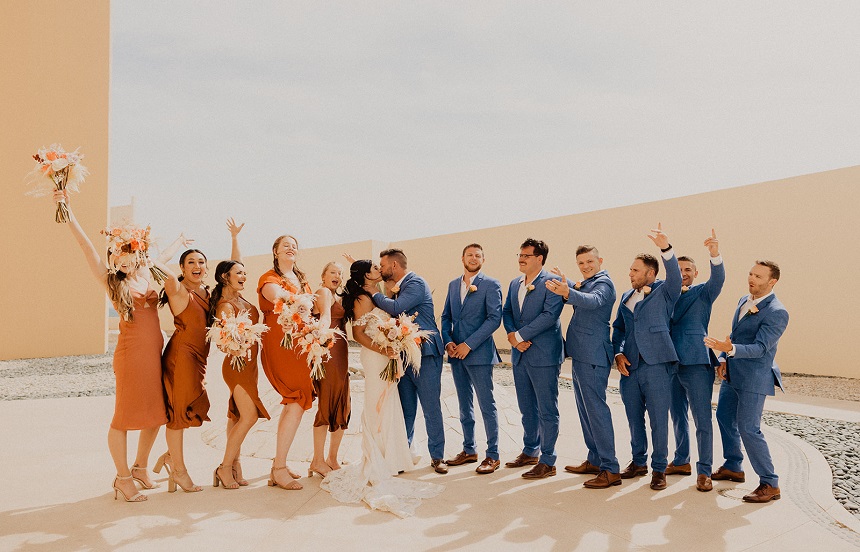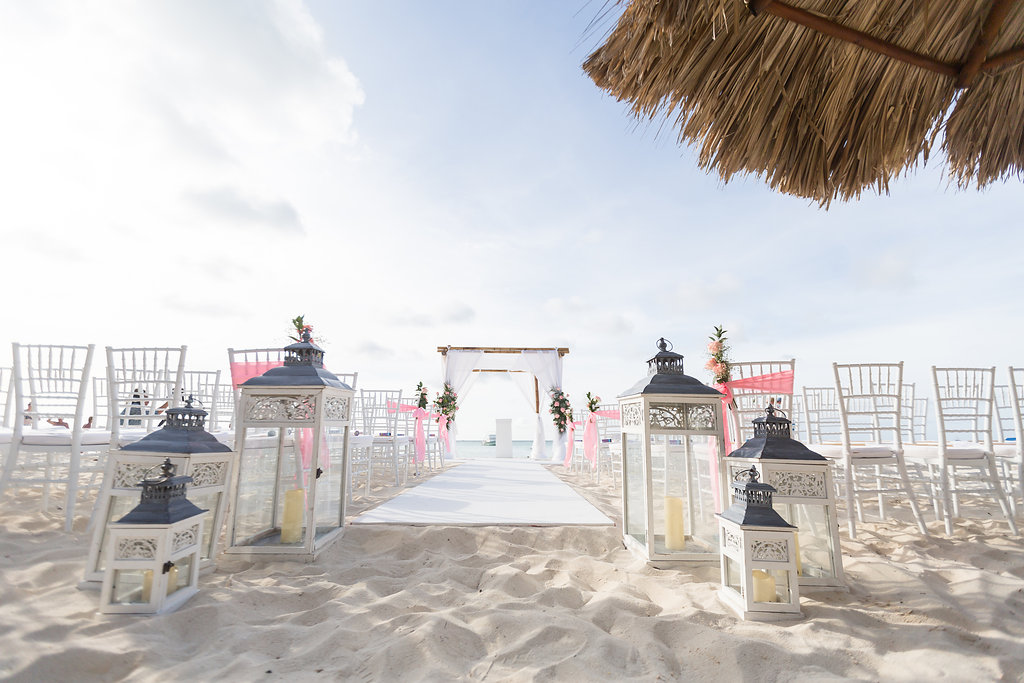


A destination wedding has one obvious environmental problem and a lot of small, fixable ones. The obvious problem is that everybody flies. The fixable ones are the paper, the plastic, the imported flowers and the favors that go straight into a bin at the airport.
Worth saying plainly: a wedding abroad also replaces dozens of separate car journeys, a rented venue, a marquee and a catering operation built from nothing for one evening. It isn’t automatically the worse option. It’s just a different set of trade-offs, and most of them are genuinely within your control.
Here’s where the effort actually counts.

1. Deal With the Flights First
Everything else on this list is a rounding error next to air travel. If you only do one thing, do this one.
Most airlines now offer carbon offsetting at the point of booking, and a growing number of independent programs let you offset a whole group in one go. Some couples cover offsets for every guest as a line in the wedding budget, which costs far less than most people assume and is a meaningful gesture to make in the invitation.
You can also reduce the footprint before offsetting it. Direct flights burn considerably less fuel than connecting ones, because takeoff is the expensive part, so choosing a destination with direct service from where most of your guests live does real work. So does encouraging people to stay longer. One flight for a seven-night trip is better value, environmentally and otherwise, than one flight for three nights.
And a smaller guest list is the most effective lever of all, which is worth remembering if you were already leaning that way.
2. Choose a Resort That’s Actually Doing the Work
Plenty of resorts describe themselves as eco-friendly. Fewer have been independently assessed on it, and that distinction is now easy to check.
Ask whether a property holds a recognized sustainability certification. Several international schemes audit hotels on energy, water, waste and local sourcing, and a certified property has had to show its work rather than write a paragraph about caring. Ask what happens to food waste, whether the resort still uses single-use plastics in the rooms and at the bars, and where the kitchen buys from. The answers tell you a great deal very quickly.
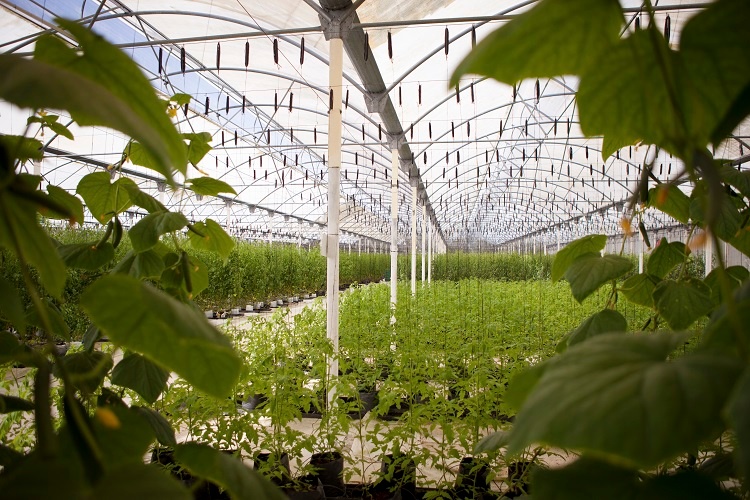
Some properties build it into the experience rather than the policy document. El Dorado Royale in Mexico’s Riviera Maya grows produce on site in a greenhouse of around 100,000 square feet, which supplies the kitchens directly. Food that travels a few hundred feet to your reception is about as local as sourcing gets.

Elsewhere on the same coast, Sandos Caracol Nature Resort & Water Park is built around an existing natural ecosystem rather than cleared land, with mangroves, wildlife and cenotes running through the property. Couples can hold the ceremony at a cenote, which is a genuinely unusual setting and one that only works because the landscape was left largely intact.
3. Go Local With Food and Flowers
Catering and florals are two of the larger lines in any wedding budget, and they’re also where imported goods quietly stack up. Flowers flown in from another continent for a single evening are the clearest example.

Ask your coordinator what’s in season locally that month and build the palette from there. Tropical blooms grown nearby cost a fraction of imported peonies, look more at home against the setting, and hold up far better in heat and humidity, which is a practical argument as much as an environmental one.
Do the same with the menu. Resort chefs are usually glad to be asked, and a menu built around local fish, fruit and produce tends to be the one guests remember. Give the kitchen accurate final numbers too, because guaranteed counts are the single biggest factor in how much food gets thrown away.
Afterward, ask what happens to the flowers. Many resorts will rehome arrangements to the lobby, restaurants, or local organizations rather than bin them, but it generally has to be requested in advance.
4. Lose the Paper, Including on the Day
Digital save-the-dates were novel a few years ago and are now simply how it’s done, especially for a destination wedding where details shift and a printed card goes out of date the moment a flight changes.

A wedding website does the heavy lifting: schedule, room block, airport guidance, passport reminders, dress code. Our complimentary wedding website includes designs for personalized digital save-the-dates at no cost.
The newer shift is on the day itself. QR codes have quietly replaced printed programs, menus and seating charts at a lot of weddings, with one printed sign at the entrance pointing to everything. It cuts the single largest pile of same-day paper, and nobody misses the program they folded into their pocket and threw away that night.
If you do want something printed, make it the invitation. One beautiful piece people keep beats a full suite nobody does.
5. Rent, Resell or Re-Wear the Attire
This is where the most has changed. A few years ago, buying a sustainably made gown was more or less the whole conversation. Now rental and resale are mainstream for wedding and guest attire alike, and both are more straightforward than they used to be.

Buying pre-owned is the lowest-impact option and often a fraction of retail, with plenty of gowns worn once and professionally cleaned. Renting suits the wedding party particularly well, since nobody needs to own a linen suit they’ll wear once in a climate they don’t live in. And a lighter, simpler dress chosen for a beach ceremony is frequently a dress you’d genuinely wear again, which is the most sustainable outcome of all.
When it’s over, resell or donate. Several organizations accept wedding dresses for charitable resale, and specialist marketplaces handle the rest. Check that whoever you’re giving it to is still operating and still taking donations before you post anything.
6. Rethink Favors and Welcome Bags
Welcome bags are a lovely gesture and a reliable source of landfill. Sunglasses, koozies and branded trinkets largely end up in a hotel bin on checkout day, and plenty of guests leave them behind rather than use luggage space.
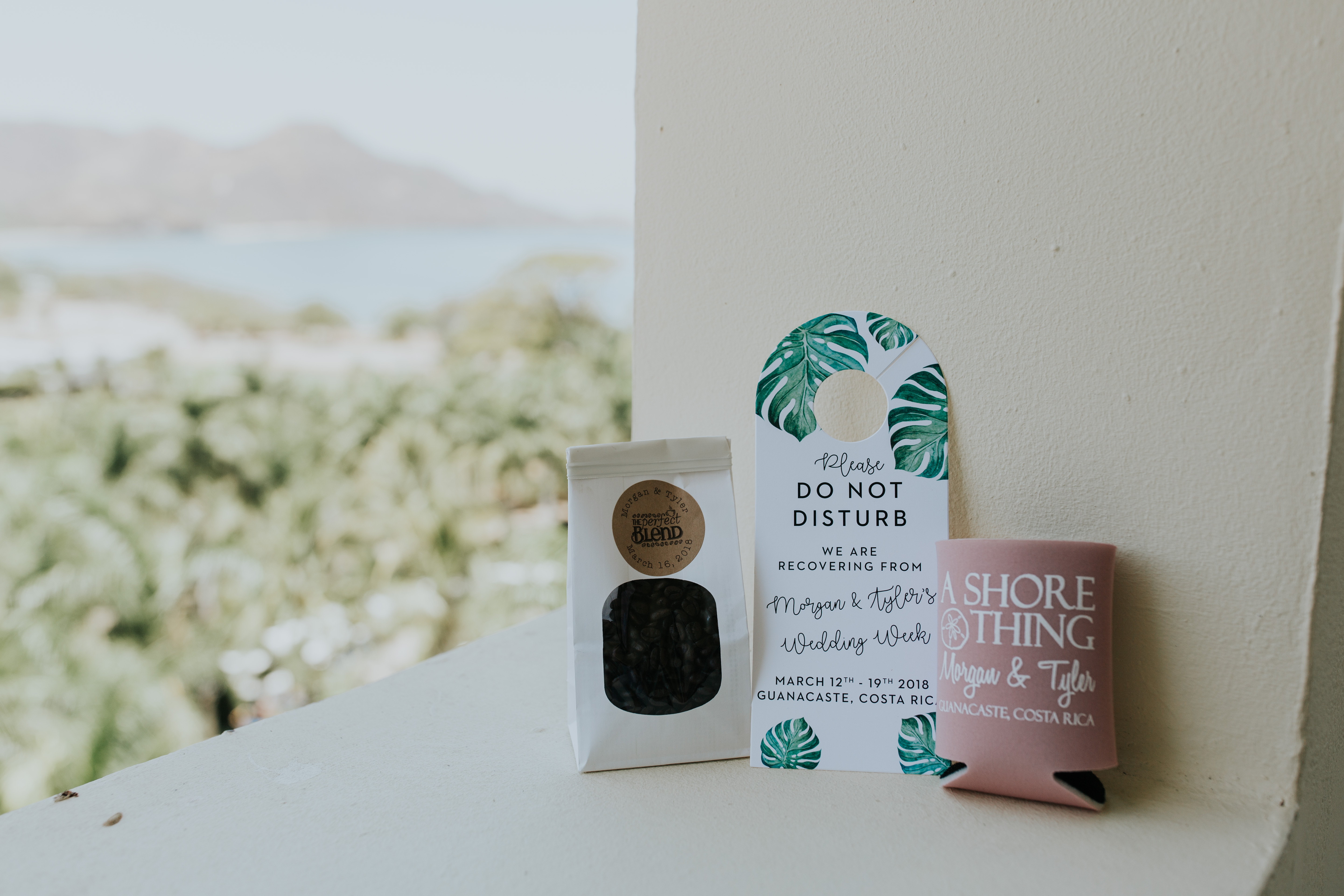
There’s a practical reason to rethink the contents too. A number of Caribbean and Latin American destinations have introduced restrictions on single-use plastics in recent years, covering things like bags, straws and polystyrene. The rules differ by country and change, so ask your resort what applies where you’re marrying before ordering anything in bulk.
The things guests actually keep are the useful ones. A good reusable water bottle, something edible and local, or a reusable tote that replaces a plastic one all earn their place. Seed paper and plantable favors are a nice idea, though it’s worth checking whether guests can legally take seeds home with them. Fewer, better items beat a full bag every time.
7. Protect the Water You’re Marrying Beside
This one barely came up a few years ago and now matters a great deal. Common sunscreen chemicals, particularly oxybenzone and octinoxate, damage coral, and a number of destinations with reefs have restricted or banned sunscreens containing them. Cenotes and eco-parks in Mexico often require biodegradable sunscreen as a condition of entry.
For a wedding party spending four days in and out of the sea, that’s a real amount of sunscreen going into the water. Putting reef-safe sunscreen in the welcome bag is the single most useful thing you can hand a guest, and it quietly solves the problem for everyone at once.
Rules vary by destination and do change, so check what applies where you’re going. If your group is snorkeling or visiting a cenote, the excursion operator will usually tell you what’s permitted, and it’s easier to sort before you travel than at the gate.

Where to Put Your Effort
If the list feels long, it isn’t meant to be done all at once. Offsetting the flights and choosing a certified resort between them account for most of the impact you can actually influence. The paper, the favors and the flowers are worth doing and are genuinely easier, but they’re smaller.
The reef-safe sunscreen is the one with the best effort-to-benefit ratio on the whole list. It costs almost nothing, takes one conversation, and protects the exact stretch of water you chose to get married beside.
Eco-Friendly Destination Wedding FAQs
Is a destination wedding bad for the environment?
The flights are the main cost, and they’re significant. But a destination wedding also removes a rented venue, a marquee, a catering build-out and dozens of separate car journeys, and guest lists tend to be much smaller. Offsetting flights and choosing a certified resort addresses most of what’s within your control.
What is reef-safe sunscreen and do you need it?
It’s sunscreen without chemicals known to harm coral, most commonly oxybenzone and octinoxate. Several destinations with reefs restrict or ban the alternatives, and many cenotes and eco-parks require biodegradable sunscreen for entry. Rules vary and change, so check what applies where you’re going.
How do you make wedding favors more sustainable?
Choose things guests will use on the trip rather than carry home: reef-safe sunscreen, a reusable bottle, or something edible and local. Several Caribbean and Latin American destinations now restrict single-use plastics, so check the rules before ordering in bulk. Fewer, better items work better than a full bag.
How can you tell if a resort is genuinely eco-friendly?
Ask whether it holds an independent sustainability certification, since those involve an audit rather than a marketing claim. Then ask three specific questions: what happens to food waste, whether single-use plastics are still used in rooms and bars, and where the kitchen sources from. Vague answers tell you as much as detailed ones.
A Wedding That Leaves the Place As You Found It
You picked somewhere beautiful because it’s beautiful. Offsetting the flights, asking a few direct questions of the resort and handing every guest the right sunscreen covers most of what matters, and none of it makes the day feel like a compromise.
Fill out our online wedding planning form and one of our Certified Destination Wedding Specialists will help you find a resort that takes this as seriously as you do!

About the Author

Maggie Sabin
Maggie started as the SEO Manager at DestinationWeddings.com in 2024, where she works to drive organic traffic and conversions while creating meaningful, SEO-optimized content for the website. Previously, Maggie's career spanned from Human Resources & Recruitment to teaching at international schools for almost 10 years. Maggie spends her free time traveling, learning new languages, reading non-fiction books, working out, going to the beach and spending time cuddling her dog, Lola!