
Getting legally married in the Dominican Republic is more paperwork-intensive than most destination wedding couples expect, but the process is entirely manageable when you know exactly what’s required. Documents need apostille certification. Everything needs Spanish translation. You need to be in-country several business days before the ceremony. And a local civil officiant has to perform the legally binding portion.
The alternative is what many couples ultimately choose: complete the legal paperwork at home, then host a symbolic ceremony at your Dominican Republic resort. Both paths are valid, and your Certified Destination Wedding Specialist can help you decide which one fits your timeline and priorities.
Below, everything you need to know about legally getting married in the Dominican Republic, from required documents to arrival windows to the symbolic-ceremony alternative.
Legal Marriage in the Dominican Republic: Overview
The Dominican Republic recognizes civil marriages performed by a local civil officiant or judge. To be legally married in-country, you’ll need to gather specific documents at home, have them apostilled and translated into Spanish, submit them to your resort’s wedding coordinator or a local Dominican wedding agency 30 to 60 days before your ceremony, and arrive at least 3 business days before your wedding date to finalize the registry steps.
There is no residency requirement beyond the 3-business-day arrival window, and no blood tests are required. But the document requirements are strict: everything must be original or certified, everything foreign must carry an apostille stamp, and everything must be officially translated into Spanish.
Required Legal Documents
Every document below must be gathered before you travel, and foreign-issued documents must be apostilled and translated. Start this process 3 to 6 months before your wedding date.
- Valid passports: Original booklets for both partners, plus two witnesses. Witnesses cannot be family members.
- Birth certificates: Original or certified long-form copies for both individuals. Standard short-form birth certificates are not accepted.
- Single status affidavits: Notarized sworn declarations confirming eligibility to marry.
- Divorce or death certificates: Required if either partner was previously married. Original decree absolute for divorce, or original death certificate.
- Apostille certification: All foreign documents (birth certificates, single status affidavits, divorce or death decrees) must carry an official apostille stamp issued by your home country’s authorized authority.
- Spanish translation: All apostilled documents must be translated into Spanish by an official certified translator recognized by Dominican authorities.
Timeline and Arrival Requirements

Dominican Republic wedding paperwork has a specific timeline, and skipping steps or arriving late can push your legal ceremony to symbolic status.
- 3 to 6 months before travel: Begin gathering and apostilling all required documents. This is the most time-consuming portion of the process and shouldn’t be rushed.
- 30 to 60 days before the wedding: Submit completed, apostilled, and translated paperwork to your resort’s on-site wedding coordinator or your local Dominican wedding agency for pre-registration with local authorities.
- 3 business days before the ceremony: Arrive in the Dominican Republic to finalize registry steps with local civil authorities. Business days do not include weekends or Dominican public holidays.
- Post-wedding: Obtain your official Dominican marriage certificate and have it legalized through the Dominican Ministry of Foreign Affairs so it’s recognized in your home country. Your resort coordinator or agency typically handles this step.
Ceremony Rules and Officiant Requirements
The legally binding portion of your ceremony must be performed by a Dominican civil officiant or civil judge. Most Dominican wedding resorts have established relationships with local civil officiants who visit the property for ceremonies, which streamlines coordination significantly.
The couple must be accompanied by two witnesses who are 18 or older, are not family members, and hold valid identification. If you’re traveling without designated witnesses, your resort or wedding agency can typically arrange local witnesses for you.
Ceremonies can be performed indoors or outdoors depending on your resort’s setup, and the civil officiant portion typically takes 15 to 20 minutes. Personalized vows, readings, and cultural elements can be added around the legally required portion.

Legal Wedding Fees and Costs
Beyond your resort’s wedding package price, legal marriage in the Dominican Republic involves several government and administrative fees. Typical ranges (paid in USD or Dominican pesos):
| Fee | Typical Cost |
|---|---|
| Apostille certification (at home) | $20 to $50 per document |
| Certified Spanish translation | $50 to $100 per document |
| Civil officiant or judge fee | $300 to $600 |
| Marriage certificate legalization | $50 to $150 |
Many resort wedding packages include a legal-ceremony add-on that bundles most of these fees. Ask your resort or Certified Destination Wedding Specialist for an itemized breakdown before you commit.
The Alternative: Legal at Home Plus Symbolic Ceremony in the Dominican Republic
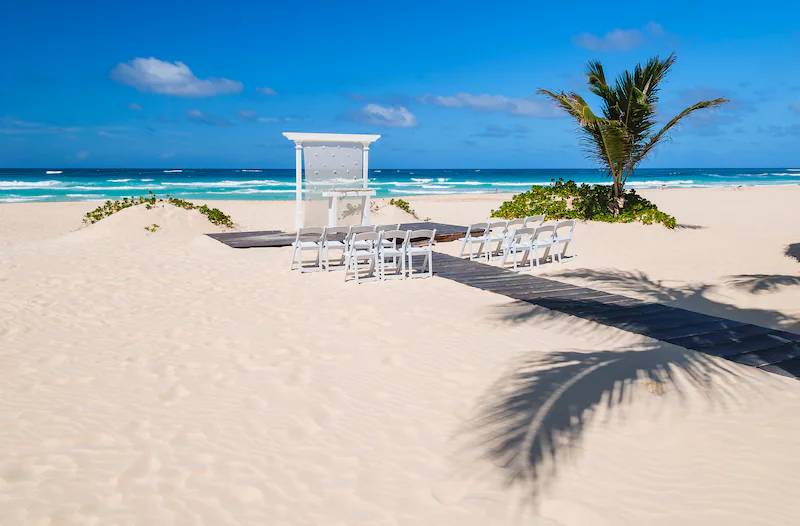
Because the paperwork burden is real, many couples opt to complete the legal portion of their marriage at home (a civil courthouse ceremony, or a quiet legal signing) before traveling to the Dominican Republic for a symbolic ceremony at their resort.
A symbolic ceremony has no paperwork, no arrival window, no apostille requirements, and no Spanish translation. It looks and feels identical to a legal ceremony (same officiant reading, same vows, same setting, same photos), but doesn’t require any of the government-registered steps. Guests generally can’t tell the difference, and the couple gets the visual and emotional benefits of a destination ceremony without the administrative burden.
This approach is genuinely popular. Choose the legal ceremony in the Dominican Republic if the paperwork feels manageable and you want a fully binding ceremony at the wedding destination. Choose the symbolic option if you want a lighter timeline, more location flexibility, and less document management.
How Our Certified Destination Wedding Specialists Help
Dominican Republic legal wedding logistics work best when handled by someone who’s coordinated them before. Our Certified Destination Wedding Specialists support couples through every step:
- Matching you to a resort with an established legal-ceremony coordination process and strong civil officiant relationships
- Building a document-gathering timeline so apostille and translation steps happen in the right order
- Coordinating with the resort’s on-site wedding team on the 30 to 60 day submission window
- Advising on symbolic vs legal ceremony trade-offs based on your specific timeline and priorities
- Handling post-wedding marriage certificate legalization guidance so your marriage is recognized back home

Dominican Republic Legal Wedding FAQs
How long do we have to be in the Dominican Republic before we can legally marry?
At least 3 business days before your wedding date. Business days exclude weekends and Dominican public holidays. This arrival window is used to finalize registry steps with local civil authorities.
Do we need blood tests to marry in the Dominican Republic?
No. The Dominican Republic does not require blood tests for legal marriage, unlike some other Caribbean and Mexican destinations.
Will our Dominican marriage be recognized in the United States?
Yes, as long as you complete the post-wedding legalization step through the Dominican Ministry of Foreign Affairs. Your resort or wedding coordinator typically handles this, and your marriage certificate will be recognized in the U.S. and most other countries.
Should we do the legal ceremony at home or in the Dominican Republic?
Both are valid. Legal in the Dominican Republic gives you a fully binding ceremony at the destination and eliminates the need for any at-home paperwork. Legal at home plus symbolic at the destination eliminates the apostille and translation burden, gives you more flexibility on timing and location, and looks identical to guests. Your Certified Destination Wedding Specialist can help you weigh the trade-offs.
Start Planning Your Dominican Republic Destination Wedding
Whether you’re planning a fully legal ceremony in the Dominican Republic or a symbolic ceremony with legal paperwork at home, our Certified Destination Wedding Specialists can guide you through every step. From resort matchmaking to document coordination to civil officiant introductions, we’ve helped hundreds of couples navigate Dominican Republic wedding legalities without stress.
Fill out our online wedding planning form, and one of our DW Specialists will help you build a Dominican Republic destination wedding that’s both legally sound and unforgettable.

About the Author

Maggie Sabin
Maggie started as the SEO Manager at DestinationWeddings.com in 2024, where she works to drive organic traffic and conversions while creating meaningful, SEO-optimized content for the website. Previously, Maggie's career spanned from Human Resources & Recruitment to teaching at international schools for almost 10 years. Maggie spends her free time traveling, learning new languages, reading non-fiction books, working out, going to the beach and spending time cuddling her dog, Lola!