
A destination wedding lives or dies on guest communication. Unlike a hometown wedding where guests just show up on the day, your destination wedding requires guests to book flights, request time off, choose accommodations, and often plan family logistics months in advance. Miss the RSVP timeline, and you’ll end up with guests booking flights they can’t afford, guests who miss the resort room block, or worst of all, guests who back out entirely because they didn’t have enough notice.
The good news: destination wedding RSVP timelines follow a predictable pattern, and getting it right isn’t complicated once you know the framework. Our Certified Destination Wedding Specialists have watched hundreds of couples build guest communication timelines that actually work, and the successful ones consistently follow the same rhythm.
Below is the complete destination wedding RSVP and guest communication timeline, from the first save-the-date to the day-of logistics email.
The Complete Destination Wedding RSVP Timeline at a Glance
| Timeline | Communication | Goal |
|---|---|---|
| 12 to 18 months before | Save-the-date + wedding website launch | Give guests the earliest possible runway to plan |
| 9 to 12 months before | Formal invitation + room block booking link | Get guests booking rooms before flight pricing spikes |
| 6 months before | First reminder email + FAQ | Address common travel questions proactively |
| 3 to 4 months before | RSVP deadline + non-responder reminders | Lock in final guest count for resort billing |
| 1 to 2 months before | Detailed itinerary email | Give guests full schedule and logistics |
| 2 to 4 weeks before | Final reminder + welcome bag prep | Confirm details, address last-minute questions |
| Wedding week | Group chat + physical schedule | Real-time coordination on-property |
12 to 18 Months Before: Save-the-Dates and Wedding Website
Destination weddings need more lead time than hometown weddings. Guests need to save vacation days, budget for the trip, arrange childcare or eldercare, and coordinate travel logistics. Sending save-the-dates as soon as you’ve booked the resort (typically 12 to 18 months out) gives everyone the runway they need.
What Goes on the Save-the-Date
- Wedding date and destination (specific resort not required yet, but the city and country matter).
- Wedding website URL so guests can find more details.
- A note that formal invitations will follow.
Launch Your Wedding Website at the Same Time
Your wedding website is the single most important guest communication tool for a destination wedding. It should include the resort details, airport information (closest airport, typical flight duration from major cities), weather expectations for your wedding date, packing recommendations, room block details and booking links, ceremony and reception logistics, and any dress code notes.
Guests will visit this website dozens of times between the save-the-date and the wedding. Make it exhaustive.
9 to 12 Months Before: Room Block and Formal Invitations

Once save-the-dates are out, your Certified Destination Wedding Specialist can help you lock in the resort room block. Rooms sold before this point often didn’t come with your group rate, so getting the block established with a clear booking window is important.
Send Formal Invitations Around 9 Months Out
Formal invitations follow save-the-dates but come earlier than a hometown wedding. Nine to twelve months out gives guests enough runway to book flights before pricing spikes.
Include the room block booking deadline, group discount codes, resort-specific booking links, and a clear RSVP deadline (typically 3 to 4 months before the wedding).
Group Room Block Communication
Your Certified Destination Wedding Specialist typically manages the group room block. Guests book through the DW Specialist or directly with the resort using a group code, and you’ll get regular updates on how many rooms have been booked.
Communicate the room block booking deadline clearly in the invitation and on the wedding website. Room block rates typically expire 6 to 8 weeks before the wedding, and rooms booked after that point often revert to standard rates (which can be significantly higher during peak season).
6 to 9 Months Before: RSVP Reminders and Travel Details
Once formal invitations are out, guests need periodic nudges to book rooms and confirm attendance. This is also when travel-planning questions typically start rolling in.
Send a First Reminder Email
Around 6 months before the wedding, send a friendly email reminding guests about the room block booking deadline. Include the deadline date, the booking link, and a quick recap of what the room block covers (group rate, sometimes complimentary transfers or resort credits).
Address Common Travel Questions
Anticipate the questions guests will ask and address them proactively via the wedding website or a dedicated FAQ email. Passport requirements. Vaccination or health documentation needs (if any). Airport transfer options. Currency and tipping norms at the wedding destination. Weather during your wedding week. Packing recommendations.
3 to 4 Months Before: RSVP Deadline and Final Guest Count
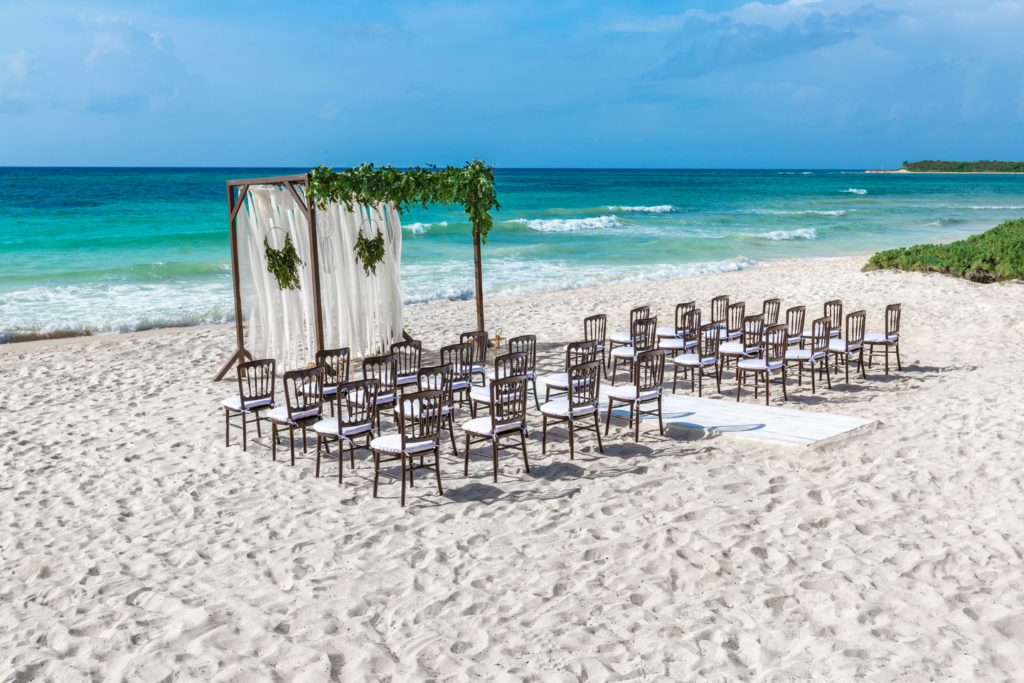
Destination weddings need RSVPs earlier than hometown weddings. Your resort needs a final guest count 6 to 8 weeks before the wedding for menu planning, seating arrangements, and per-person billing.
Set the RSVP Deadline 3 to 4 Months Out
Setting the RSVP deadline 3 to 4 months before the wedding gives you time to chase late responses, adjust the guest count with your resort, and finalize wedding-package inclusions based on real headcount.
Send Polite Reminders to Non-Responders
Two weeks before the RSVP deadline, send reminder emails to anyone who hasn’t responded. Direct outreach (a text or phone call from you or a member of the wedding party) works better than a mass email for guests who need a nudge.
Collect Additional Details in the RSVP
Your RSVP form should capture more than just yes/no attendance. Include fields for dietary restrictions and food allergies, additional events they’ll attend (welcome dinner, farewell brunch), travel details (arrival flight number and time, departure flight time), and any accessibility needs.

1 to 2 Months Before: Detailed Itinerary and Logistics
With RSVPs in and the guest count locked, send a detailed itinerary email covering the entire wedding weekend.
What Goes in the Itinerary Email
- Full schedule of events (welcome dinner, ceremony, reception, farewell brunch, any group excursions) with start and end times.
- Dress code for each event.
- Location of each event within the resort (specific ballroom, beach venue, restaurant name).
- Airport transfer details and pickup information.
- Contact information for the wedding coordinator and a backup contact.
- Suggested optional activities during downtime.
Confirm Final Room Block and Travel Details
Follow up individually with any guests whose room booking or travel plans are still incomplete. This is your last chance to catch problems before the resort’s final billing cutoff.
2 to 4 Weeks Before: Final Reminder and Welcome Bag Prep
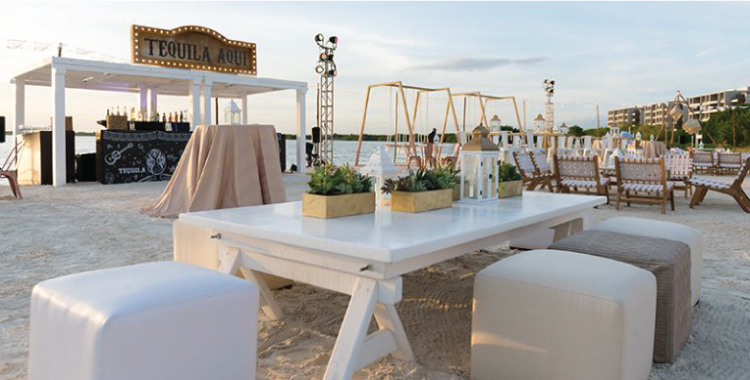
A final email 2 to 4 weeks out reinforces the schedule, addresses last-minute questions, and helps guests feel oriented before departure.
Final Reminder Email Content
- Confirmation of the full itinerary (as a reminder, in case guests haven’t read the earlier email in weeks).
- Weather forecast for the wedding week.
- Packing tips specific to your ceremony format (rain-plan clothing, beach-appropriate shoes, dress-up options for evening events).
- Currency, tipping, and any resort-specific tips (e.g., how the resort’s restaurant reservation system works).
- Contact info for the wedding coordinator plus your day-of-travel contact.
Welcome Bag Content Planning
Welcome bags aren’t required, but couples who put together thoughtful welcome bags consistently get feedback from guests that this was one of their favorite parts of the trip. Include: local snacks, a personalized itinerary card, a bottle of water, a small souvenir (a wedding hashtag koozie, a compass keychain, a mini bottle of sunscreen).
Wedding Week: Day-Of Logistics
Once guests arrive, communication shifts from email to real-time coordination. Most couples use a group text or WhatsApp thread with all guests to handle real-time updates.
Set Up a Group Chat
Add every adult guest to a WhatsApp or group SMS thread on Day 1 of the wedding week. Use it for last-minute updates (weather-triggered venue changes, shuttle pickups, restaurant meet-up plans). Assign a wedding party member to manage the thread so you don’t have to during the celebration.
Provide Written Schedules at Check-In
Even with digital communication, guests appreciate a physical printed schedule they can reference throughout the trip. Distribute in welcome bags or at the resort front desk on check-in day.

Destination Wedding RSVP FAQs
When should we send save-the-dates for a destination wedding?
12 to 18 months before the wedding date. This gives guests the runway to save vacation days, budget for the trip, and book flights before pricing spikes.
When should the RSVP deadline be for a destination wedding?
3 to 4 months before the wedding date. Your resort needs the final guest count 6 to 8 weeks before the wedding for menu planning, seating arrangements, and per-person billing. Setting the RSVP deadline 3 to 4 months out gives you time to chase late responses and adjust the guest count with your resort before the resort’s cutoff.
What if a guest RSVPs “yes” but then backs out?
This happens with destination weddings more than hometown weddings, since travel is a real cost commitment. Communicate flexibility upfront (guests can cancel before the room block booking deadline without financial penalty) and be understanding when it happens. Your Certified Destination Wedding Specialist can help you adjust the guest count with your resort.
Do we need a wedding website for a destination wedding?
Effectively yes. The wedding website is the central hub for guest logistics, travel information, and updates. Every destination wedding couple should have one, and the more detailed, the better. Guests will reference it dozens of times between the save-the-date and the wedding.
Start Planning Your Destination Wedding Today
A clear RSVP and guest communication timeline turns a stressful destination wedding into a smooth one. The right cadence keeps guests informed, prevents surprises, and gets everyone to the resort on time.
Fill out our online wedding planning form, and one of our Certified Destination Wedding Specialists will help you build your specific communication timeline and manage your group room block from day one.

About the Author

Maggie Sabin
Maggie started as the SEO Manager at DestinationWeddings.com in 2024, where she works to drive organic traffic and conversions while creating meaningful, SEO-optimized content for the website. Previously, Maggie's career spanned from Human Resources & Recruitment to teaching at international schools for almost 10 years. Maggie spends her free time traveling, learning new languages, reading non-fiction books, working out, going to the beach and spending time cuddling her dog, Lola!