
There’s a moment early in every engagement when someone asks when the wedding is, and you realize you’ve been staring at a calendar for twenty minutes without a single date meaning anything.
Marrying abroad adds a layer to this. A date at home is mostly about venue availability and who can come. A destination wedding date also has to survive a rainy season, a sargassum season, a hurricane season, a price spike, and a school calendar, all in a place you may have never visited.
The good news is that these constraints stack neatly, and once you lay them over each other, the calendar narrows fast. Our Certified Destination Wedding Specialists do this exercise daily, and it usually ends with two or three genuinely good windows rather than an open year.
Choose the Date Last, Not First
This is our strongest opinion on the subject, and it runs against how almost everyone does it.
A date picked before you know your budget, guest count, and destination becomes a constraint everything else has to bend around. Once it’s public, every later problem has to be solved by cutting people or finding more money, because the date is the one thing nobody wants to move.
Work in this order instead: agree the budget, agree roughly how many people, decide what kind of celebration it is, choose the destination that fits all three, and then pick the date. By that point, most of the work is already done, because the wedding destination has ruled out half the year for you.
The Five Things That Should Decide It
In rough order of how much they should influence you.
| Factor | What to check | How much it should weigh |
|---|---|---|
| Weather and sea conditions | Rainy season, hurricane season, heat, seaweed | Heavily; it’s the one thing you can’t fix |
| Your key guests’ calendars | School terms, work cycles, family milestones | Heavily, for the ten people who matter most |
| Cost peaks | Holidays, spring break, peak season weeks | A lot, because it decides who can afford to come |
| Resort and venue availability | Which dates your chosen venue still has open | Moderately, and more on peak weekends |
| Legal requirements | Residency waiting periods and paperwork lead times | Only if you’re marrying legally on site |
Sentimental dates come below all five. An anniversary or a meaningful number is lovely, and it’s not worth a hurricane watch or a guest list nobody can afford.
Weather Is the Constraint You Can’t Negotiate
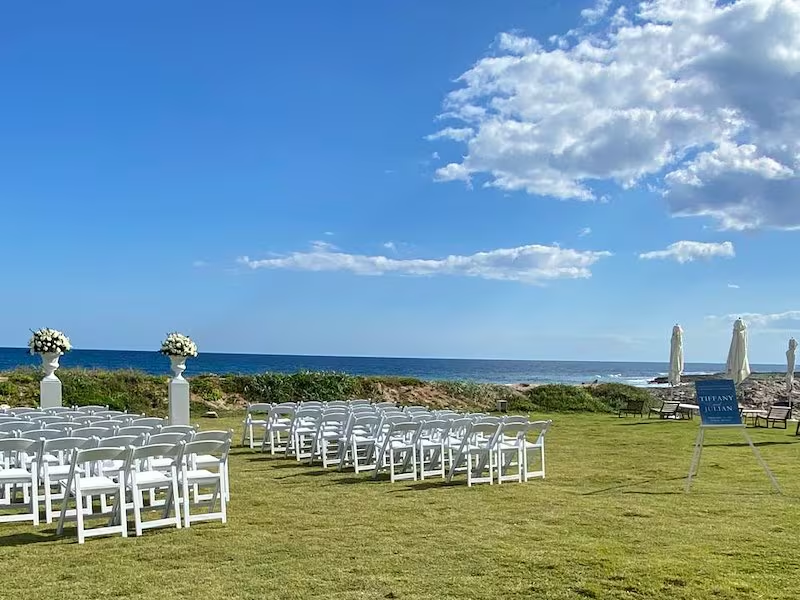
Everything else on that list has a workaround. This one doesn’t, so start here.
Hurricane Season, and How Seriously to Take It
Atlantic hurricane season runs from June 1 to November 30, with the genuine peak concentrated in August, September, and early October. That covers Mexico’s Caribbean coast, the Caribbean islands, and much of Central America.
This doesn’t put half the year off limits. Plenty of beautiful destination weddings happen in June and late November, and rates are noticeably softer. What it does mean is that a wedding in the peak weeks carries a real, if modest, chance of disruption, and you should plan accordingly with travel insurance for yourselves and your guests, and a clear indoor backup. Having a wet-weather plan is something our Certified Destination Wedding Specialists list as a straightforward must-do regardless of season.
If the idea of watching a storm track for two weeks would ruin the run-up for you, that’s a legitimate reason to avoid September entirely. Some couples genuinely don’t mind. Know which one you are.
Heat, and the Summer Beach Wedding Problem
Our Certified Destination Wedding Specialists are unusually blunt about this one: don’t book a summer beach wedding. Their reasoning is that it’s simply too hot for a ceremony and reception on sand in July and August, and that couples consistently underestimate what that feels like in formal clothes.
If summer is your only option, the fix isn’t to abandon the beach. It’s to move the time. Which brings us to the single most useful piece of scheduling advice in this article, and it applies year-round.
Take the Latest Ceremony Slot Available
Our Certified Destination Wedding Specialists list a midday ceremony as one of the most avoidable regrets they see. It’s hot, the resort is at its busiest, and the light is at its least flattering.
The latest available slot is better on every measure. The heat has dropped, the resort is winding down for the day, and other guests are heading back to their rooms, and the light in the hour before sunset is what everyone actually pictures when they imagine a beach wedding. Ask what the latest ceremony time is before you ask about anything else on the schedule.
Seaweed, Rain, and Regional Quirks
A few destination-specific things worth knowing, because they don’t follow the hurricane calendar.
- Sargassum affects Mexico’s Caribbean coast, so Cancun, Riviera Maya, and Tulum, typically from around April through August, with the heaviest arrivals in May to July. It varies enormously year to year and resorts clean their beaches daily, but it’s a genuine consideration if a pristine beach is the point.
- Costa Rica’s green season runs roughly May to November. Our Certified Destination Wedding Specialists flag this specifically, because couples fixate on July and August without realizing that’s the rainy half of the year. December to April is the dry season, and it’s a different experience entirely.
- Los Cabos sits on the Pacific and runs on a different calendar. It’s dry and mild from November to May, genuinely hot from July to September, and the Pacific storm season peaks in late summer.
- Jamaica is driest from December through April, with wetter spells in May and June and again from September to November.

A Month-by-Month View
For the Mexican Caribbean and the wider Caribbean, which is where most of our couples marry, here’s how the year generally breaks down.
| Window | Conditions | Cost | Verdict |
|---|---|---|---|
| January to February | Dry, warm, low humidity | High | Excellent weather, peak pricing |
| March to mid-April | Dry and warm, seaweed starting | Highest | Lovely, but spring break inflates everything |
| Late April to May | Warm, dry, before the rains | Moderate | Our most-recommended window |
| June to July | Hot and humid, short showers | Lower | Good value, take a late ceremony slot |
| August to September | Peak storm season, very hot | Lowest | Cheapest, highest risk |
| October | Storm season easing, warm | Low | Improving value, still some risk |
| November to early December | Dry, warm, calm seas | Moderate | The other standout window |
| Mid-December to early January | Beautiful | Highest of the year | Gorgeous, and expensive for everyone |
If you take one recommendation from the table, it’s the two shoulder windows: late April into May, and November into the first week of December. You get dry-season weather without peak-season pricing, and your guests feel the difference in their own booking costs.
Your Guests’ Calendar Matters More Than Yours
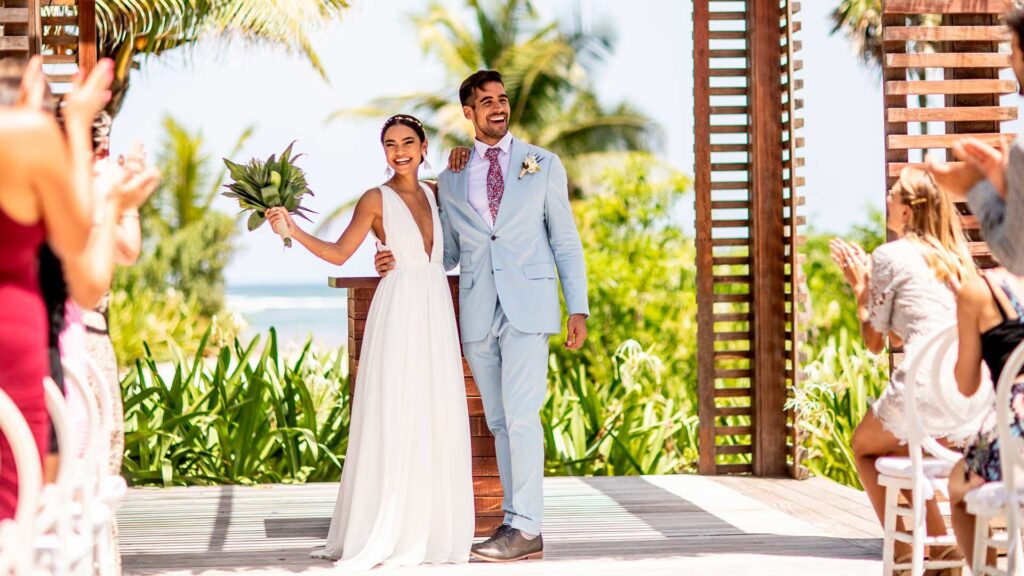
A destination wedding asks people for money and annual leave. The date determines how much of both.
The Day of the Week Is a Real Decision
This is the detail our Certified Destination Wedding Specialists say couples most often overlook. A Friday to Monday destination wedding costs guests far less paid time off than a Tuesday to Thursday one, and for anyone with limited annual leave that difference decides whether they come.
The trade-off is that weekday weddings are cheaper and more available. If your guest list is mostly people with flexible schedules, a Tuesday can be excellent value. If it’s mostly people with fixed jobs and children, the weekend is worth paying for.
Survey Your Ten Most Important Guests, Quietly
Before you commit, take your shortlist of two or three windows and check them informally against the people you’d genuinely mind not having there. Not a poll, just a quiet word with parents, siblings, and closest friends.
What you’re looking for are hard conflicts: a sibling’s own wedding, a busy season at work that can’t be moved, exam periods, a fixed family commitment. Ten quiet conversations before anything is booked prevents the version of this where you discover the clash after the deposit.
Do keep it contained, though. Our Certified Destination Wedding Specialists have a phrase worth remembering here: take outside opinions with a grain of salt. You’re checking for genuine obstacles, not inviting the wider family to vote on a season.
School Terms and Big Holidays
If a meaningful number of your guests have school-age children, the date is mostly chosen for you. Term dates are non-negotiable and holiday weeks are the expensive ones, which is an awkward pair of constraints.
The weeks to avoid unless you have a specific reason: Christmas and New Year, spring break through March, Easter, and the major long weekends. Flights and rooms spike, resorts are full, and some properties restrict private events during their busiest periods.
The Paperwork Can Affect Your Date
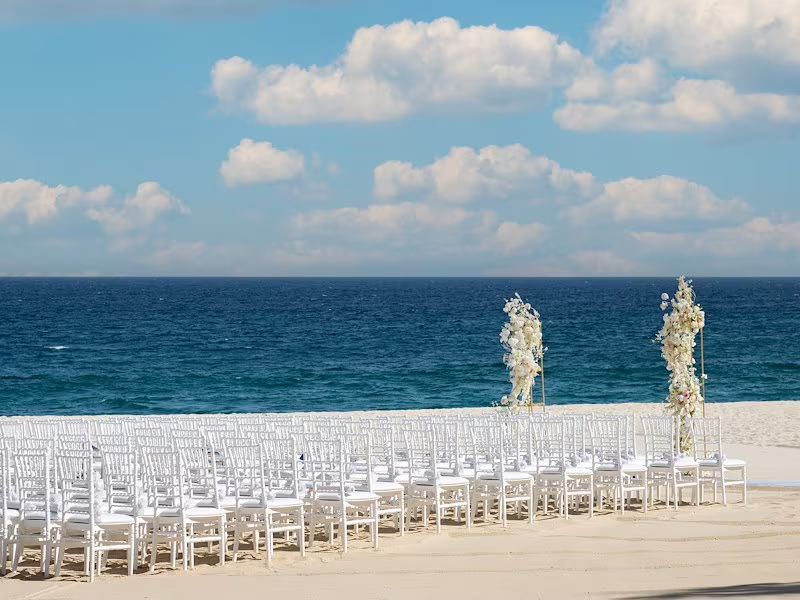
If you’re marrying legally in your destination rather than at home, a few timing details matter.
Some countries have residency waiting periods, meaning you need to arrive a set number of days before the ceremony. Some require blood tests, translated documents, or apostilled paperwork, all of which take weeks and occasionally months. Requirements vary a lot by country, and they change, so check the specifics for your destination early rather than assuming.
A symbolic ceremony, where the legal marriage is completed at home before or after and the ceremony abroad is the real celebration, removes all of this. Nothing about the day looks or feels different, and it takes the entire paperwork question off your critical path. A large share of our couples choose exactly this, and it gives you far more freedom with the date.
A Simple Way to Actually Choose
Four steps, in order, and you’ll have a date within a couple of weeks.
- Rule out the bad seasons for your destination. That usually removes three to five months immediately and is the single biggest narrowing step.
- Strike the expensive weeks. Holidays, spring break, and peak periods, unless you have a specific reason to want one.
- Pick two or three candidate windows and check them with your key guests. Quietly, and only the people whose absence would genuinely matter.
- Check availability at the resorts you like, then commit. Popular properties release wedding dates well ahead, and the best venues on prime weekends go first, so once you have a date that clears the first three tests, book it.
On timing, give yourself enough runway for the guest list you have. Groups of 30 or more want 10 to 12 months of notice. Smaller groups of 20 or fewer are comfortable with 6 to 8. Send save-the-dates around 10 to 12 months out rather than earlier, since airlines only open their schedules about 11 months ahead and guests can’t book flights before then anyway.

Setting a Destination Wedding Date FAQs
What’s the best month for a destination wedding?
For Mexico and the Caribbean, late April into May and November into early December are the two standout windows. Both give you dry-season weather without peak-season pricing, which matters for your guests as much as for you. January and February have excellent weather too, but they’re among the most expensive weeks of the year.
Should you avoid hurricane season for a wedding abroad?
Atlantic hurricane season runs June 1 to November 30, with the real peak in August, September, and early October. Plenty of couples marry successfully within that window and rates are noticeably lower, but you should take travel insurance and have a clear indoor backup plan. If the prospect of tracking a storm for two weeks beforehand would spoil the run-up, choose a different month.
How far in advance should you set a wedding date?
Most couples want 10 to 14 months between booking and the wedding, driven by how long guests need to save and arrange time off. Groups of 30 or more need 10 to 12 months of notice, while groups under 20 can work comfortably with 6 to 8. What matters more than the total is the order: set the date after you’ve settled the budget, guest count, and destination, not before.
Is a weekday destination wedding a bad idea?
Not at all, and it’s often cheaper with better availability. The consideration is annual leave: a Friday to Monday wedding uses far fewer days off than a Tuesday to Thursday one, which matters a lot for guests with fixed jobs or school-age children. If your guest list is mostly flexible, a weekday is excellent value.
What time of day should a destination wedding ceremony be?
As late as the resort allows. Our Certified Destination Wedding Specialists consistently recommend the latest available slot, because the heat has dropped, the resort is quieter as other guests head back to their rooms, and the light in the hour before sunset is the best of the day. A midday ceremony is one of the most common and most avoidable regrets they see.
Find the Window That Works for You
The right date isn’t the one that looks best on paper. It’s the one where the weather cooperates, the people you love can actually get there, and nobody is quietly stretching to afford it.
Tell us where you’re thinking and roughly who you want there, and we’ll tell you which windows genuinely work and which ones only look good from a distance. Fill out our online wedding planning form and one of our Certified Destination Wedding Specialists will help you land on a date you’re happy with!

About the Author

Maggie Sabin
Maggie started as the SEO Manager at DestinationWeddings.com in 2024, where she works to drive organic traffic and conversions while creating meaningful, SEO-optimized content for the website. Previously, Maggie's career spanned from Human Resources & Recruitment to teaching at international schools for almost 10 years. Maggie spends her free time traveling, learning new languages, reading non-fiction books, working out, going to the beach and spending time cuddling her dog, Lola!