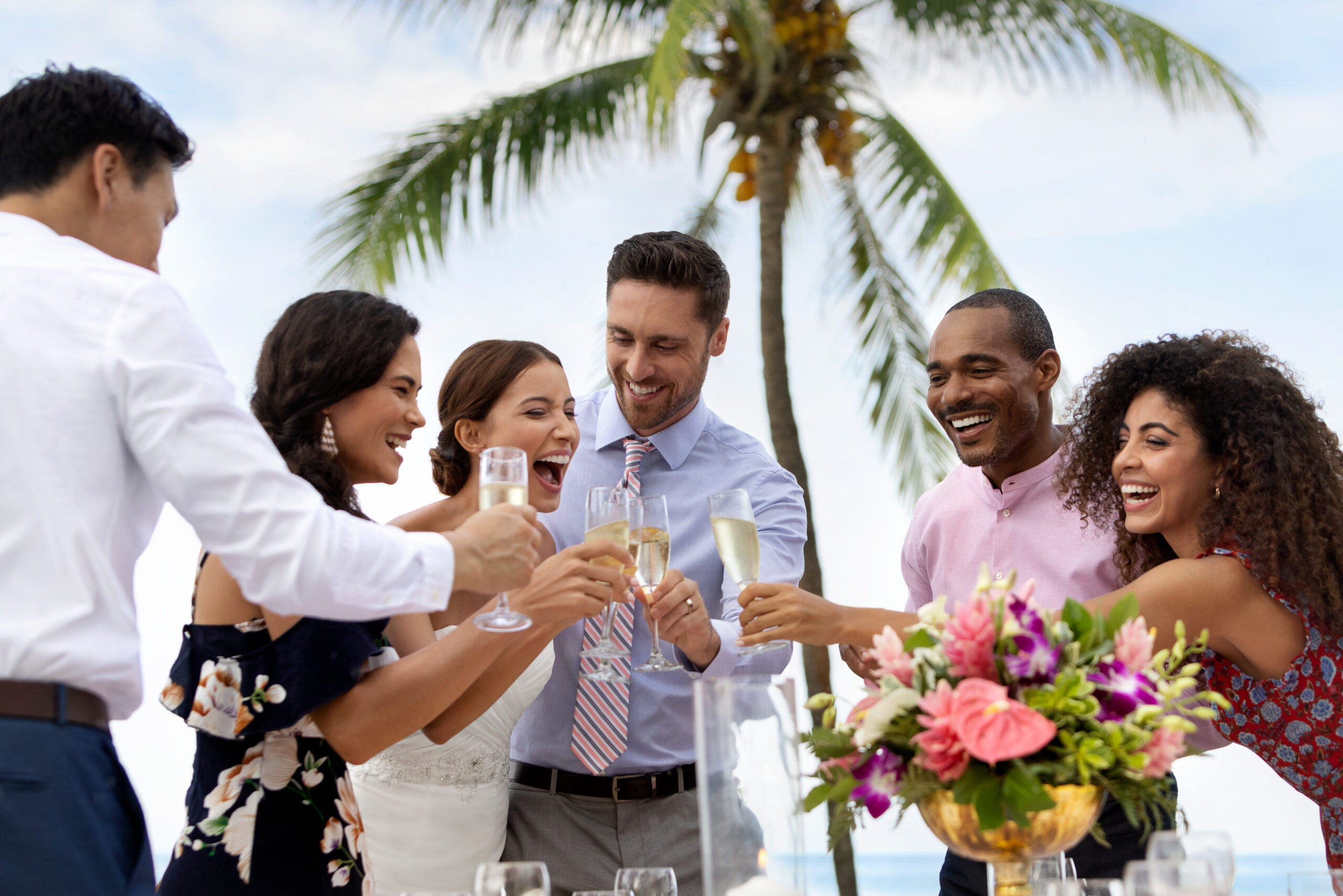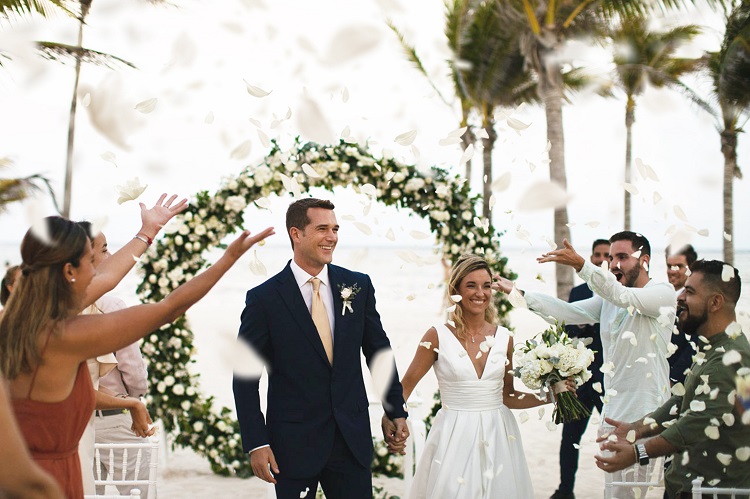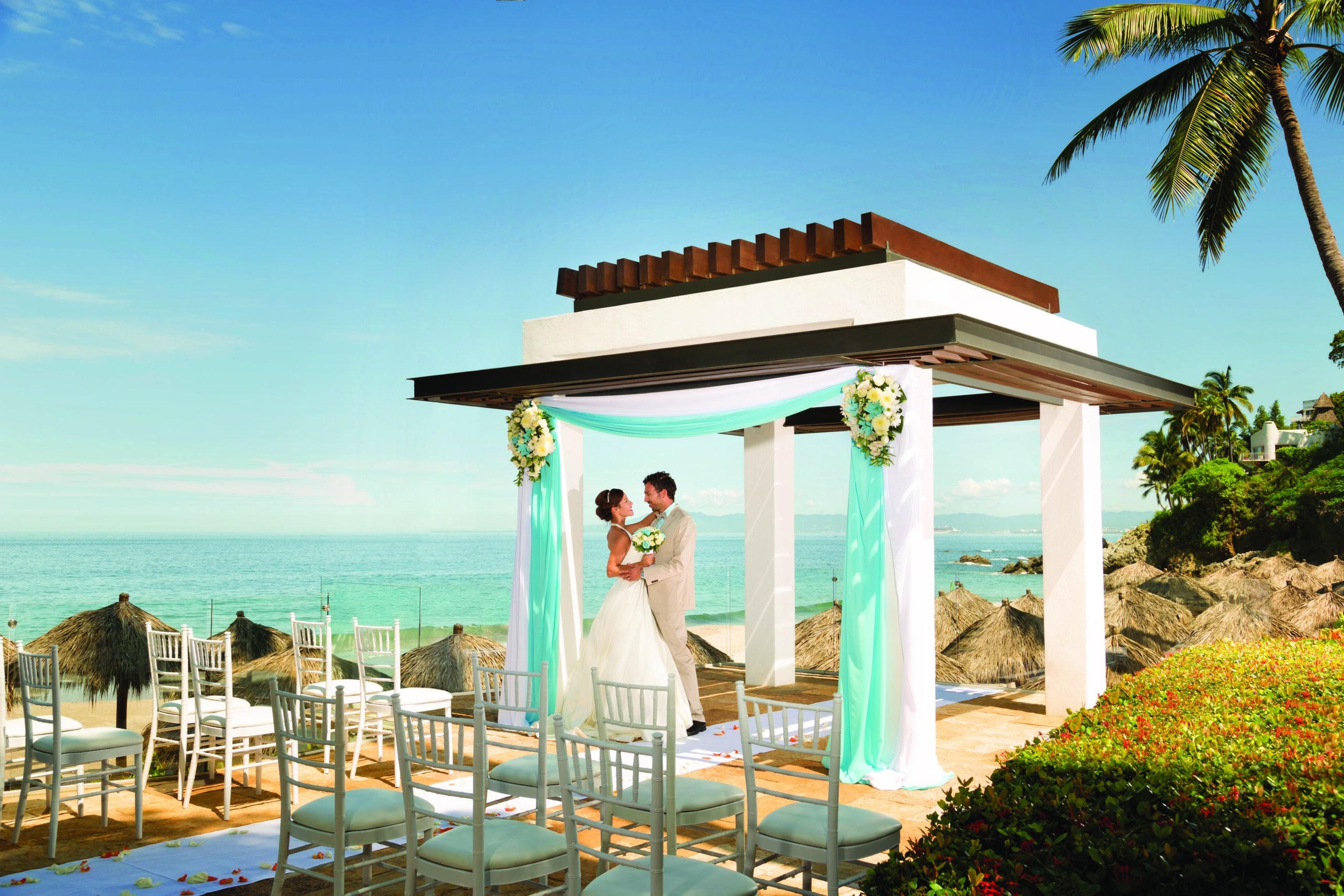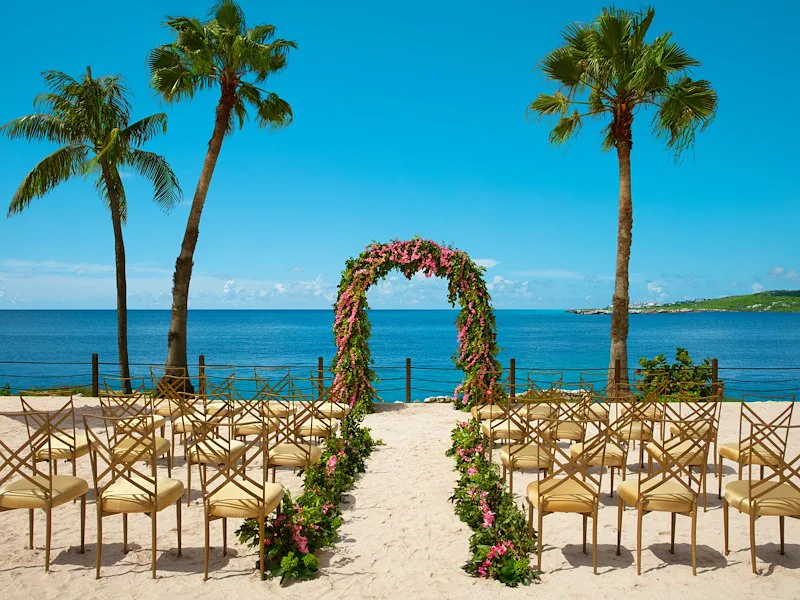

A wellness wedding is quietly becoming one of the most-requested formats our Certified Destination Wedding Specialists get asked to plan. Couples are trading over-programmed weekends for something calmer. Mornings that start with yoga on the beach instead of a 7:00 AM hair-and-makeup call, dinners built around whole foods and local ingredients rather than a heavy resort banquet menu, and afternoons that leave room for the group to actually breathe.
The destination wedding day still anchors everything, but the surrounding weekend feels less like a marathon and more like a shared reset. If you’re drawn to that kind of celebration, this is the playbook.
What Makes a Wedding “Wellness”
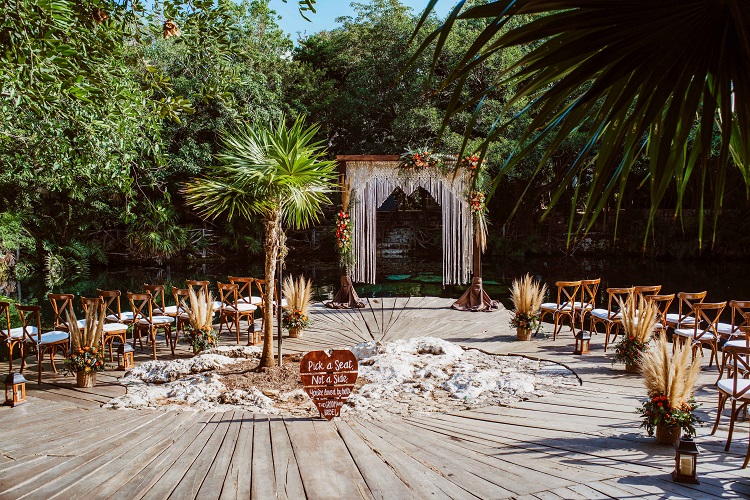
The label gets thrown around loosely, so it’s worth defining. A wellness destination wedding isn’t a specific ceremony style or a themed reception. It’s a set of intentional design choices layered across the whole wedding week that prioritize restoration over stimulation, presence over spectacle, and the couple’s and guests’ physical and emotional well-being alongside the celebration itself.
In practice, that shows up as a lighter itinerary with structured downtime between events, a menu that skews fresh and local, movement built into the daily rhythm, and thoughtful attention to sleep, hydration, and sensory design. Some couples layer in explicit wellness programming (a group yoga session, a guided meditation before the ceremony, a spa afternoon for the wedding party). Others simply strip out the noise of a conventional wedding weekend and let the destination do the restorative work on its own.
The common thread across every wellness wedding our Certified Destination Wedding Specialists have helped plan: less is more. Fewer scheduled events. Simpler décor. Cleaner food. More time for guests to nap, swim, walk the beach, and talk to each other without a coordinator hurrying the group between activities.
Why Destination Weddings Are Ideal for the Wellness Format
Destination weddings are a natural fit for the wellness format for reasons that don’t apply to hometown weddings. The most important thing is that guests are already on vacation. The framing shifts everything. When people fly in and check into a resort, they’ve already given themselves permission to slow down. A wellness itinerary layered on top of that mindset lands with far less friction than trying to convince guests at a Saturday-night hometown wedding to attend a 9:00 AM yoga session the morning after.
The physical setting also does most of the work. Beaches, gardens, oceanview terraces, and open-air spa cabanas are the standard-issue infrastructure of Caribbean and Mexican resort properties. You don’t have to build a wellness environment from scratch. You just have to plan events that use what’s already there.
And the multi-day format that makes destination weddings feel spacious also makes wellness programming possible. A single-evening wedding leaves no room for morning yoga, mid-day spa treatments, or an unhurried farewell brunch. A 3-to-5-day wed-cation format gives you the schedule to actually build in the restorative moments that make a wellness wedding feel different from a conventional one.
Building a Restorative Wedding Weekend Itinerary
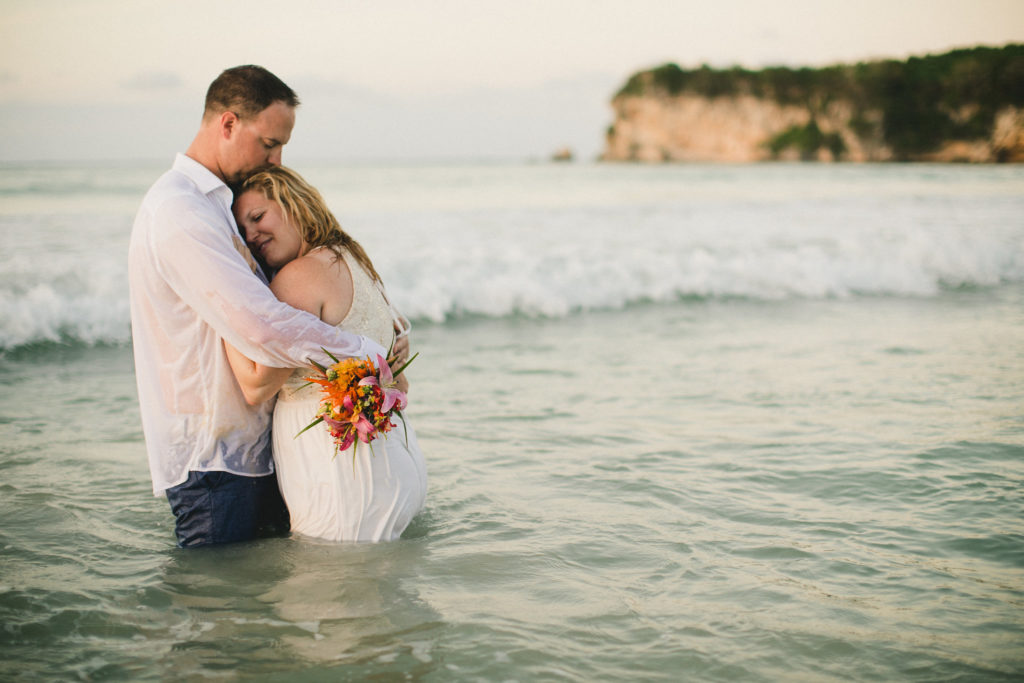
The single most important design decision in a wellness destination wedding is the itinerary itself. The rhythm of the weekend matters more than any individual activity, and the biggest mistake couples make is over-programming.
One of our Certified Destination Wedding Specialists puts it directly: “Design a rhythm rather than just an itinerary, perhaps one structured event per day plus an optional gathering. Clearly communicate that gaps are for personal downtime so guests feel they’re part of an experience rather than attending a series of events.”
For a wellness wedding, that rhythm skews even lighter than a standard destination wedding. Here’s the shape it tends to take.
Arrival Day: Welcome Without Overwhelm
Guests are tired from travel. Airport lines, layovers, and time zones have already used up their reserves. The arrival day should be simple: a check-in window at the resort, a casual welcome cocktail hour (early-evening, low-key), and an early night. Skip the elaborate welcome dinner tradition here. Save the full group dinner for Night 2, when everyone has had a chance to sleep, hydrate, and adjust.
Middle Days: One Structured Event Per Day
The middle of the wedding week is where the wellness rhythm gets its shape. Aim for one structured event per day, ideally with a wellness element built in. Morning yoga on the beach one day. A group snorkel excursion, another. A spa afternoon for the wedding party on the third. Reserve evenings for group dinners, but let one dinner be a casual buffet at the resort and another be a slightly more curated affair. Don’t program back-to-back big meals.
Between events, leave real gaps. Not “an hour to freshen up” gaps but “the whole afternoon is open” gaps. Guests will use the time to swim, nap, read, or catch up with other guests they haven’t seen. That unstructured time is where the actual restorative benefit of a wellness wedding shows up.
Wedding Day: Anchor the Day With Space, Not Stress
Late-afternoon ceremonies (4:00 to 5:00 PM start) work best for wellness destination weddings for practical and restorative reasons. The temperature drops from mid-day heat. The light is more flattering for photos. And the morning is completely open, perfect for a private breakfast for the wedding party, a grounding yoga or meditation session for the couple, and unhurried getting-ready time.
The reception can still be a full celebration with dinner, speeches, dancing, and a proper sparkler exit. Wellness doesn’t mean quiet. It means the reception is the peak moment of an otherwise-restful weekend rather than one exhausting event in an over-programmed lineup.
Farewell Day: Recovery Brunch, Optional Everything Else
The farewell brunch is the last shared moment of the weekend. Keep it casual: a poolside or beachside buffet, coffee and mimosas, no formal speeches or programming. Some guests will leave right after. Others will stay for a final afternoon at the pool or beach. Both are fine. The point is to end with a gentle exit, not another packed event.
Signature Wellness Activities to Weave In
The specific activities you include are less important than the fact that you include some. A handful that our Certified Destination Wedding Specialists have seen work particularly well:
Beachfront Yoga
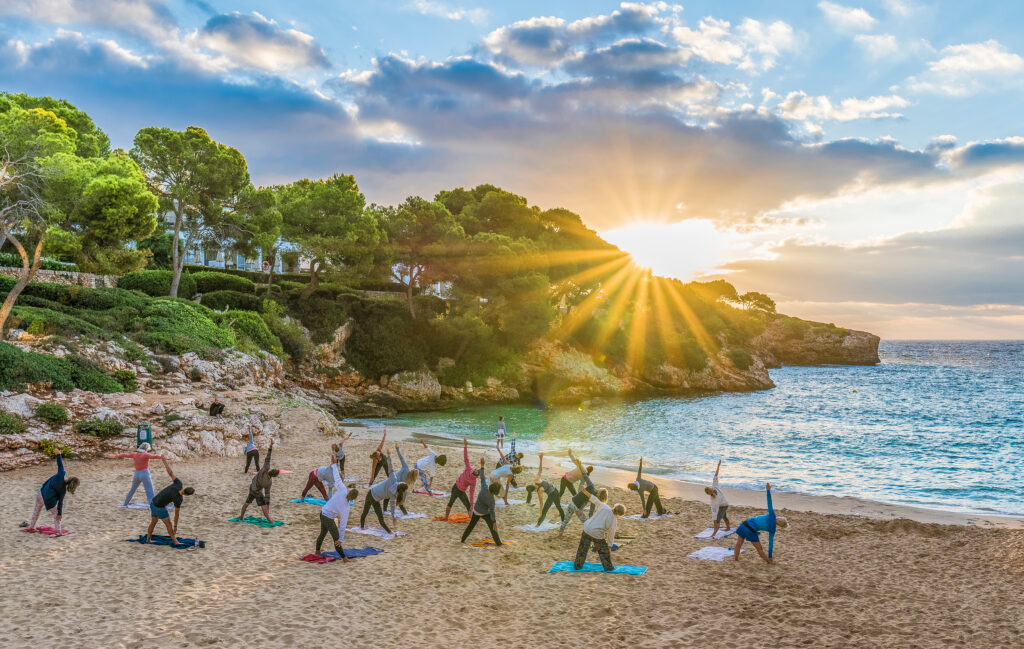
The most universally-loved wellness offering. Most Caribbean venues and Mexican resorts have a yoga instructor on staff or can arrange one. Schedule for 8:00 or 9:00 AM on a midday when guests have had time to recover from travel. A 45-minute all-levels session on the beach, followed by fresh juice and coffee, sets the tone for the whole day.
Communicate in advance that it’s optional, and that beginner-friendly modifications are available; some guests won’t attend but will still appreciate the invitation.
Group Spa Afternoon
The wedding party often carries the highest stress load in the days before the ceremony. A booked-out spa afternoon (couples’ massages, facials, mani-pedis for the wedding party) two days before the wedding is one of the highest-impact gifts you can give the people who are helping most. Most resorts offer group spa packages that offer a discount when you book multiple treatments simultaneously.
Sound Bath or Meditation
A guided sound bath or short meditation session, even 20 minutes, on the morning of the wedding day, is one of the most powerful pre-ceremony moves a couple can make. It’s simple, it’s calming, and it creates a shared quiet moment that resets nerves before the day gets busy. If your resort doesn’t have an in-house facilitator, local practitioners in Riviera Maya, Tulum, and most Costa Rica destinations can be sourced through your Certified Destination Wedding Specialist.
Nature Walks and Guided Excursions
Movement in nature, a hike to a waterfall, a beach walk at sunset, a guided snorkel over a nearby reef, hits the wellness note without feeling like a program. These excursions also serve as the main “shared adventure” of the wedding week, and they photograph beautifully. The specific option depends on the destination: cenote swims in Riviera Maya, rainforest hikes in Costa Rica, catamaran days in Punta Cana or Aruba.
Breathwork or Cold Plunge
For couples with a more serious wellness practice, a guided breathwork session (Wim Hof-style or similar) or a cold plunge morning ritual adds a distinctive angle that guests remember. These skew niche, so they’re better as optional add-ons than centerpiece events. Offer them, let interested guests attend, don’t program the whole group.
Menu and Beverage Choices
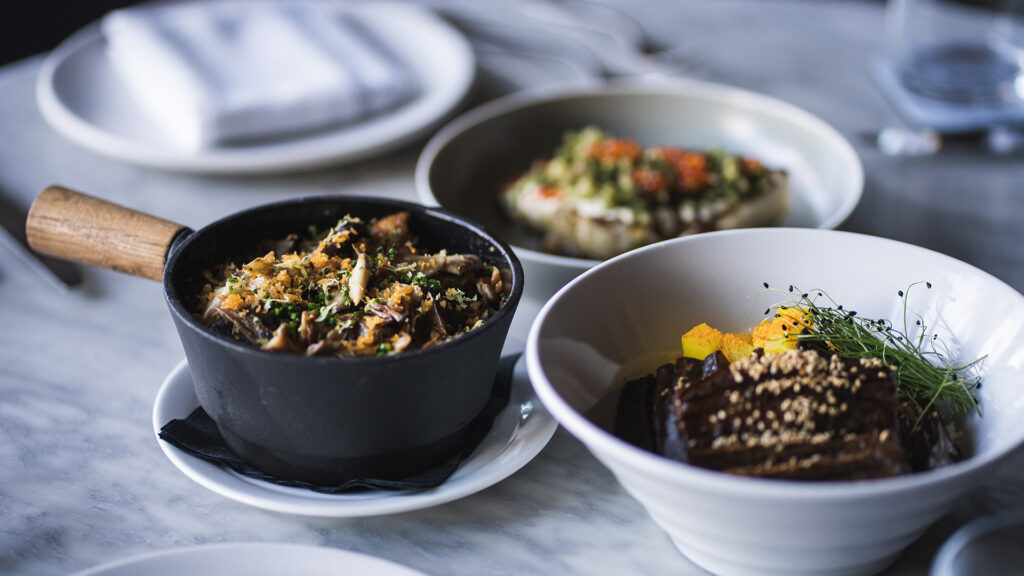
Food is one of the biggest levers in a wellness destination wedding, and it’s often the easiest to overlook. The default resort banquet menu, heavy proteins, rich sauces, and unlimited alcohol, is the opposite of what a wellness weekend needs. Work with the resort’s culinary team well in advance (six weeks minimum) to build a menu that skews lighter across the whole weekend.
Local, seasonal ingredients should be the foundation. Fresh seafood, tropical fruit, grilled vegetables, and cold-pressed juices at breakfast all work in this setting because they’re what the resorts already source well. The reception dinner can still be a full three-course meal; you’re not asking guests to eat kale salads on the wedding day, but choose lighter preparations. Grilled fish over cream-sauce pasta. A vegetable-forward first course rather than a heavy soup.
On the beverage side, a curated wine list, a signature cocktail featuring fresh tropical juices, and generous non-alcoholic options (kombucha, mocktails, sparkling water with fresh fruit) all support the wellness framing without making it feel restrictive. Position the non-alcoholic drinks with the same prominence as the cocktails, a “zero-proof bar” alongside the regular bar signals to guests that they can opt in to the lighter side of the weekend without feeling like they’re skipping the celebration.
Attire, Décor, and Sensory Design
A wellness destination wedding aesthetic tends to be softer and less produced than a conventional wedding. Natural fabrics, linen, cotton, silk, over structured formal wear. A relaxed dress code for guests (linen shirts, flowy dresses, sandals) rather than cocktail-formal. For the couple, the wedding attire itself can be simpler: fewer layers, softer silhouettes, less heavy jewelry.
Décor follows the same principle. Loose greenery instead of elaborate floral installations. Beeswax or soy candles rather than commercial fragrances. Live plants at the reception (potted palms, tropical foliage) as centerpieces that guests can take home or that the resort can reuse. The goal is warmth without visual clutter.
Small sensory touches matter more than big design gestures. A calming essential oil diffuser in the getting-ready room. A curated playlist of low-key acoustic music at cocktail hour rather than an amped-up DJ set. Bud vases with fresh herbs (rosemary, lavender) on the reception tables. None of these is expensive or elaborate, but together they shift the sensory experience toward calm.
Communicating a Wellness Wedding to Guests
Guests need to know upfront that this is a wellness-themed weekend. If they arrive expecting the standard destination wedding rhythm and encounter yoga at 8:00 AM and a lighter reception menu, some will feel like something is missing. Set expectations early.
Include the wellness framing on your save-the-dates and your wedding website. Something as simple as “Our weekend will be a slower, more restorative pace—expect morning yoga, a spa afternoon, and plenty of downtime between events. Come ready to relax.” Frame it as an invitation to a specific kind of experience, not a rule about how guests should behave. That framing signals what to pack (workout clothes, a favorite meditation app, comfortable sandals), what pace to expect, and what to leave at home (the pressure to schedule every free hour).
A pre-arrival email with the full itinerary and packing suggestions goes a long way. If guests know a spa afternoon is coming, they’ll book their own treatments in advance. If they know evenings are unstructured, they’ll plan a group dinner off-property with a friend group. Communication is what turns wellness intent into a wellness experience.

What a Wellness Destination Wedding Costs
Costs land in a similar range to a conventional destination wedding, though the allocation shifts. The average cost of a destination wedding runs $10,000 to $20,000 all-in for the couple, and wellness weddings sit within that range for most couples we work with. Where the money goes changes: fewer dollars into elaborate florals, décor, and structured evening events; more into curated food, spa services, wellness practitioners, and thoughtful room setups.
These averages reflect real spend data from couples who booked their destination wedding with our Certified Destination Wedding Specialists.
The largest wellness-specific line items to plan for: yoga instructor fees ($150 to $400 per session, often bundled with resort wellness packages), spa treatments for the wedding party ($200 to $500 per person, depending on treatment length and property), sound bath or meditation practitioner ($300 to $800), and menu customization fees (typically absorbed by the resort at higher package tiers but worth budgeting $500 to $1,500 for elaborate custom menus). None of these are dealbreakers on a mid-tier budget.

Wellness Wedding FAQs
What is a wellness wedding?
A wellness wedding is a destination wedding format designed around restoration and well-being alongside the celebration itself. It typically includes a lighter itinerary with structured downtime, wellness activities like yoga or spa treatments, a menu skewed toward fresh and local ingredients, and thoughtful sensory design. The wedding day still anchors the weekend, but the rhythm around it is calmer and more intentional than a conventional wedding week.
Is a wellness wedding more expensive than a regular destination wedding?
No, generally similar. Most wellness weddings land in the standard destination wedding range of $10,000 to $20,000 all-in for the couple. The budget allocation shifts—less spent on elaborate florals and evening entertainment, more on curated food, spa services, and wellness practitioners—but total cost stays comparable.
Which destinations work best for a wellness wedding?
Any destination with strong resort spa infrastructure and access to nature works well. Riviera Maya (particularly Tulum), Costa Rica, Bali, Sedona, and the ABC Islands (Aruba, Curaçao, Bonaire) are all popular with couples planning wellness weddings. The specific property matters more than the destination, look for resorts with established yoga programs, respected spas, and reception spaces that feel serene rather than nightclub-adjacent.
How do we get skeptical guests on board?
Frame the wellness elements as invitations, not requirements. A guest who doesn’t want to attend morning yoga should feel welcome to sleep in without judgment. A pre-arrival email that describes the pace and suggests how to opt in (or out) of specific activities lets guests self-select their level of participation. Most guests appreciate the option to slow down once they realize it’s genuinely open.
Can we still have a full reception at a wellness wedding?
Absolutely. A wellness destination wedding isn’t a quiet wedding. The reception can be a full celebration with dinner, speeches, dancing, and a sparkler exit. The wellness framing just means the reception is the peak moment of an otherwise restful weekend, rather than one of many overprogrammed events across a stressful week.
Start Planning Your Wellness Destination Wedding Today!
A wellness wedding is one of the most memorable formats a destination wedding can take, precisely because it doesn’t feel like a typical wedding. Guests leave rested instead of exhausted. The couple starts their marriage in a genuine state of calm rather than recovering from a marathon weekend. And the resort setting does most of the heavy lifting once you strip out the noise of a conventional wedding itinerary.
Fill out our online wedding planning form, and one of our Certified Destination Wedding Specialists will help you build the restorative weekend that fits your vision.

About the Author

Maggie Sabin
Maggie started as the SEO Manager at DestinationWeddings.com in 2024, where she works to drive organic traffic and conversions while creating meaningful, SEO-optimized content for the website. Previously, Maggie's career spanned from Human Resources & Recruitment to teaching at international schools for almost 10 years. Maggie spends her free time traveling, learning new languages, reading non-fiction books, working out, going to the beach and spending time cuddling her dog, Lola!