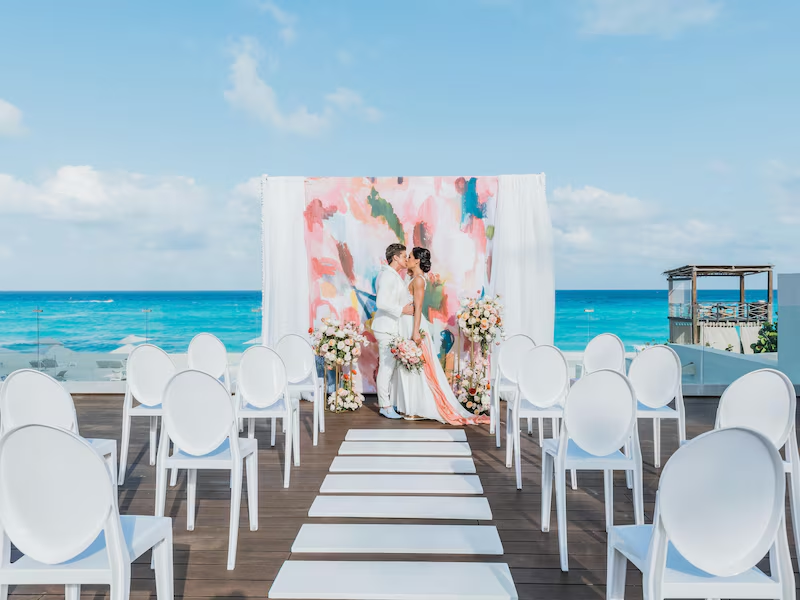

Forty people have flown to another country for you. Most of them know maybe six of the others. Some arrived Tuesday, some land Thursday night, and you’re about to spend the next four days trying to say a proper hello to every single one of them between appointments.
That’s the problem a welcome party solves, and it’s the reason almost every destination wedding ends up having one even when the couple didn’t plan for it. It’s also an extra event, which means an extra line on the budget, and it’s fair to ask whether you actually need it.
The short version is that the event is usually worth it and the cost is usually smaller than you’d think, because at an all-inclusive resort the food and drink have already been paid for by everyone standing there.
Here’s how to decide, what it should cost you, and the question that starts most of the arguments: who’s supposed to pay?
What a Welcome Party Is Actually For
It helps to be clear about the job before deciding whether to pay for it, because the welcome party does three things that nothing else on the schedule does.
It gets the hellos out of the way in one go. Without it, you spend the whole week being intercepted, and you’ll reach the wedding day having had forty half-conversations and no real ones. One evening at the start replaces all of that and buys back the rest of your trip.
It introduces the two halves of the room to each other. At a wedding at home, guests arrive, sit down, and leave. Here they’re sharing a resort for four days, and whether your college friends and their cousins have met by Wednesday genuinely changes what the wedding day feels like.
And it marks the beginning. People who’ve traveled a long way need a moment that says the thing has started; otherwise the days before the ceremony feel like a vacation that happens to be happening near a wedding.
Do You Actually Need One?
Mostly yes, but not always, and it’s worth knowing which situation you’re in before you book anything.
It’s close to essential if your guests don’t all know each other, if people are arriving across several days, if you’ve got more than about twenty-five attending, or if the group is staying for the better part of a week. Those are the weddings where the first proper introduction can’t be the ceremony.
It matters much less if you’re having a genuinely small destination wedding with a dozen people who are already close, if everyone flies in the day before and leaves the day after, or if your resort is small enough that the group will find each other at the pool by lunchtime on day one. In those cases, a reserved table at dinner does the same job without anyone calling it an event.
The thing to avoid is the middle ground where you skip the formal party but don’t replace it with anything. A group of thirty with no planned moment in the first forty-eight hours tends to split into little clumps that never quite mix, and you’ll feel it on the dance floor later.

Who Pays for the Welcome Party?

The etiquette rule is short, and it hasn’t changed: whoever issues the invitation is the host, and the host pays. If the invitation goes out in your names, it’s yours. If one set of parents sends it, it’s theirs.
Traditionally, the groom’s family hosted the night-before event, which is where the rehearsal dinner convention comes from, and plenty of families still follow that. In practice, most couples getting married abroad now cover it themselves, partly because they’re already coordinating everything with the resort and partly because the sums involved are smaller than a domestic rehearsal dinner. It’s also increasingly common for a parent to offer this specific event as their contribution, precisely because it’s a self-contained thing somebody can own.
What doesn’t happen is guests paying. If you’ve invited people to a welcome party, you’re hosting them, and asking them to cover their own drinks turns it into a meet-up rather than an event. The one acceptable version of a no-cost gathering is the informal one, where you simply tell everyone which bar you’ll be in at seven and let people wander down. That’s a lovely thing to do, and nobody expects to be hosted at it, but then don’t call it a party on the invitation.
Decide this early, and decide it with whoever might be paying rather than announcing it. A welcome party that somebody volunteered to host and a welcome party somebody got handed are different conversations.
Why an All-Inclusive Changes the Math
This is the part that doesn’t apply to a wedding at home, and it’s why the cost question has a different answer here.
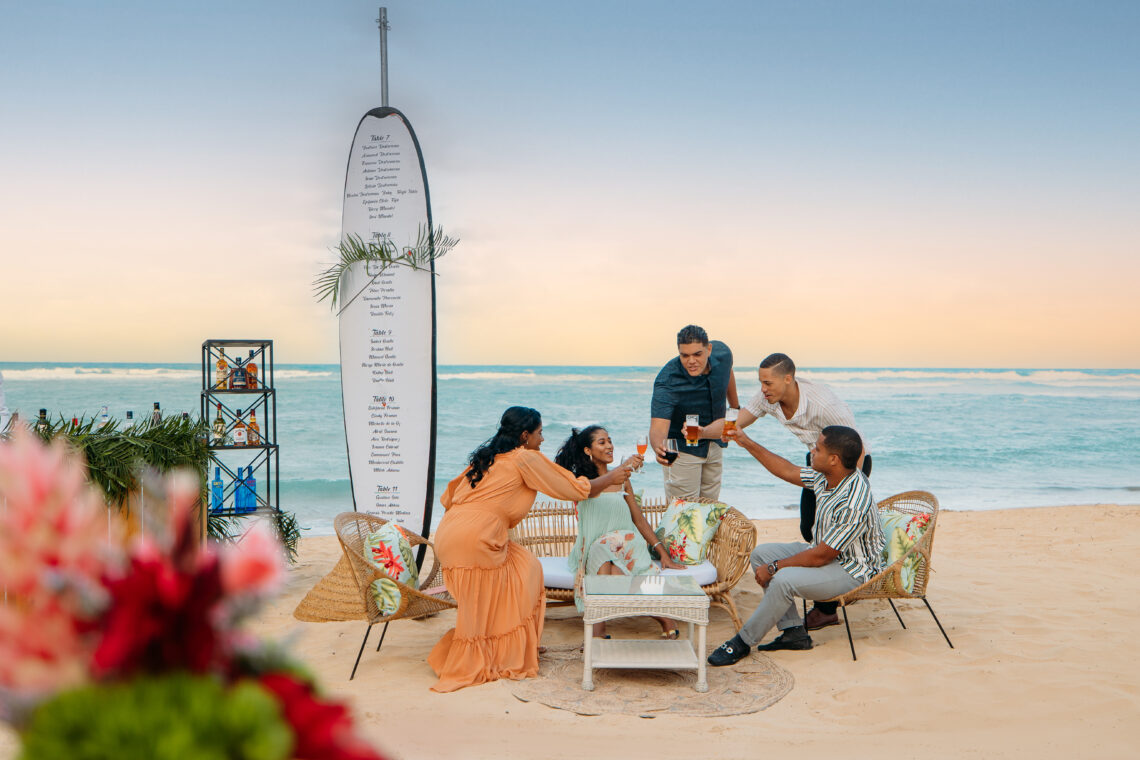
At an all-inclusive resort, every guest’s food and drink is already covered by the room they booked. So the cheapest version of a welcome party costs nothing at all: you reserve a section of a restaurant or a stretch of a bar for your group on a set night, people come, eat and drink what they were entitled to anyway, and the only thing you’ve organized is the when and the where. Many couples do exactly this, and it works.
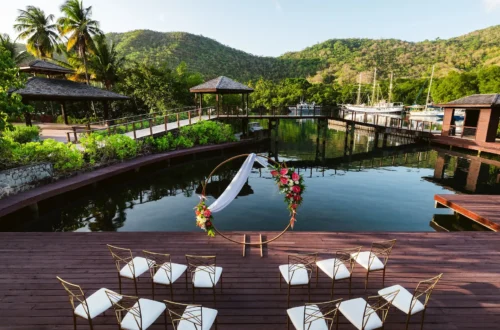
What you pay for is exclusivity and production. A private venue closed off to other hotel guests, a dedicated bar, a set menu or a buffet rather than the restaurant’s, decor, lighting, a DJ or a live band. Most resorts price this as a private event fee, often per person with a minimum headcount, plus whatever you add on top. That’s the version that photographs like an event, and it’s a real expense.
Before you price any of it, check your wedding package. A lot of packages include a cocktail hour, a private dinner, or a set number of private event hours, and plenty of couples discover they can move an included event to the welcome night and get the whole thing for free. That one question saves more money than any other on this page, and it’s worth asking before you start comparing menus.
Welcome Party or Rehearsal Dinner?
These are two different things at a wedding at home, and they usually collapse into one abroad, which confuses people.
A rehearsal dinner is small and follows the actual rehearsal, so it’s the wedding party, immediate family, and anyone with a job on the day. A welcome party is for everybody who traveled. At a destination wedding, where the whole guest list is already on site, and the rehearsal is often a twenty-minute walkthrough rather than an evening, holding two separate events in the same week starts to feel like a lot.
So most couples do one of two things. They merge them, inviting everyone to a single event the night before or two nights before and treating it as both. Or they keep a genuinely small rehearsal dinner for the people who are in the ceremony and hold the welcome party on a different night for the whole group. Either works. What doesn’t work is a rehearsal dinner that half the guests can see happening and weren’t invited to, which is much harder to hide at a resort than at a restaurant at home.
Who to Invite and When to Hold It
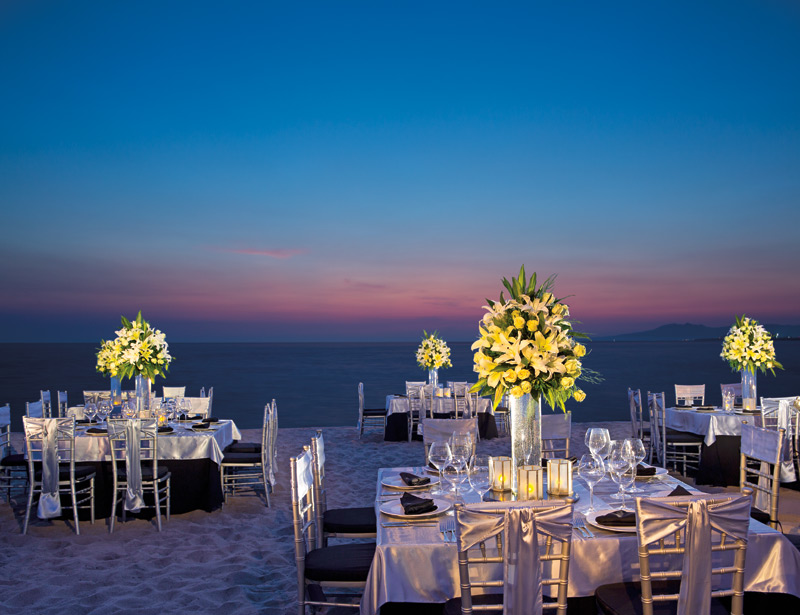
The invitation list is the easy part. Everyone who traveled, with no exceptions. The entire point is that nobody spends the week feeling like they’re on the outside of something, and a welcome party with a guest list defeats it completely. That includes plus ones, anyone who flew in with a guest, and the people arriving late who’ll walk in halfway through.
The timing takes more thought. Hold it on the night the last significant group has landed, which is often two nights before the wedding rather than the night before. The night before works if everyone’s already there, but it means your welcome party and your early ceremony call time are about ten hours apart, and somebody always takes that as a challenge.
Keep it shorter than you think. Two to three hours, early evening, built so people can drift off when the flights catch up with them. Guests who landed that afternoon will fade by ten, and an event that ends while everyone still wants more is doing its job.
Tell people about it on the wedding website with the date and the dress code, because it’s the single most common thing guests pack wrong for. If there’s a dress code at all, say exactly what it means rather than naming it.

Destination Wedding Welcome Party FAQs
Do you need a welcome party at a destination wedding?
It’s optional, but it earns its place at most weddings where guests have traveled. It gets the introductions out of the way in one evening instead of across four days, and it mixes guests who’d otherwise stay in their own groups until the reception. Very small weddings where everyone already knows each other can skip it without anyone noticing.
Who pays for a destination wedding welcome party?
Whoever sends the invitation is the host, and the host pays. Traditionally that was the groom’s family, carried over from the rehearsal dinner, but most couples marrying abroad now cover it themselves or accept it as a parent’s contribution. Guests are never asked to pay at an event they were invited to.
How much does a destination wedding welcome party cost?
It ranges from nothing to a significant line item. Reserving a section of a resort restaurant or bar for your group costs nothing extra because guests’ food and drink are already included in their stay. A private venue with its own bar, set menu, and entertainment is charged as a private event, usually per person with a minimum.
Is a welcome party the same as a rehearsal dinner?
No. A rehearsal dinner is small and follows the ceremony rehearsal, while a welcome party includes everyone who traveled. At a destination wedding, the two are often merged into a single event, since the whole guest list is already on site and two separate dinners in one week is a lot to host.
When should you have a welcome party?
On the evening the last significant group of guests has arrived, which is frequently two nights before the wedding rather than the night before. Holding it the night before works if everybody’s landed, but it leaves very little room between the end of the party and the start of the wedding day.
Who gets invited to a destination wedding welcome party?
Every single person who traveled for the wedding, including plus-ones and anyone who came along with a guest. The event exists to make the whole group feel included from the start, so a welcome party with its own guest list works against the thing it’s meant to do.
Get Ready to Plan Your Destination Wedding
It’s the event couples add last and remember most, usually because it’s the only night of the trip where nobody is nervous and everybody is in one place.
Fill out our online wedding planning form, and one of our Certified Destination Wedding Specialists will tell you exactly what your package already covers before you spend a dollar on an extra event!

About the Author

Maggie Sabin
Maggie has always loved traveling and discovering new places and cultures. Before joining DestinationWeddings.com as SEO Manager in 2024, she spent nearly a decade teaching at international schools across Europe and Asia, from the UK and Spain to Taiwan. Today, she creates and manages all of the blog's content, making sure couples can easily find the answers and inspiration they need to plan their destination wedding with confidence. When she's not working, you'll find Maggie learning a new language, curled up with a good book, working out, or soaking up the sun at the beach. She's happiest at home snuggling with her dogs, Lola and Minnie.