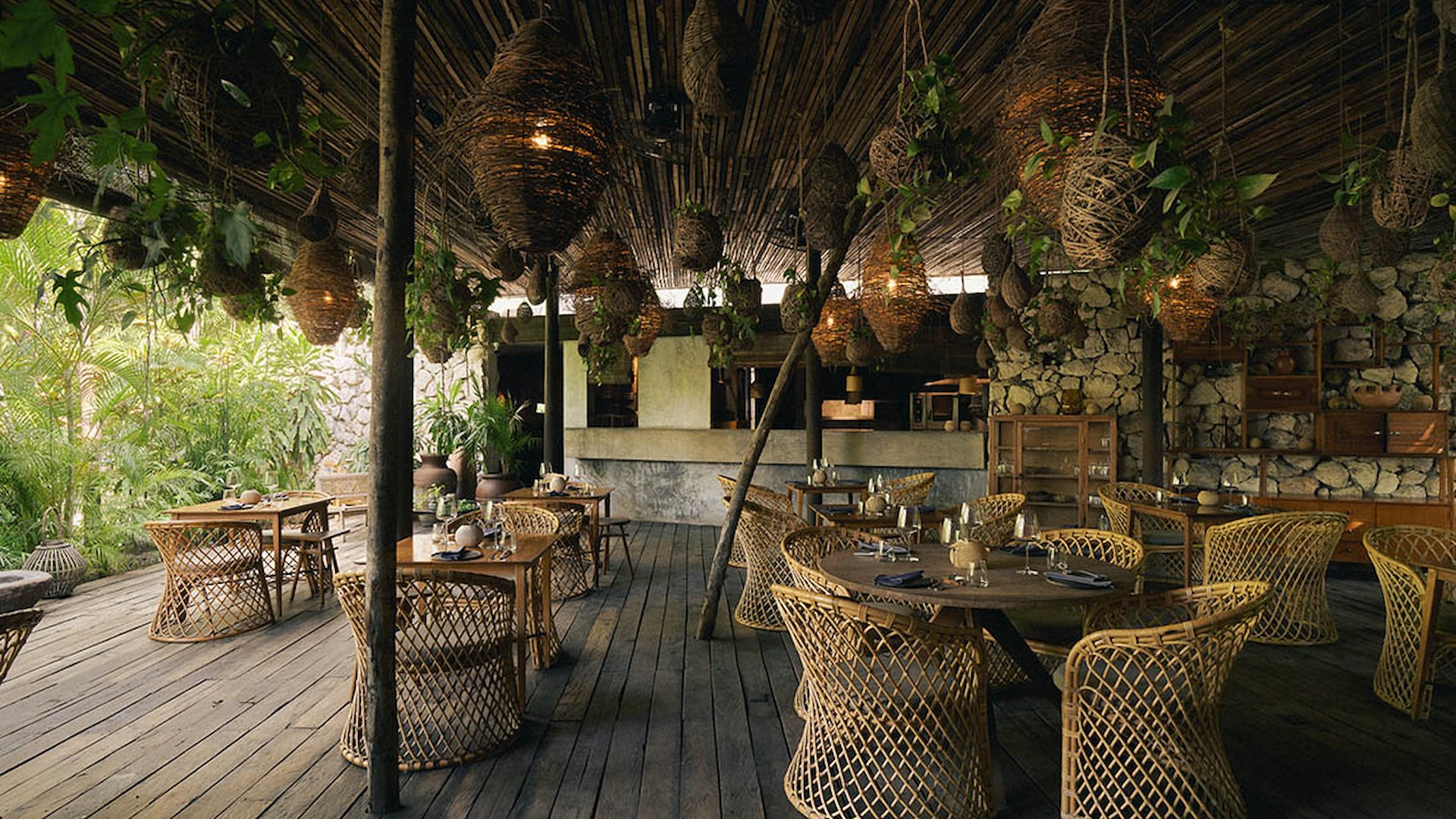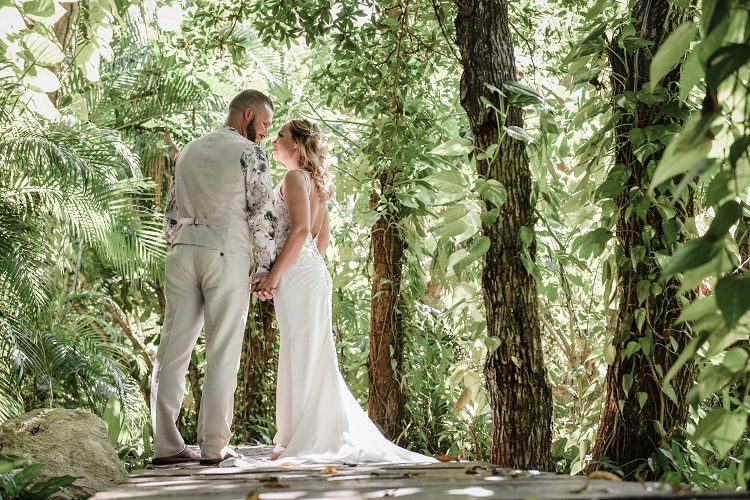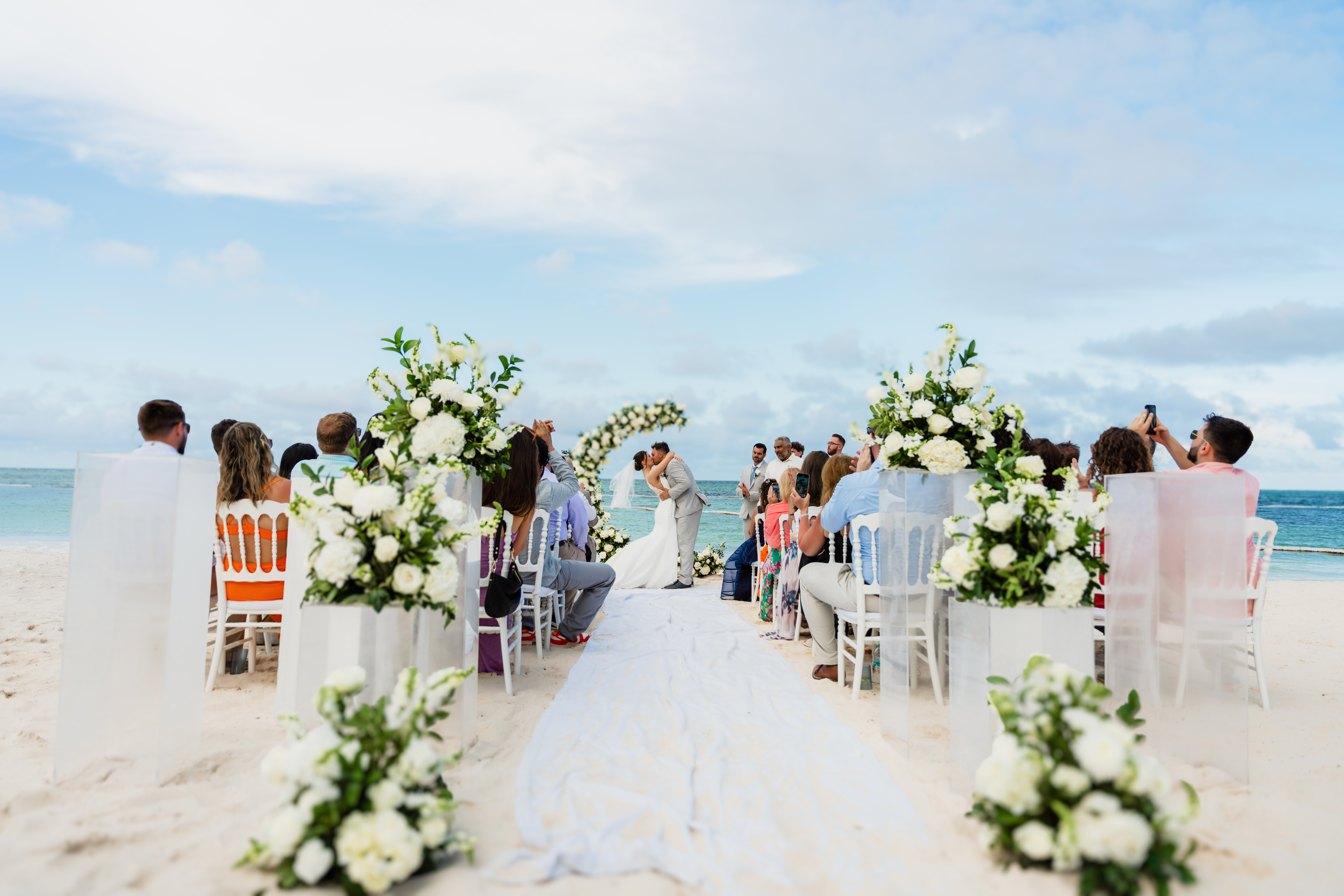

A European wedding sounds like the expensive option. Olive groves in Puglia, a castle in the Scottish Highlands, a whitewashed terrace above the Aegean. Most couples assume those images come with a figure they can’t quite reach, and quietly move on to somewhere closer to home.
However, that assumption deserves a second look. The average wedding in the United States now runs about $36,000, according to Zola’s 2026 wedding spend survey. With that number in mind, plenty of European weddings come in well under that figure, and the ones that don’t usually blow the budget on things that have nothing to do with having your wedding in Europe.
What makes a destination wedding in Europe genuinely different from a Caribbean or Mexican one isn’t the price ceiling. It’s the structure. Understanding this difference is what separates couples who pull it off on a US budget from couples who get three quotes and give up.

Why European Weddings Are Priced So Differently
Almost every destination wedding in Mexico and the Caribbean runs on the all-inclusive model. An all-inclusive wedding package is a fixed-price bundle covering the ceremony venue, an officiant, basic decor, a cake, and a toast, offered by a resort where your guests’ rooms already include their food and drink. It’s a single quote from a single vendor, and it’s why costs in those regions are so predictable and, for the most part, affordable.
Europe, on the other hand, usually doesn’t work that way. You’re booking a venue, a caterer, a florist, a photographer, accommodation, and transport as separate line items from separate businesses. Nothing is bundled, and nobody hands you one neatly packaged number.
That’s the real reason European weddings feel unaffordable. It isn’t necessarily that they cost more. It’s that the cost arrives in fifteen pieces instead of one, so you can’t see the total until you’ve done the work of assembling it, and every piece feels like a new expense rather than part of a plan.
| Element | Caribbean or Mexico all-inclusive | Typical European wedding |
|---|---|---|
| How it’s quoted | One package price from the resort | Separate contracts per vendor |
| Guest food and drink | Included in their nightly rate | Paid per head by you, or by guests |
| Where guests sleep | Usually one resort, one rate | Spread across hotels, villas, rentals |
| Cost predictability | High, known early | Lower, firms up as vendors are booked |
| Flexibility on style | Within the resort’s menu | Essentially unlimited |
| Airfare from the US | Lower, shorter flights | Higher, and the biggest guest barrier |
For context on the all-inclusive side, couples who book through our Certified Destination Wedding Specialists spend an average of $10,218 all in on a wedding in Mexico and $10,705 in the Caribbean, covering the package, accommodations, airfare, and add-ons.
These averages reflect real spend data from couples who booked their destination wedding with our Certified Destination Wedding Specialists. They cover the couple’s own costs, and they’re specific to those regions rather than to Europe.
The Five Levers That Actually Move a European Wedding Budget
Most budget advice for European weddings focuses on small savings: skip the welcome bags, do your own playlist. Those are rounding errors. Five decisions account for the overwhelming majority of what you’ll spend, and they’re all made early.
1. Guest Count Is Not One Lever Among Many. It’s the Lever.
In an all-inclusive setting, a bigger guest list raises your cost gradually because guests largely pay for themselves. In Europe, you’re usually paying per head for the meal, the wine, the transport, and sometimes the accommodation, so every additional guest hits your budget directly and repeatedly.
This is the single biggest structural difference between the two models, and it cuts both ways. A 100-person European wedding is genuinely expensive. A 25-person European wedding is often cheaper than a 100-person wedding at home, because the venue costs roughly the same and everything else scales down with you.
If Europe is the priority, shrink the list before you shrink anything else. It buys more than every other decision combined.
2. Season, and Not the Season You’re Thinking Of
Peak European wedding season is roughly June through September, which is also peak tourist season, and when transatlantic airfare is at its worst. Booking inside this window means paying premium rates on the venue, vendors, and every flight your guests buy.
Shoulder season is the stretch on either side of peak season, when the weather is still reliable, but demand has dropped. In much of southern Europe, that means late April through May and late September through October. Rates fall meaningfully, availability opens up, and in places like Italy and Greece the weather in those months is arguably better than August, which is hot enough to be genuinely uncomfortable for formalwear.
Northern Europe runs a shorter window, so Ireland, Scotland, and Iceland concentrate into summer more tightly. Even there, a May or September date typically prices better than July.

3. Choose the Region, Not Just the Country
The gap between the famous part of a country and the rest of it is where most of the savings live. Every country in Europe has a stretch of coastline or countryside that appears in every wedding magazine, and it’s priced accordingly. Move an hour or two inland or down the coast, and you’re often paying half as much for scenery that photographs just as well.
This applies to Italy, Greece, France, Spain, and Portugal about equally. The headline regions carry a premium built almost entirely on recognition. If you can name the area off the top of your head, you’re paying for the name.
4. Venue Type Sets Your Ceiling
A private estate, a working farm property, a small family-run hotel, and a historic castle are four completely different budgets, and the difference isn’t only the rental fee. Some venues require you to use their in-house caterer at their prices. Some require you to bring everything in, which means hiring furniture, linens, and sometimes a kitchen.
Ask early which model a venue uses. A cheap rental fee with mandatory expensive catering is often more costly overall than a higher fee that includes the meal, and that comparison is difficult to make once you’ve fallen for a place.
5. Currency and Timing
You’ll be paying in euros or pounds across a planning window that can run eighteen months, and exchange rates move. Deposits paid at one rate and balances paid at another can shift your real cost by a noticeable margin in either direction.
It isn’t something to obsess over, but it’s worth knowing that your budget is not a fixed number in your own currency, and worth building in a small buffer rather than planning to the last dollar.
Which European Countries Work Best on a US Budget

Greece is usually the strongest value in southern Europe. The food and wine that make a wedding feel generous cost less there than in France or Italy, and once you look beyond the most photographed islands, the accommodation picture improves sharply. It also tends to be the easiest southern European country for American couples on the paperwork side.
Ireland and Scotland are the value picks in northern Europe. Both offer genuinely dramatic settings, both are English-speaking, which removes a layer of friction from every vendor conversation, and neither carries the premium attached to a Tuscan or Provençal address. The trade is weather, which is unpredictable enough that an indoor backup isn’t optional.
Italy and France are the aspirational picks, and they can still work. They just require the region and season decisions above to be made deliberately rather than by default. A September wedding in a lesser-known Italian region is a different budget from an August wedding in the obvious one.
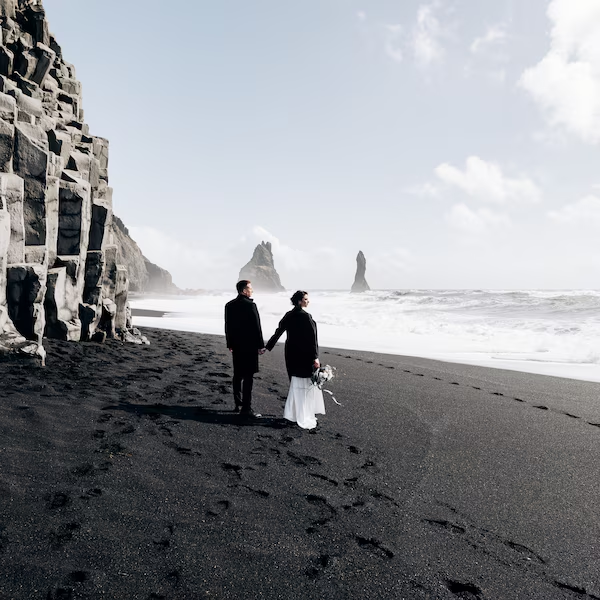
Iceland is its own category. Dramatic beyond almost anywhere else, small guest lists by necessity, and a cost of living high enough that food and accommodation will surprise you. It suits an elopement or a very small group far better than a full wedding.
The Legal Piece Is Where European Budgets Actually Break

This is the part couples underestimate, and it can cost you weeks and real money if you find out late.
Getting legally married in a European country as a foreign national is significantly harder than doing it in Mexico or the Caribbean. Requirements vary enormously by country and sometimes by region within a country. Some require one or both of you to be physically resident for a set period before the ceremony, which can mean arriving weeks early. Some require documents issued, translated, and certified in a specific sequence. Some require a declaration made at a consulate before you travel.
The practical answer for most couples is the same one that dominates destination weddings everywhere: a symbolic ceremony is a ceremony with no legal standing, where you exchange vows and rings wherever you like and handle the legal marriage at a courthouse at home. It removes the residency requirement, the document chain, and most of the associated cost, and no guest at your wedding will know or care.
If a legally binding European ceremony genuinely matters to you, it’s worth knowing that Denmark has built a reputation as the most straightforward country in Europe for foreign couples to marry in, with a shorter and simpler process than most of its neighbours. That reputation is the reason it appears on this list at all.
Requirements change, and they’re set by national and local authorities rather than by venues. Confirm the current position with your Certified Destination Wedding Specialist and the relevant consulate before you build a timeline around it.
Where to Spend and Where to Save
Once the five big levers are set, the smaller decisions do matter, and they’re easier to get right when you know which ones guests actually notice.
One category deserves singling out, because it catches couples out at European venues more than anywhere else. When we ask our Certified Destination Wedding Specialists which costs most surprise couples, lighting is near the top, and it applies double here. Most outdoor venues provide little beyond basic safety lighting, so string lights, uplighting, pathway lighting, and anything over a dance floor are separate rentals. At a courtyard in Puglia or a walled garden in Ireland, that’s the difference between a venue that works after dark and one that doesn’t. Raise it early rather than discovering it in the final quote.
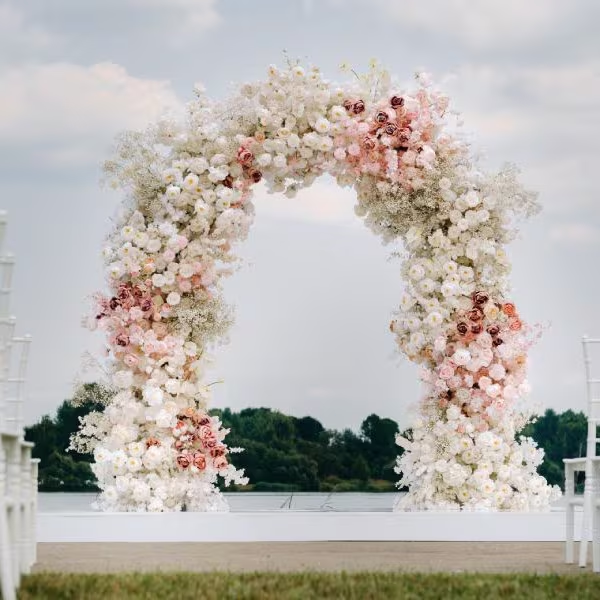
Florals are the other one, for the same reason everywhere: expectations set by photographs of arrangements that were in season, locally grown, or both.
Worth spending on:
- A planner or coordinator who is local to the region. For an à la carte wedding in a country you don’t live in, this is the line item that saves money rather than costing it. They know the vendor rates, the venue quirks, and the paperwork.
- Food and wine. In Europe, this makes the wedding. It’s what guests will remember and what most reliably justifies the flight.
- Guest transport on the day. Rural European venues plus unfamiliar roads plus wine is a combination worth solving with reliable transportation.
Reasonable to save on:
- Florals. A courtyard in Greece or a hillside in Ireland arrives decorated. Heavy floral installations fight the setting rather than adding to it.
- The venue’s most photographed room. Many properties price their signature space well above a second space that guests would find equally beautiful.
- Saturday. A Thursday or Friday wedding often prices lower, and when guests have flown across an ocean, they’re staying several days regardless.

Europe Destination Wedding Budget FAQs
Is a wedding in Europe more expensive than the Caribbean?
Usually yes for a comparable guest count, mostly because of airfare and because European weddings are priced per person rather than bundled into an all-inclusive package. The gap narrows sharply as the guest list shrinks. A 20-person wedding in Greece and a 20-person wedding in Mexico are far closer in cost than a 100-person version of each.
What’s the cheapest European country for a destination wedding?
Greece is generally the strongest value in southern Europe, and Ireland and Scotland in the north, though the region you choose within a country matters as much as the country itself. Avoiding the single most famous area and booking in shoulder season typically saves more than switching countries.
Do you have to be a resident to get married in Europe?
It depends entirely on the country. Some require a residency period before the ceremony, some require documents prepared in a set order well in advance, and some are relatively straightforward. This varies too much to generalize safely, which is why most couples hold a symbolic ceremony abroad and complete the legal marriage at home.
How far ahead should you book a European wedding?
Twelve to eighteen months is realistic, and closer to eighteen if you want a specific venue in peak season. Because you’re contracting vendors individually rather than booking one resort package, there are simply more bookings to sequence, and the good local suppliers in popular regions fill early.
Get Ready to Plan Your European Destination Wedding
A wedding in Europe on a US budget is a real thing, and it’s mostly a matter of making five decisions deliberately: how many people, what time of year, which region, what kind of venue, and whether the ceremony needs to be legally binding. Get those right, and the rest is detail.
Fill out our online wedding planning form, and one of our Certified Destination Wedding Specialists will help you compare countries, seasons, and realistic budgets for the guest list you actually have.

About the Author

Maggie Sabin
Maggie started as the SEO Manager at DestinationWeddings.com in 2024, where she works to drive organic traffic and conversions while creating meaningful, SEO-optimized content for the website. Previously, Maggie's career spanned from Human Resources & Recruitment to teaching at international schools for almost 10 years. Maggie spends her free time traveling, learning new languages, reading non-fiction books, working out, going to the beach and spending time cuddling her dog, Lola!