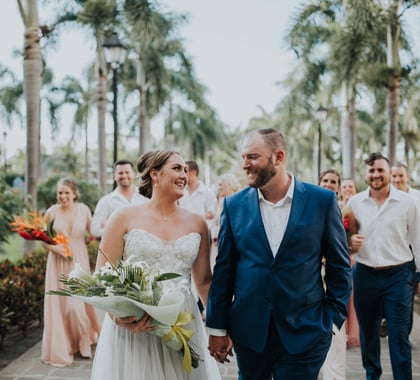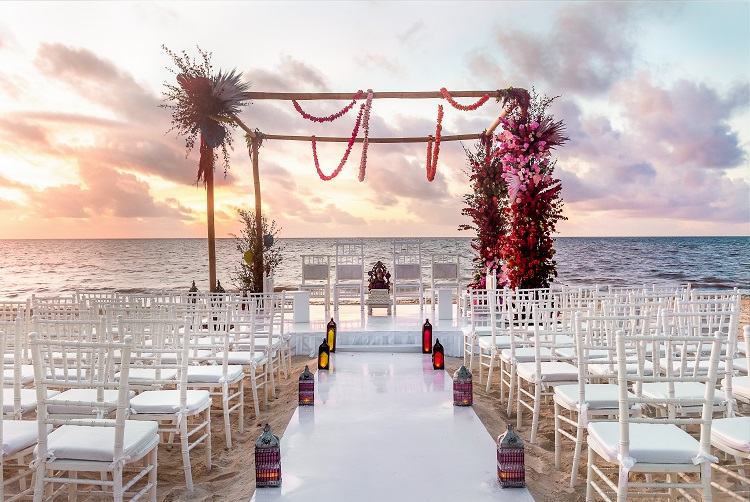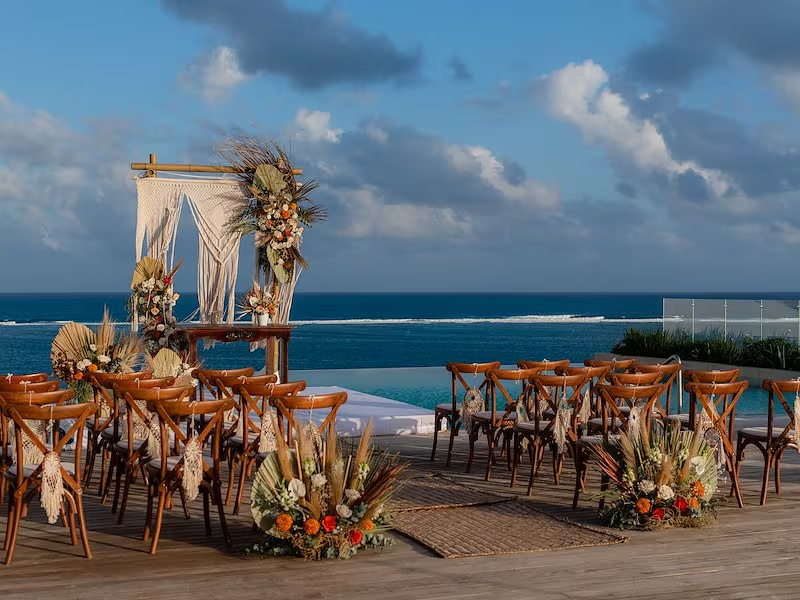

Getting legally married in Costa Rica is meaningfully simpler than in many other Latin American destinations. The country has no in-country residency requirement, no mandatory health screening, and a civil ceremony process that can happen within days of arrival. The main planning lift sits in advance paperwork: documents need to be apostilled and translated into Spanish before the ceremony, and a Costa Rican Notario Público (notary public, who in Costa Rica is also a licensed attorney) performs the civil marriage. Most major Guanacaste and Manuel Antonio resorts handle the coordination on your behalf.
Short answer: civil ceremony performed by a Costa Rican Notario Público, no in-country residency required, apostilled and Spanish-translated documents sent or hand-carried to the country, two witnesses, and roughly $500 to $1,200 in legal-only costs.
This guide walks through Costa Rica’s legal destination wedding process step by step, including a frank note on same-sex marriage law (which Costa Rica legalized in 2020, ahead of much of Latin America). Our Certified Destination Wedding Specialists can help you plan every detail of your big celebration.

Civil vs. Symbolic Ceremony in Costa Rica: At a Glance
| Civil Ceremony | Symbolic Ceremony | |
|---|---|---|
| Legally binding? | Yes, internationally recognized | No, marry legally at home before or after |
| Days in Costa Rica before ceremony | None required (arrive any time) | None required |
| Health screening | None required | None required |
| Documents | Passports, apostilled birth certificates, apostilled divorce/death decrees if applicable, single status affidavit, two witnesses | Passport only |
| Officiant | Notario Público (notary public, who is also a licensed attorney in Costa Rica) | Any officiant of your choice |
| Typical legal-only cost | $500–$1,200 | Included in most resort wedding packages |
Your Ceremony Options in Costa Rica
There are three ways to exchange vows in Costa Rica. Only one is legally binding, but all three can stand alone as the wedding moment itself.
Civil Ceremony (Legally Binding)
A civil ceremony is performed by a Costa Rican Notario Público, who in Costa Rica’s legal system is a licensed attorney with notarial authority (not the lower-stakes notary role common in the US). The notary handles the application, the document review, and the ceremony itself. The ceremony can happen at your resort, beach, rainforest, or any other approved venue. Two witnesses sign the marriage certificate alongside you and your partner. Once signed and filed with Costa Rica’s Registro Civil, your marriage is internationally recognized under the Hague Convention.
Symbolic Ceremony (Most Popular)
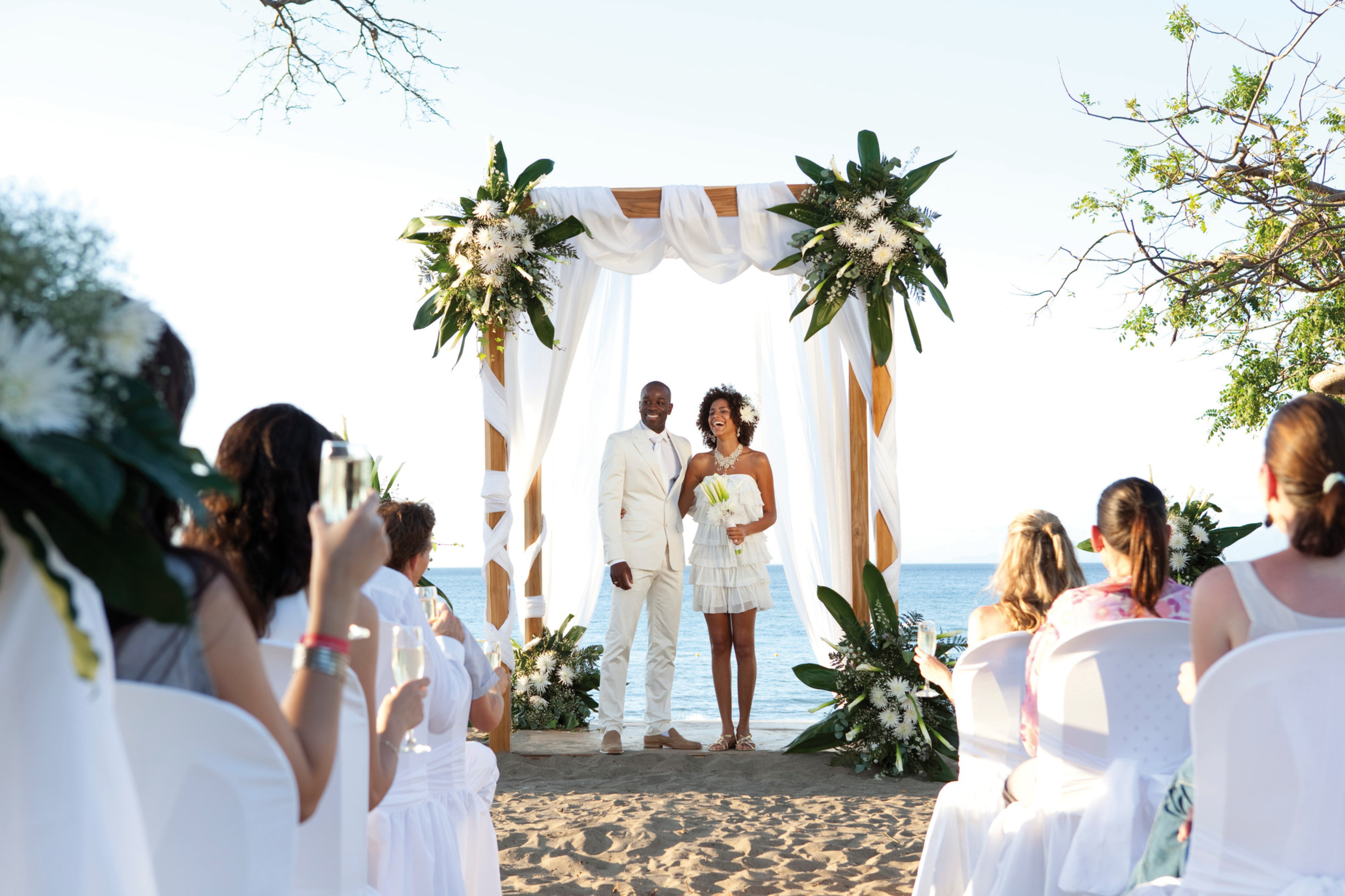
The majority of Costa Rica destination weddings are symbolic. Couples exchange vows, rings, and intentions without the paperwork, and handle the legal piece quietly at a courthouse back home before or after the trip. Symbolic ceremonies can happen anywhere: beachfront at a Guanacaste resort, in a rainforest clearing in Manuel Antonio, on a volcano-view terrace near Arenal, or at a Caribbean-coast venue in Cahuita. With no documents, no waiting period, and no advance paperwork, symbolic ceremonies offer maximum flexibility.
Religious Ceremony
Costa Rica has a strong Catholic tradition, and Catholic religious ceremonies can be legally binding if performed by a priest registered with the Costa Rican civil authorities. Protestant, Jewish, and other religious ceremonies are not automatically legally binding unless paired with a civil ceremony. Some resorts have on-site chapels or relationships with local clergy; if a specific denomination matters, plan for longer lead times (six to nine months is typical).

Costa Rica’s Legal Wedding Geography
Costa Rica’s legal wedding process is the same nationwide, but the resort-coordination depth varies meaningfully by region. Each of the country’s main wedding hubs offers a slightly different legal-coordination experience.
-
- Guanacaste and the Papagayo Peninsula (Northern Pacific Coast): Costa Rica’s largest wedding hub by volume, with the deepest legal-coordination experience. The luxury anchors (Four Seasons Papagayo, Andaz Costa Rica, Secrets Papagayo), the Tamarindo all-inclusive corridor, and the Nicoya Peninsula all coordinate civil ceremonies routinely.
-
- Manuel Antonio (Central Pacific Coast): Smaller but well-established legal-wedding scene with rainforest-meets-Pacific ceremony venues and resorts experienced in coordinating notaries and translators.
-
- Caribbean Coast (Limón, Cahuita, Puerto Viejo): A quieter wedding scene with fewer resort properties, but the same nationwide legal process applies. Couples here often work with independent wedding planners rather than full-service resort coordinators.
-
- Inland (Arenal, Monteverde): Active volcano resorts and cloud-forest properties can host legal ceremonies, though the coordination is less common than at Pacific-coast resorts. Best as a pre- or post-wedding adventure rather than the primary ceremony location.
Required Documents for a Legal Costa Rica Wedding
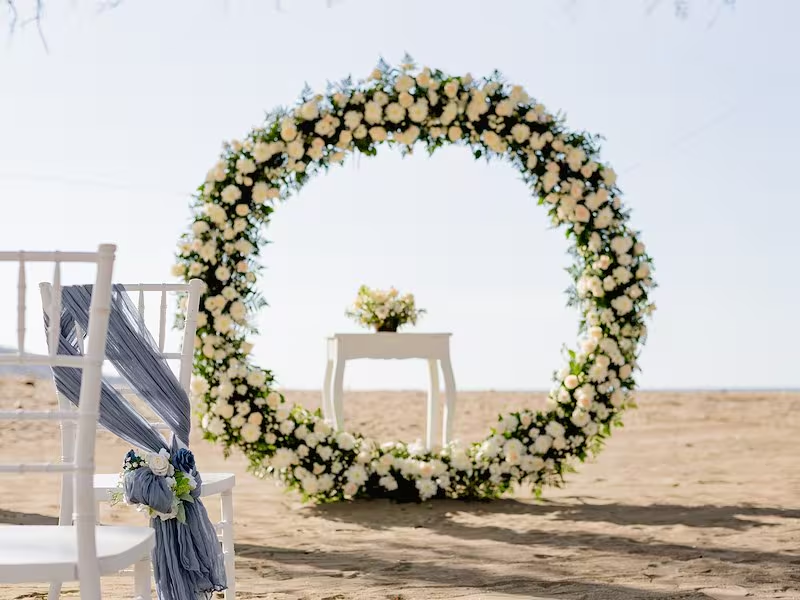
Allow 4 to 8 weeks before travel to gather apostilled and translated paperwork.
-
- Valid passports for both partners (six months of remaining validity recommended).
-
- Apostilled and translated birth certificates for both partners. Costa Rica joined the Hague Apostille Convention in 2011, so apostille is accepted in place of older consular-legalization processes.
-
- Apostilled divorce decree or death certificate of a previous spouse, if applicable.
-
- Single status affidavit (declaración jurada de soltera/o): a sworn statement affirming that you are legally free to marry. Each partner needs their own, notarized and apostilled.
-
- Two witnesses with valid passport or government-issued photo ID. Witnesses cannot be blood relatives of the couple.
All foreign documents must be apostilled in your home country and translated into Spanish by an official Costa Rican-licensed translator (the notario or resort coordinator typically arranges the translation). Expect to pay $40 to $100 per document for certified translation.
The Civil Ceremony Process in Costa Rica, Step by Step
Step 1: Apostille and Gather Documents at Home (4–8 Weeks Before Travel)
Request fresh certified copies of birth certificates and any divorce or death decrees. Apostille each through your home-country Secretary of State or equivalent authority. Draft and notarize a single status affidavit for each partner, then apostille those as well. US documents are apostilled through the Secretary of State in the issuing state; federal documents go through the US Department of State.
Step 2: Send Documents to Costa Rica (2–4 Weeks Before Travel)
Send digital and physical copies of your apostilled documents to your resort wedding coordinator or to the Notario Público, who will perform the ceremony. The notary arranges a Spanish translation through an official translator and prepares the marriage application paperwork. Hand-carry originals when you travel, in case any documents need to be re-verified locally.
Step 3: Arrive in Costa Rica
No mandatory waiting period and no health screening required. Most couples arrive a few days before the ceremony for guest welcome events, but the legal piece itself doesn’t require advance days in the country.
Step 4: The Civil Ceremony
The Notario Público performs the ceremony at your resort, beach, rainforest, or other chosen venue. Two witnesses sign your marriage certificate alongside you and your partner. The ceremony runs about 20 to 30 minutes in Spanish; many notaries are bilingual or arrange an English interpreter. The notario files the marriage with Costa Rica’s Registro Civil immediately after the ceremony.
Step 5: Recognize the Marriage at Home
After the ceremony, your Costa Rican marriage certificate is issued in Spanish. Since Costa Rica is part of the Hague Apostille Convention, the certificate can be apostilled through the Costa Rican Foreign Ministry (your notario or coordinator typically arranges this) before you leave the country. Once home, translate the apostilled certificate into English (or your home language) and file the translated copy with your local county clerk or vital records office to record the marriage.
Legal Wedding Costs in Costa Rica
| Item | Typical Cost (USD) | Notes |
|---|---|---|
| Apostille (per document, home country) | $20–$50 | Through your state Secretary of State |
| Certified Spanish translation (per document) | $40–$100 | Through a Costa Rican-licensed translator |
| Notario Público fee (ceremony + filing) | $300–$600 | Includes civil registration with Costa Rica’s Registro Civil |
| Apostille of Costa Rican marriage certificate | $30–$75 | Done in Costa Rica before departure |
| Resort legal-coordination fee (often bundled) | $0–$300 | Many resorts include this in wedding packages |
| Total legal-only cost | $500–$1,200 | Separate from resort wedding package, dining, and decor |
Working with Costa Rica Resorts on Legal Coordination
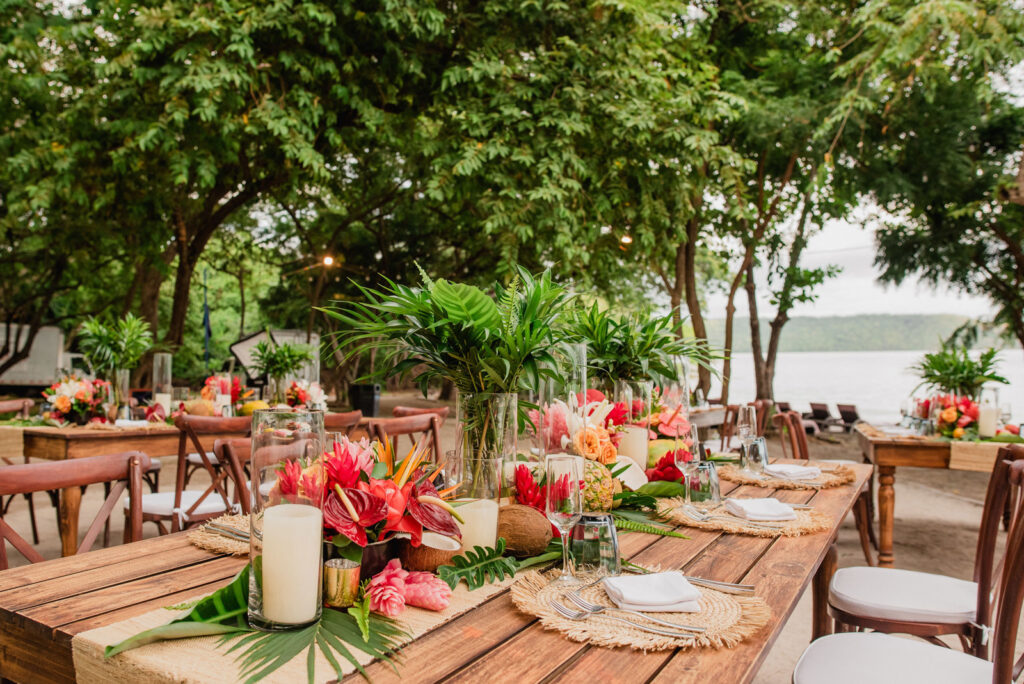
Costa Rica’s resort wedding scene has built up real legal-coordination experience in Guanacaste, the Papagayo Peninsula, Manuel Antonio, and the Nicoya Peninsula. Most major luxury and all-inclusive properties have dedicated wedding coordinators who manage the entire legal process: notary scheduling, translation coordination, document submission to the Registro Civil, witness pairing if needed, and post-ceremony apostille of your Costa Rican marriage certificate.
Resorts with strong legal-coordination experience include the Four Seasons Resort Costa Rica at Peninsula Papagayo, Andaz Costa Rica Resort at Peninsula Papagayo, Secrets Papagayo Costa Rica, Dreams Las Mareas Costa Rica, the JW Marriott Guanacaste, and the Tamarindo luxury anchors. Manuel Antonio’s boutique luxury properties (Arenas del Mar, Si Como No, Tulemar) also coordinate civil ceremonies routinely. Your Certified Destination Wedding Specialist can match you to a resort with the right legal-coordination depth for your timing.
Same-Sex Marriage in Costa Rica
Costa Rica legalized same-sex marriage in May 2020, becoming the first Central American country to recognize marriage equality nationwide. Same-sex couples can have a legally binding civil ceremony with identical procedures, documents, and protections as opposite-sex marriages.
Costa Rica’s resort wedding scene has embraced LGBTQ+ weddings, with multiple Guanacaste and Manuel Antonio properties running dedicated same-sex wedding programs and experienced coordinators. For LGBTQ+ couples seeking a legal Central American destination wedding, Costa Rica is one of the most welcoming and well-supported choices in the region.
What to Do When You Return Home
Your Costa Rican marriage certificate (acta de matrimonio), when apostilled by the Costa Rican Foreign Ministry, is recognized in the United States, Canada, the UK, and most other countries under the Hague Convention. Most couples have their notario or resort coordinator handle the apostille before leaving Costa Rica, which saves the hassle of dealing with the paperwork from abroad.
Once home, get the apostilled certificate translated into English (or your home language) by a certified translator and file the translated copy with your local county clerk or vital records office to register the marriage. Keep multiple certified copies for tax filings, name changes on passports and social security records, and immigration paperwork.

Costa Rica Legal Wedding FAQs
How long do we need to be in Costa Rica for a legal wedding?
Costa Rica has no mandatory residency requirement, which means couples can legally marry shortly after arrival. Most couples plan to arrive at least two to three days before the ceremony for welcome events and to give the local document review and translation processes time to settle. There’s no blood test, no health screening, and no Civil Registry queue to navigate (the Notario Público handles the registration).
Can same-sex couples legally marry in Costa Rica?
Yes. Costa Rica legalized same-sex marriage in May 2020, becoming the first Central American country to recognize marriage equality nationwide. Same-sex couples have identical procedures, documents, and protections as opposite-sex marriages. The country’s resort wedding scene has embraced LGBTQ+ weddings, with multiple Guanacaste and Manuel Antonio properties running dedicated same-sex wedding programs.
Will our Costa Rican marriage be recognized at home?
Yes, in nearly all cases. Costa Rica joined the Hague Apostille Convention in 2011, so apostilled marriage certificates are recognized in the United States, Canada, the United Kingdom, and most other Hague-Convention countries. Have your notario or coordinator apostille the Costa Rican certificate before you leave the country, then file the translated certificate with your local vital records office once home.
What is a Notario Público and why does it matter?
In Costa Rica’s legal system, a Notario Público is a licensed attorney with notarial authority (a much higher-stakes role than the US notary public, which just witnesses signatures). Notarios in Costa Rica are authorized to perform civil marriages, draft binding legal documents, and file with the Registro Civil. The notary handles your entire civil ceremony process from application to registration. Most resort wedding coordinators have relationships with reliable English-speaking notarios.
Pacific coast or Caribbean coast: which is best for a legal Costa Rica wedding?
The Pacific coast (Guanacaste, Papagayo Peninsula, Manuel Antonio, Nicoya Peninsula) has the deepest legal-coordination experience and the largest concentration of wedding-friendly resort properties. The Caribbean coast (Limón, Cahuita, Puerto Viejo) handles legal ceremonies under the same nationwide rules but has fewer resort wedding coordinators, so couples there typically work with independent wedding planners. For most legal Costa Rica weddings, the Pacific coast is the more practical choice.
A Note on Verifying Current Requirements
Legal requirements can change, and Costa Rican notaries and the Registro Civil adjust procedures and fees periodically. Before booking, confirm current requirements with your resort’s wedding coordinator, your Certified Destination Wedding Specialist, or the US Embassy in Costa Rica.
Start Planning Your Costa Rica Wedding
A legal Costa Rica wedding offers one of the most practical paths to a legally binding Central American destination wedding. The combination of no residency requirement, marriage-equality legality, refined Pacific-coast resort coordination, and the country’s reputation for warmth and natural beauty makes Costa Rica one of the smoothest places in the region to navigate a civil ceremony.
Our Certified Destination Wedding Specialists coordinate the legal piece (apostille tracking, translation, notary scheduling, registration filing) so you can focus on the celebration. Fill out our online wedding planning form to get started.
About the Author

Maggie Sabin
Maggie started as the SEO Manager at DestinationWeddings.com in 2024, where she works to drive organic traffic and conversions while creating meaningful, SEO-optimized content for the website. Previously, Maggie's career spanned from Human Resources & Recruitment to teaching at international schools for almost 10 years. Maggie spends her free time traveling, learning new languages, reading non-fiction books, working out, going to the beach and spending time cuddling her dog, Lola!