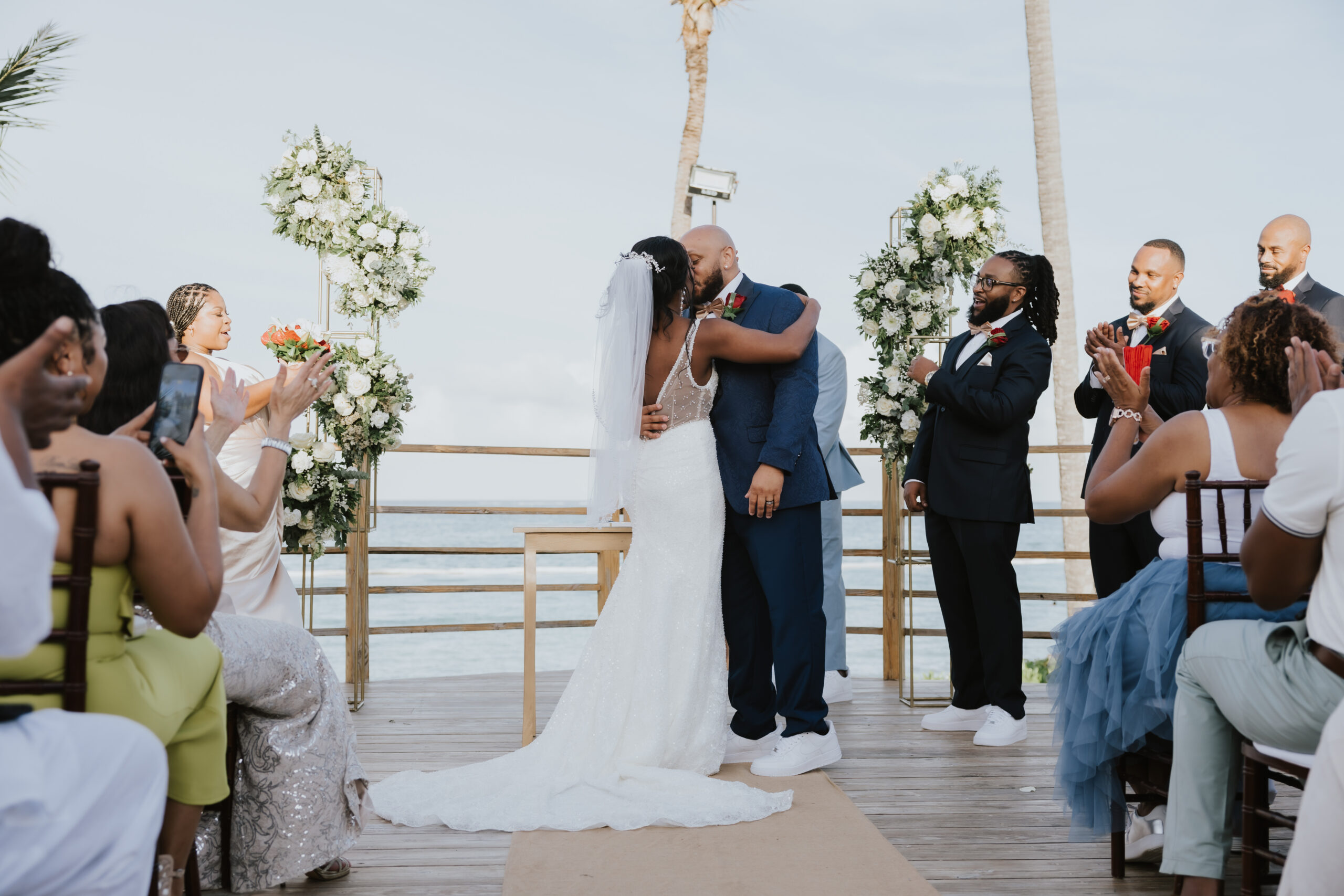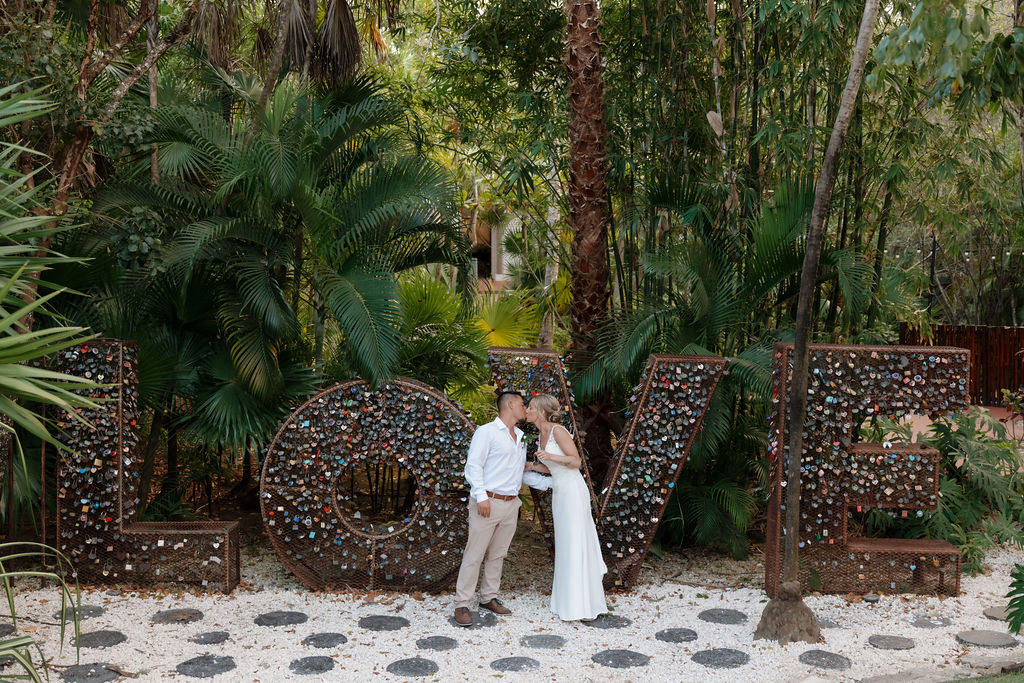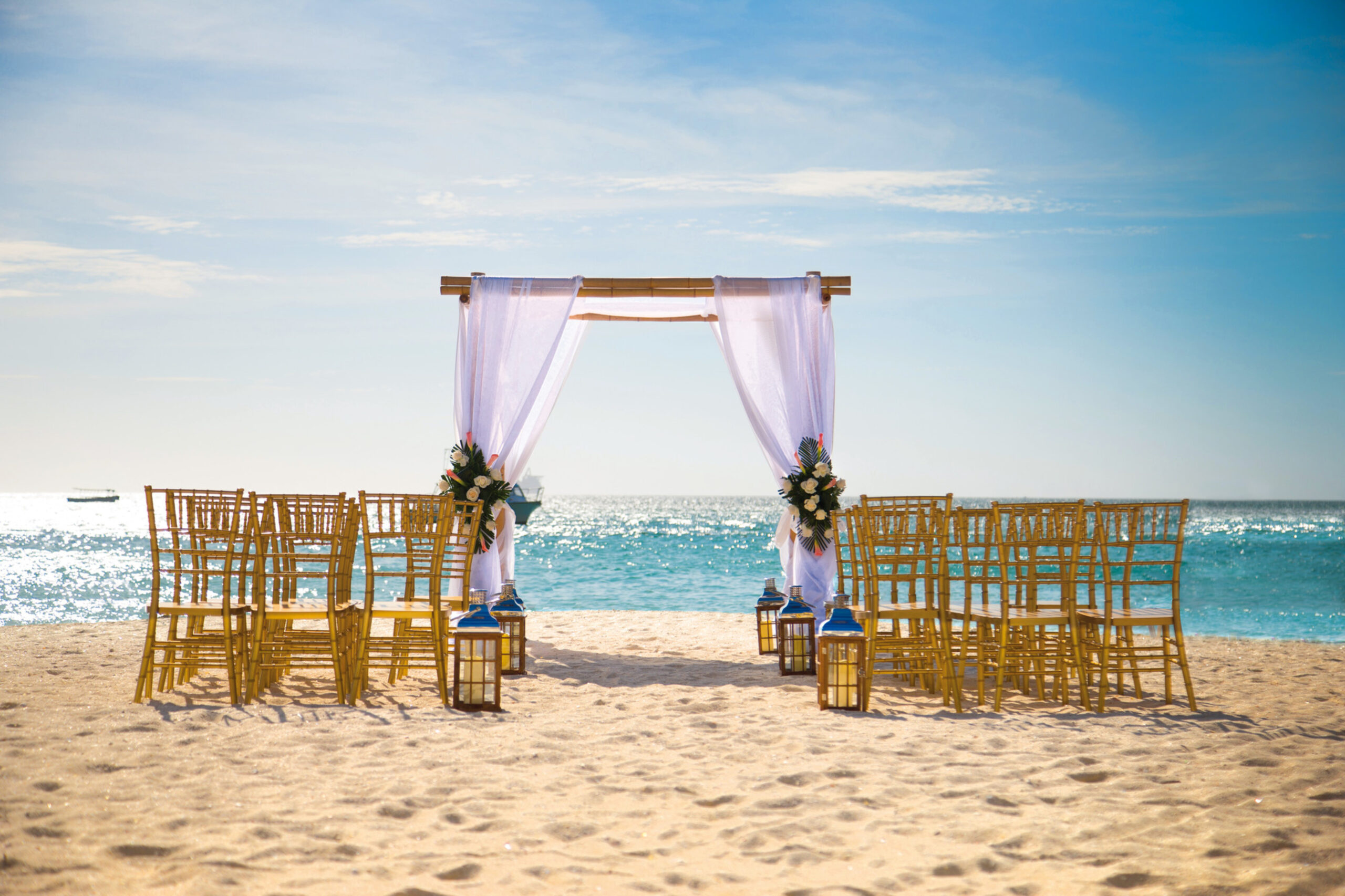

Saying “I do” in Tulum can absolutely be legally binding! Mexico’s civil ceremony process is well-worn, and Tulum’s own Registro Civil handles foreign weddings from the bohemian hotel zone and the surrounding jungle every week. The catch with Tulum specifically: the boutique, low-rise hotel zone has more variable legal-coordination depth than the bigger all-inclusive corridors of Cancun or central Riviera Maya, so picking the right resort and planner matters a little more here.
Short answer: a civil ceremony at the Tulum Registro Civil (or off-site with a Juez del Registro Civil), 3 to 4 business days in country, apostilled and Spanish-translated documents, a brief health screening on arrival, and roughly $700 to $2,000+ in legal-only costs.
This guide focuses on the Tulum-specific pieces of the legal process. For the full overview of Mexican legal requirements (apostille, perito traductor, complete document list, same-sex marriage law), see our Mexico legal marriage hub. For Tulum weather and timing, see our guide to the Best Time to Get Married in Tulum.
Civil vs. Symbolic Ceremony in Tulum: At a Glance
| Civil Ceremony | Symbolic Ceremony | |
|---|---|---|
| Legally binding? | Yes, internationally recognized | No, marry legally at home before or after |
| Days in Tulum | 3–4 business days minimum | None required |
| Documents | Passports, apostilled birth certs, FMM, witnesses, health certificate | Passport only |
| Best for | Couples who want one ceremony, legally recognized in both countries | Couples handling legal paperwork at home who want simpler planning |
Your Ceremony Options in Tulum
There are three ways to exchange vows in Tulum. Only one is legally binding, but all three can stand alone as the wedding moment itself, and Tulum’s setting is uniquely suited to each.
Civil Ceremony (Legally Binding)
A civil ceremony is performed by a Juez del Registro Civil from the Tulum municipality. The judge can perform the ceremony at the registry office in central Tulum (about 15 to 20 minutes from the hotel zone) or, for an additional fee, travel to your resort, beach, jungle clearing, or cenote venue. You’ll need four witnesses with valid government-issued ID, apostilled and translated documents, and a health certificate completed in Mexico. Once your acta de matrimonio is signed by the judge and witnesses, your marriage is internationally recognized.
Symbolic Ceremony (Most Popular)
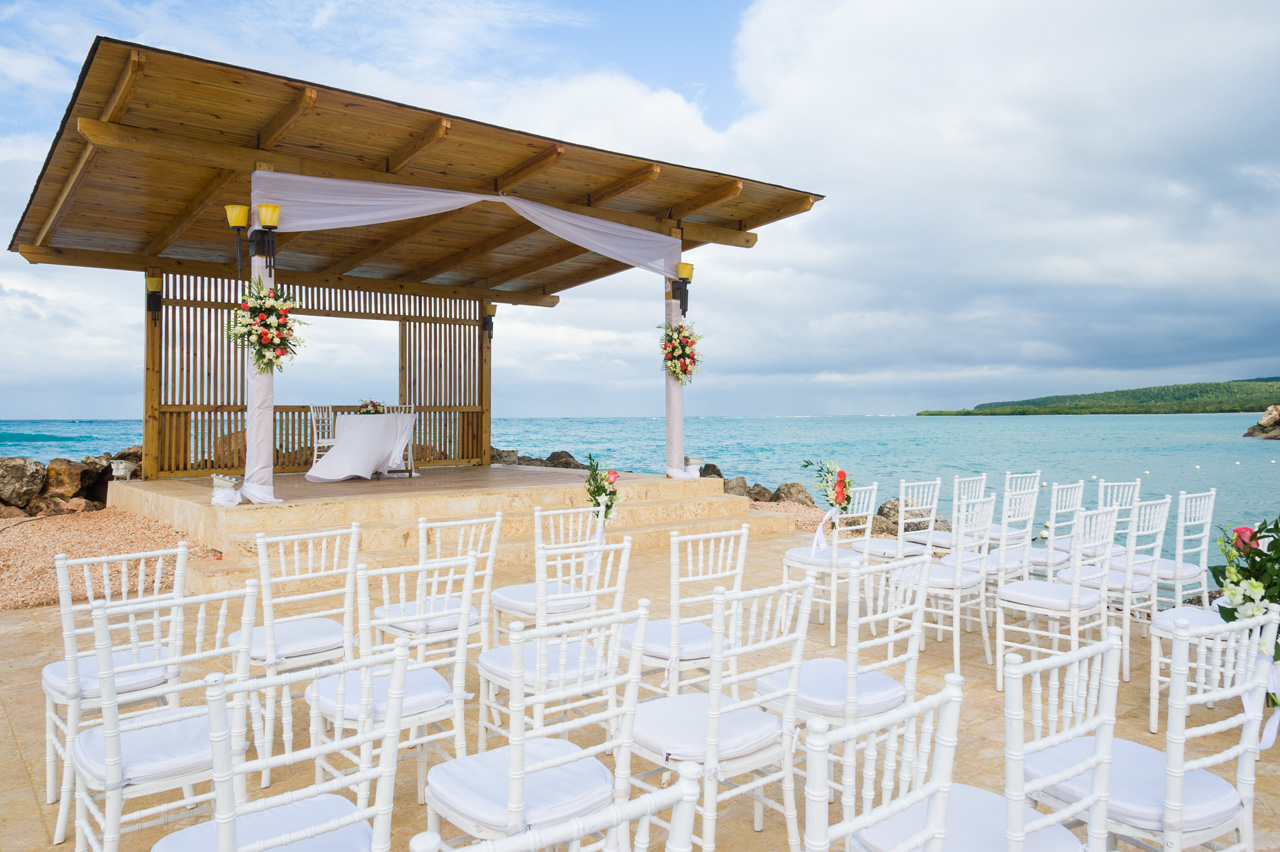
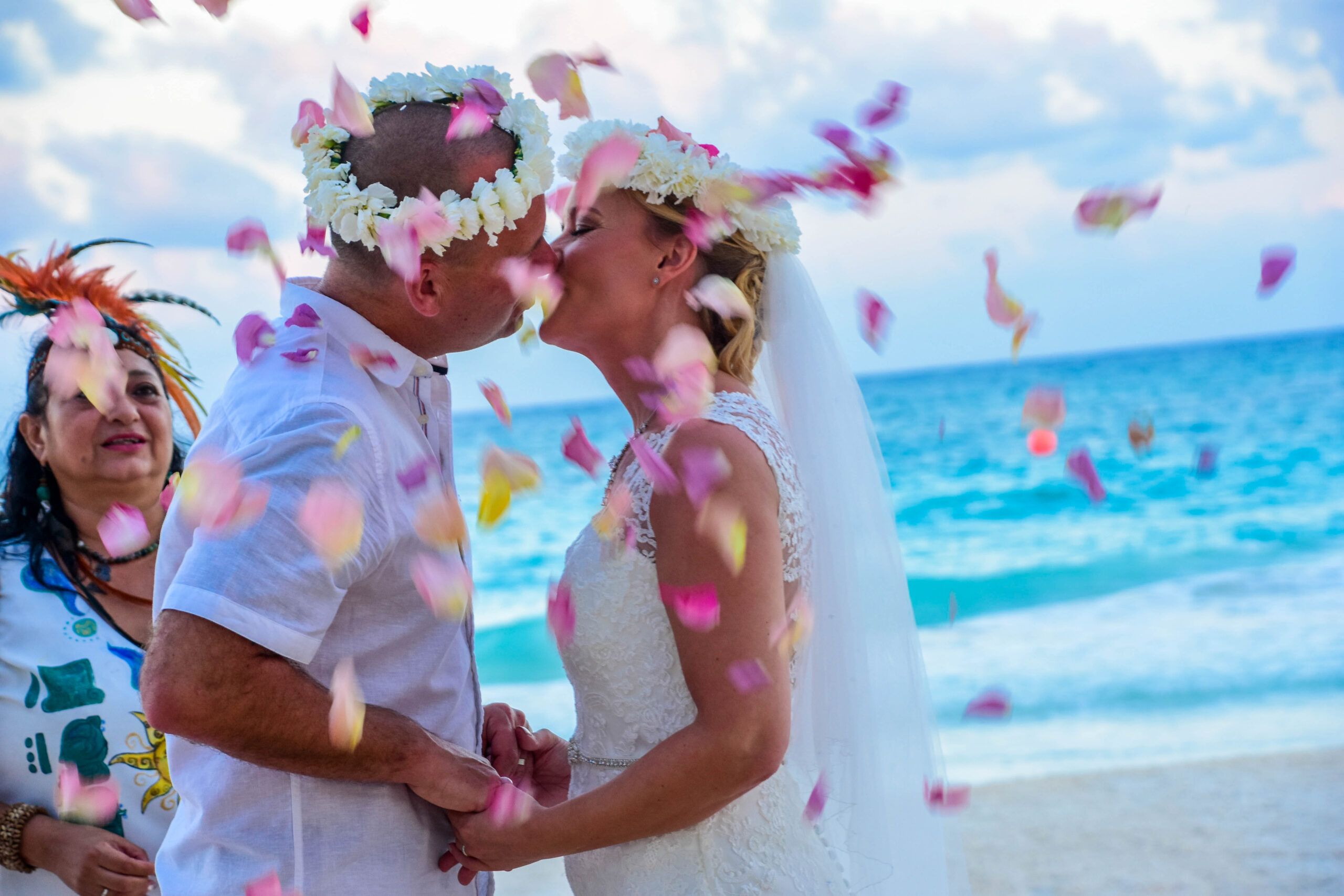
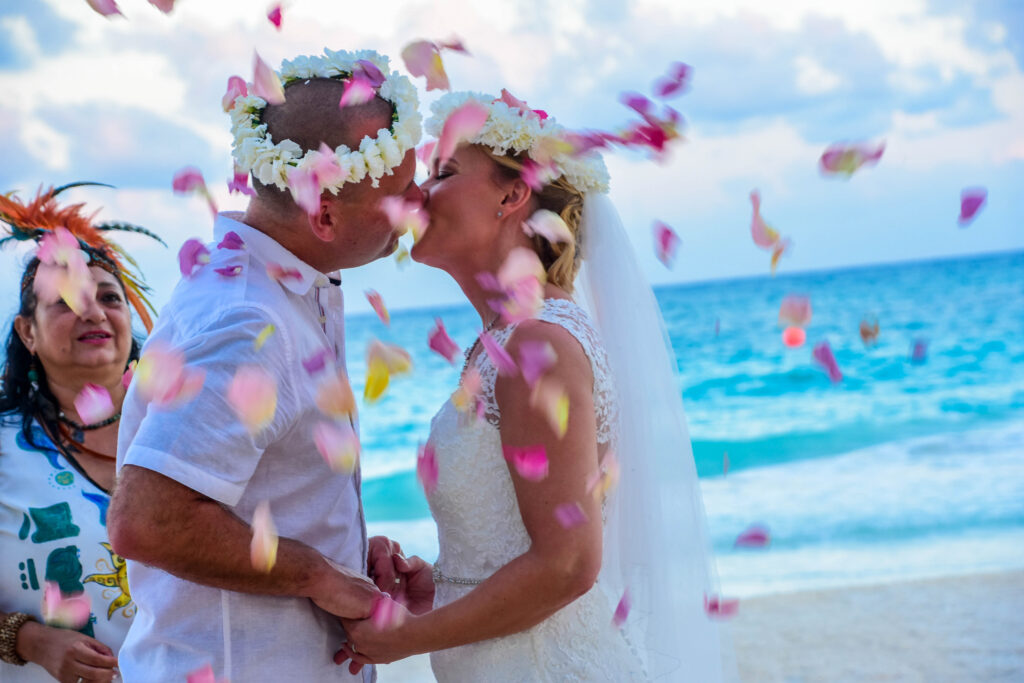
The vast majority of Tulum destination weddings are symbolic, and the destination is arguably built for them. Couples exchange vows, rings, and intentions without the paperwork, and handle the legal piece quietly at a courthouse back home before or after the trip. Symbolic ceremonies in Tulum lean into the destination’s bohemian, jungle-meets-sea spirit: cenote ceremonies at dawn, beachfront vows below the cliff-top Mayan ruins at golden hour, jungle clearings lit by paper lanterns, palapa pavilions with the Caribbean stretching beyond. Many couples also weave in Mayan ritual elements (a Mayan shaman blessing, copal incense, a sacred-cacao ceremony) to honor the destination’s heritage. With no documents, health tests, or residency requirements, most all-inclusive wedding packages default to this option.
Religious Ceremony
Some couples add a religious ceremony, conducted by a priest, rabbi, minister, or other officiant. Religious ceremonies aren’t legally binding in Mexico unless paired with a civil ceremony. Religious infrastructure in Tulum itself is light compared to Cancun or central Riviera Maya. Couples wanting a religious ceremony often choose a resort with on-site chapel facilities (Bahia Principe Grand Tulum and Bahia Principe Luxury Sian Ka’an both have chapels), arrange for a visiting officiant, or host the religious moment at a Playa del Carmen church before traveling south to Tulum for the symbolic celebration. Start this conversation with your Specialist at least nine months out.
Tulum Municipality Specifics
Tulum sits in the Tulum municipality of Quintana Roo, with its own Registro Civil separate from Solidaridad (Playa del Carmen) and Cozumel. The civil ceremony, paperwork submission, and judge dispatch all run through this office.
A few Tulum-specific considerations:
- Tulum Registro Civil location: central Tulum town along Avenida Tulum, about 15 to 20 minutes by car from most hotel-zone resorts.
- Cenote ceremony permits: natural cenotes outside resort grounds typically require separate permits coordinated by the wedding planner. Some cenotes require closure to the public temporarily for the ceremony, which carries an additional fee.
- The Tulum archaeological site: the cliff-top Mayan ruins themselves do not permit private ceremonies inside. Several south-zone resorts position couples for ruin-backdrop photography at golden hour, but the ceremony itself happens on resort grounds or a separately permitted venue.
- Hotel-zone infrastructure: Tulum’s eco-conscious, low-rise hotel zone has more rustic infrastructure than Cancun’s Hotel Zone or central Riviera Maya. Power outages, limited cell service, and less polished resort-coordinator pipelines are realistic. Choose your resort with this in mind.
Required Documents for a Legal Tulum Wedding

The document list below is the standard Mexico-wide requirement, applied through the Tulum Registro Civil. Allow 4 to 8 weeks before travel to gather apostilled and translated paperwork.
- Valid passports for both partners (six months of remaining validity).
- Tourist permit (FMM), issued automatically on arrival in Mexico.
- Apostilled and translated birth certificates for both partners. Three certified copies recommended.
- Marital regime declaration (pre-nuptial property statement): joint or separate ownership. Standard in Mexico, often handled at the registry.
- Apostilled divorce decree or death certificate of a previous spouse, if applicable.
- Health certificate from a Mexican physician (HIV and syphilis screening, done in Mexico, valid 14 days).
- Four witnesses, each with a valid passport or government-issued photo ID.
- Certificate of No Impediment, if your home country issues one, apostilled and translated.
All foreign documents must be apostilled in the home country and translated into Spanish by a Mexico-licensed perito traductor. Our Mexico legal hub covers the apostille and perito traductor process in detail.
The Civil Ceremony Process in Tulum, Step by Step
Step 1: Apostille and Gather Documents at Home (4–8 Weeks Before Travel)
Request fresh certified copies of birth certificates and any divorce or death decrees. Apostille each through your home-country Secretary of State or equivalent authority. Send the originals to your resort wedding coordinator or Specialist so they can arrange Spanish translation through a perito traductor in Quintana Roo.
Step 2: Arrive in Tulum and Complete Health Screening
On your first or second day in country, visit the resort-recommended lab for the required blood tests. Results are typically issued within 24 to 48 hours and are valid for 14 days. Cost runs about $100 to $300 per person.
Step 3: Submit Application to the Tulum Registro Civil
Your resort coordinator submits the marriage application, your apostilled and translated documents, your FMM, and your health certificate to the Tulum Registry Office. Approval typically lands in 24 to 48 hours.
Step 4: The Civil Ceremony
A Juez del Registro Civil performs the ceremony at the Tulum registry office or, for an additional fee, at your resort, beach, jungle, or cenote venue. Four witnesses sign your acta de matrimonio. The ceremony runs about 20 to 30 minutes in Spanish; most resorts arrange an English interpreter.
Step 5: Apostille Your Mexican Marriage Certificate
After the ceremony, your acta de matrimonio is issued in Spanish. To make it valid in your home country, apostille the Mexican certificate through the Quintana Roo Secretaría de Gobierno before you leave, then have it translated to English upon returning home.

Legal Wedding Costs in Tulum
Tulum’s fee structure follows Quintana Roo’s broader pattern, but off-site ceremony fees can run higher than at Solidaridad if you’re marrying at a remote cenote, jungle, or south-zone venue (the judge’s travel time factors in). The legal piece sits separately from your resort wedding package, dining, and decor.
| Item | Typical Cost (USD) | Notes |
|---|---|---|
| Apostille (per document, home country) | $20–$50 | Through your state Secretary of State |
| Certified Spanish translation (per document) | $50–$150 | Must be a Quintana Roo perito traductor |
| Health screening (per person) | $100–$300 | Required, done in Mexico, valid 14 days |
| Civil ceremony at Tulum registry office | $40–$120 | Most affordable option |
| Off-site civil ceremony (resort, beach, cenote) | $250–$600 | Judge’s travel fee; cenote/jungle venues run higher |
| Cenote ceremony permit (off-resort) | $500–$2,000+ | Closes the cenote to the public; varies by cenote |
| Resort legal wedding package (bundled) | $500–$1,500 | Includes coordinator, judge, translator, and witnesses if needed |
| Total legal-only cost | $700–$2,000+ | Higher with cenote permit; separate from resort wedding package |
Working with Tulum Resorts on Legal Coordination
Here’s the honest read on Tulum: legal-coordination depth varies more here than in Cancun or central Riviera Maya. Tulum’s boutique, low-rise hotel zone is full of beautiful properties, but some are too small or rustic to staff a full wedding-coordination office. Couples wanting a legal ceremony should confirm the legal process experience with the resort directly before booking.
Resorts with strong legal-coordination experience include Bahia Principe Grand Tulum, Bahia Principe Luxury Sian Ka’an, Dreams Tulum Resort & Spa, Hilton Tulum, and Hotel Xcaret (just north of Tulum proper). Smaller boutique properties may require couples to work with an external wedding planner to navigate the registry process. Your Certified Destination Wedding Specialist can match you to the right resort for your timing and your appetite for hands-on planning.
Same-Sex Marriage in Tulum
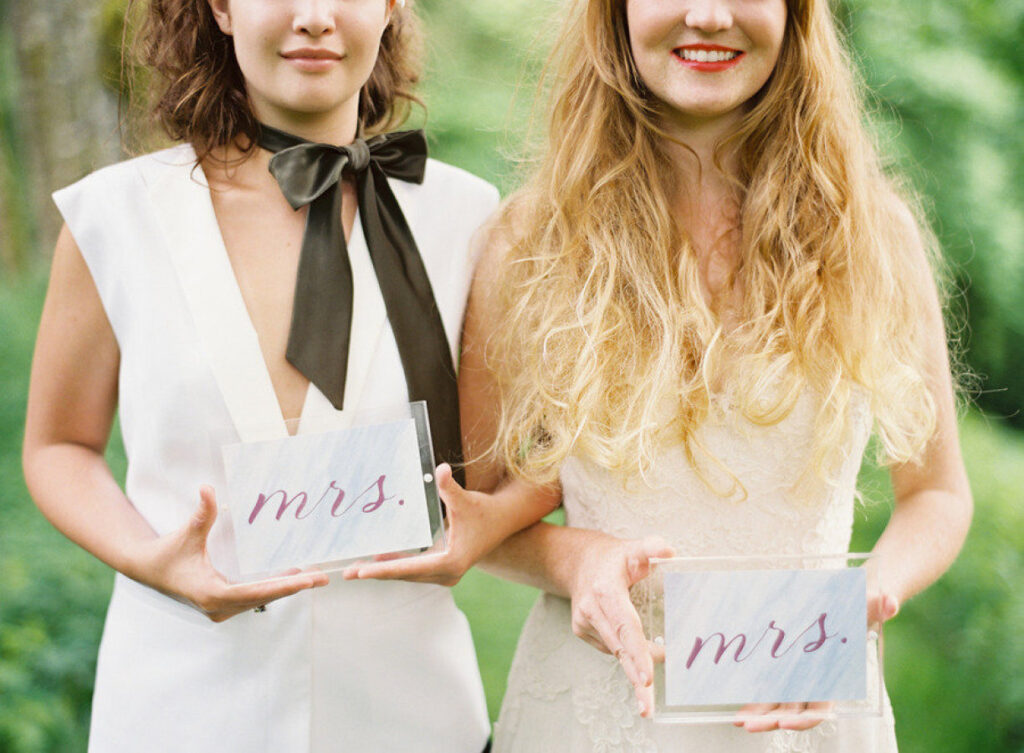
Quintana Roo legalized same-sex marriage in 2012, a full decade ahead of the 2022 national change. The Tulum Civil Registry Office has hosted legal same-sex civil ceremonies for years, with identical procedures, documents, and protections as opposite-sex marriages. Tulum’s bohemian, eco-conscious resort scene is broadly welcoming to LGBTQ+ couples, and several resorts actively promote their experience with LGBTQ+ weddings.
What to Do When You Return Home
Your Mexican marriage certificate (acta de matrimonio) is recognized in the United States, Canada, the UK, and most other countries under the Hague Convention, provided it’s apostilled by the Quintana Roo Secretaría de Gobierno before you leave Mexico. Once home, get the apostilled certificate translated into English by a certified translator and file the translated copy with your local county clerk or vital records office.
For tax filings, name changes on passports, social security records, and immigration paperwork, your translated and apostilled certificate is the document of record. Keep multiple certified copies, as you’ll need several across different filings.
Tulum Legal Wedding FAQs
Can we legally marry at a cenote in Tulum?
Yes. The Juez del Registro Civil can perform the legal civil ceremony at a cenote, jungle, or beach venue for an additional travel fee. Natural cenotes outside resort grounds typically require a separate permit coordinated by your wedding planner, and some require closing the cenote to the public temporarily for the ceremony (an added fee of $500 to $2,000+).
How is the Tulum Registro Civil different from Solidaridad’s?
Tulum and Solidaridad are separate Quintana Roo municipalities, each with its own Registro Civil. The legal requirements (documents, health screening, apostille, perito traductor) are identical because the law is statewide. The practical differences are timing and venue logistics: Solidaridad serves the busier Playa del Carmen corridor, while the Tulum Registry handles the southern hotel zone. Your resort’s location determines which registry applies.
Should we expect any Tulum-specific infrastructure quirks?
Yes. Tulum’s eco-conscious, low-rise hotel zone has more rustic infrastructure than the bigger Cancun or central Riviera Maya corridors. Power outages, intermittent cell service, and varying resort wedding-team capability are all realistic. For a legal ceremony specifically, choose a resort with strong legal-coordination experience (see the list above) or budget for an external wedding planner.
Can we get legally married at the Tulum Mayan ruins?
No. The Tulum archaeological site itself doesn’t permit private ceremonies inside. Several south-zone resorts position couples for ruin-backdrop photography at golden hour, but the legal ceremony has to happen at the registry office or another permitted venue (resort, beach, cenote, jungle).
A Note on Verifying Current Requirements
Legal requirements can change, and individual Quintana Roo municipalities adjust fees and documentation periodically. Before booking, confirm current requirements with your resort’s wedding coordinator, your Certified Destination Wedding Specialist, or the US Embassy in Mexico.
Start Planning Your Tulum Wedding
A legal Tulum wedding is absolutely doable with the right resort, the right planner, and the right amount of paperwork lead time. The destination’s bohemian setting, jungle-meets-sea spirit, and unique cenote and ruins-adjacent venues make it worth the extra coordination for couples drawn to something a little off the beaten path.
Our Certified Destination Wedding Specialists know which Tulum resorts have the deepest legal-coordination bench, which cenotes are worth the permit fee, and how to read the trade-offs between Tulum’s boutique pace and the broader Riviera Maya machine. Fill out our online wedding planning form to get started.

About the Author

Maggie Sabin
Maggie started as the SEO Manager at DestinationWeddings.com in 2024, where she works to drive organic traffic and conversions while creating meaningful, SEO-optimized content for the website. Previously, Maggie's career spanned from Human Resources & Recruitment to teaching at international schools for almost 10 years. Maggie spends her free time traveling, learning new languages, reading non-fiction books, working out, going to the beach and spending time cuddling her dog, Lola!