
Congratulations. The ring’s on, the calls are made, and somewhere in the next few weeks the question shifts from “can you believe it” to “so what’s the plan?”
This is a guide to the first 90 days. Not the whole wedding, just the stretch where a handful of decisions quietly determine everything that follows. Get these right and the next year is mostly pleasant admin. Get them in the wrong order and you’ll spend months undoing things.

Your First 90 Days at a Glance
| When | What to do |
|---|---|
| Days 1 to 14 | Insure the ring, resize it if needed, tell the people who’d hate to find out online. Nothing else |
| Days 15 to 30 | One unhurried conversation: rough guest count, rough budget, near home or away |
| Days 31 to 60 | Research destinations and seasons, get real cost figures, talk to a Specialist. Still book nothing |
| Days 61 to 90 | Shortlist resorts, hold your date and room block, tell your wedding party |
First, the Part That Isn’t Planning
Take a couple of weeks before you do anything practical. Celebrate, tell the people closest to you directly rather than letting them find it on social media, and get the ring resized and insured if you haven’t.
That’s genuinely all that’s urgent, and we’ve covered it properly in what to do the moment you get engaged. The rest of this guide picks up where that leaves off, around week three, when you’re ready to make decisions.
1. Discuss Wedding Dreams and Priorities
You’ve probably imagined what your dream wedding would look like at least once, if not for your whole life. Now is the time to talk to your partner and compare expectations. Do the two of you want a big party? A cozy celebration with your closest friends?
Talk about the things that you each consider non-negotiable. Maybe you’ve always dreamed of getting married in the church where your parents said their vows. Maybe you want to incorporate a special tradition or add a bit of adventure to your wedding in a far-off locale. Share your thoughts with your partner and listen to theirs. The two of you will start to see your shared vision fall into place.
Another important part of this conversation is where you want to get married. In your current city? In your hometown? Or somewhere completely new, like a destination wedding?

2. Choose a Wedding Date
Next, it’s time to settle on a date. Although peak season for weddings is May through September, there’s no “right” answer for this. Couples can and do get married at any time of the year.
Of course, there are things to consider here. Summer is a popular time because it promises good weather and gorgeous flowers. But if you’re considering a destination wedding, you might want to look at different times of the year. Most popular wedding destinations will have a peak season that often differs from the traditional wedding season. You may be able to find availability more easily, and more cheaply, in the off-season.
3. Start Researching a Destination Wedding
If you’re interested in a destination wedding, it’s time to get researching. There are countless options, from sunny beaches to lush, tropical getaways. Review locations, venues, and packages to help shape your vision.
Not sure where to start? Our Certified Destination Wedding Specialists can help you plan your day with zero stress.
4. Draft a Budget and Explore Funding Options
It’s no secret that weddings are pricey. Sit down and discuss the budget with your partner and anyone else contributing financially before you look at a single venue.
You may assume a destination wedding is the more expensive option. It usually isn’t. The average wedding in the United States now runs about $36,000. Couples who plan a destination wedding with our Certified Destination Wedding Specialists spend around $10,000, covering their own wedding package, room, airfare, and add-ons rather than the whole group’s costs. The gap comes down to one thing: at an all-inclusive resort, you aren’t paying a per-plate catering bill for every guest.
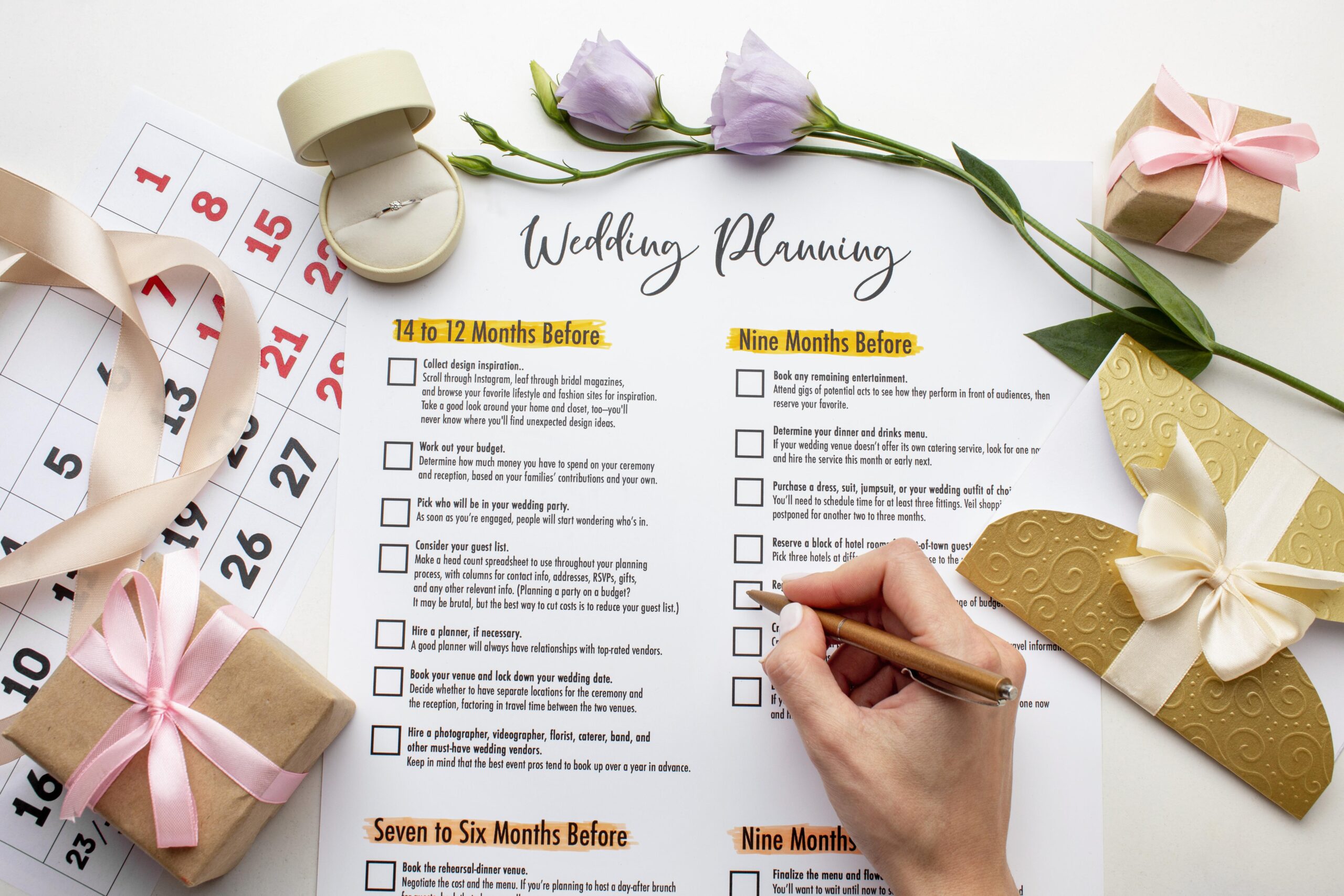
5. Create a Wedding Checklist
Once you’ve gotten your footing, it’s time to put together a checklist. These days, many couples create a wedding website. It’s easy to make a personalized site to share updates and details about the celebration with your guests.
RELATED: Your Destination Wedding Checklist
6. Put Together Your Guest List & Wedding Party
Start putting together your guest list. Whether you’re going big or small, you’ll need to know who’s coming to plan for accommodations, food, and other details.
Of course, you’ll also need to choose your wedding party. Some couples have huge parties with many friends and family members. Others choose a few close loved ones to attend them on their big day. Keep in mind that if you’re planning on having a destination wedding, depending on the package you choose, your guest list might be limited, so you’ll want to narrow down your list accordingly.
7. Gather Inspiration
Now that you’ve celebrated, it’s time to start gathering inspiration, with intention. Instead of endless scrolling, create a purposeful mood board or digital folder where you can collect visuals that truly speak to you. Explore Pinterest, Instagram, and wedding blogs for ideas on decor, color palettes, attire, and venues.
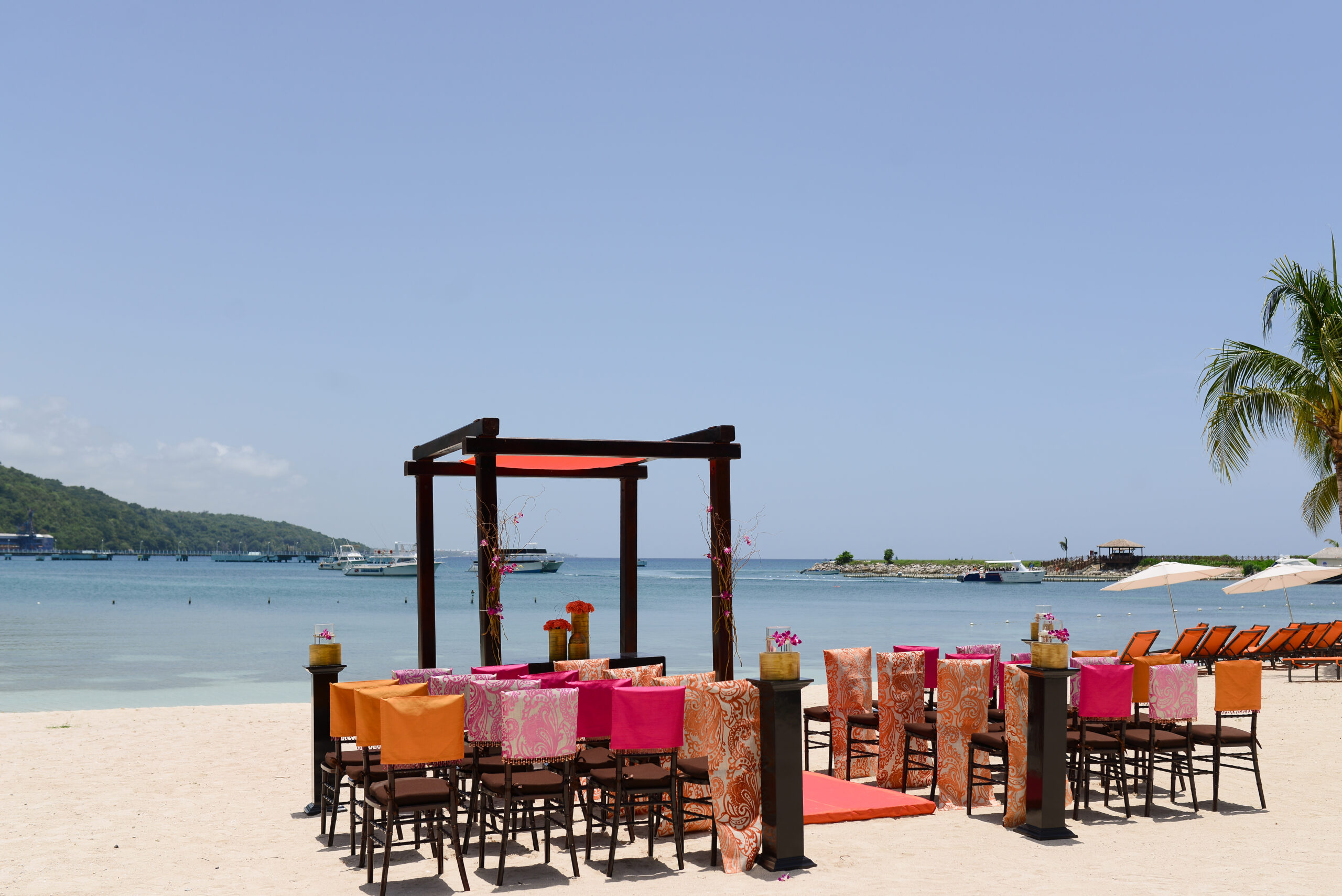
If you’re dreaming of a destination wedding, start saving inspiration that fits your ideal setting, whether that’s a beachfront ceremony or a garden celebration in a tropical destination.
8. Look for Vendors
This is the stage to start researching key vendors like photographers, florists, and officiants, especially if your celebration will be local. For destination weddings, most everything you’ll need is included in your all-inclusive wedding package. If there’s a chance you’ll want to use outside vendors, review the resort’s preferred vendor list or speak with your on-site wedding coordinator. These professionals know the area and can simplify your planning process, ensuring every detail is handled seamlessly.
9. Work With a Destination Wedding Specialist
Consider working with one of our Certified Destination Wedding Specialists early on. A Specialist can manage logistics, vendor communication, and travel arrangements so you can focus on enjoying the process. Because they have established relationships with top resorts, they can often negotiate exclusive perks, upgrades, or package enhancements. Working with an expert not only saves time but also ensures your wedding vision comes to life with ease.
10. Plan an Engagement Party
Before you find yourself walking down the aisle, don’t forget to take the time to celebrate your engagement. Engagement parties can be big or small, with extended guest lists or a few close friends. For a destination wedding, an engagement party on location can be the perfect preview for the big day.
11. Capture the Moment
This is the time to take engagement photos. These commemorate this big step in your relationship and can be used for your wedding website or save-the-dates. For a destination wedding, consider finding a backdrop that fits your location’s theme. Whatever you choose as your background, make sure it’s just as stunning as you are.

12. Finalize Major Details and Secure Services
When you have done your research and made your decisions, it’s time to book your vendors. Finalizing all those details can happen months before the wedding so that your plan is in place.
When you choose a destination wedding with us, our Certified Destination Wedding Specialists are here to help make this process smooth and stress-free by taking care of all these details so you don’t have to.
13. Enjoy the Journey
Wedding planning might take up a lot of your attention, but don’t let it overwhelm you. Enjoy your time together as an engaged couple and take breaks when you need them. Where your budget allows, try and engage professionals as they help ease the burden so you can focus on this stage of your relationship.
Five Things Not to Do After Getting Engaged
The mistakes below are common, expensive, and entirely avoidable.
1. Don’t set the date before checking with the people who can’t miss it. Four or five people genuinely cannot be absent from your wedding. Ask them about the season before you announce anything, not after. Moving a date you’ve already told fifty people about is a much harder conversation than picking a different one now.
2. Don’t sign anything non-refundable in the first month. Excitement and deposits are a bad combination. Almost nothing needs to be booked in your first four weeks, and the venue that’s pressuring you to decide today will still have availability next month.
3. Don’t tell people they’re invited. It happens naturally in the glow of the announcement, and then your guest list has forty people on it before you’ve worked out what you can afford. Say “we’d love to celebrate with you” and keep the actual list private until it’s final.
4. Don’t price venues before you have a rough guest count. Every quote you receive is meaningless without a number attached. Guest count is the single biggest driver of what a wedding costs, and researching venues without one wastes weeks.
5. Don’t let someone else’s opinion become your budget. Family members contributing money get a voice, and that’s fair. Family members offering opinions don’t. Decide early, as a couple, which is which.

What to Do After Getting Engaged FAQs
How long after getting engaged should you start wedding planning?
Most couples wait two to four weeks before doing anything practical, then spend the next two months on research rather than bookings. If you’re planning a destination wedding for 30 or more guests, aim to have your resort and date held around 12 months out.
What is the first thing to plan after getting engaged?
Your rough guest count, before anything else. It determines your budget, the venues that can host you, and how far ahead you need to book. Venue quotes mean nothing until you can attach a number to them.
Should you announce your wedding date right away?
Not until you’ve checked the season with the handful of people who genuinely can’t miss it. Once a date is public, it’s very hard to move, and destination weddings depend on guests being able to book time off well ahead.
Do you need a wedding planner if you’re having a destination wedding?
You don’t have to hire one. Our Certified Destination Wedding Specialists are complimentary, and resorts include an on-site coordinator who handles the day itself. Between the two, most couples find they don’t need to pay for separate planning.
Ready to Start Planning Your Dream Wedding?
Putting a wedding together can feel stressful and overwhelming. But don’t forget that it’s supposed to be enjoyable, too- a time for you and your partner to look forward to together.
Our Certified Destination Wedding Specialists take the stress out of planning your big day. Our experience and resources help craft a dream destination wedding that is perfect for you. Simply fill out our quick wedding planning form to get started planning your big day!

About the Author

Maggie Sabin
Maggie started as the SEO Manager at DestinationWeddings.com in 2024, where she works to drive organic traffic and conversions while creating meaningful, SEO-optimized content for the website. Previously, Maggie's career spanned from Human Resources & Recruitment to teaching at international schools for almost 10 years. Maggie spends her free time traveling, learning new languages, reading non-fiction books, working out, going to the beach and spending time cuddling her dog, Lola!