The Best Months To Get Married in Jamaica
A wedding in Jamaica has a particular rhythm. Trade winds carry the smell of jerk smoke and sea salt, the soft pulse of reggae drifts in from the resort bar, and the Caribbean shifts from impossibly clear at noon to amber-soft by evening. The big question for most couples planning a Jamaica wedding isn’t whether the island will deliver. It’s nailing down the right month for the kind of celebration you’re picturing.
Short answer: mid-November through April. That window lands squarely in Jamaica’s dry season, brings reliably warm but not punishing temperatures, and largely sidesteps the island’s lighter (but still present) sargassum window. Late summer and early fall come with a hurricane risk, though Jamaica sits south of the typical Atlantic track and is hit less often than its Caribbean neighbors.
Here’s how to think through Jamaica’s wedding calendar season by season and month by month.
Jamaica Wedding Season at a Glance
| Season | Months | Weather | Sargassum | Pricing |
|---|---|---|---|---|
| Peak (best weather) | December–April | 75–82°F, dry, breezy | Minimal (north coast) | Highest |
| Shoulder | May, late November | Warm with occasional showers | Low | Mid-range |
| Hurricane Risk | June–October | Hot, humid, storms possible | Variable | Lowest |
When to Have a Destination Wedding in Jamaica
Jamaica is known for warm trade winds, abundant sunshine, and lush mountain backdrops that make every ceremony photo pop. The season you pick shapes the weather, the pricing, the sargassum forecast, and your guests’ overall experience. Here’s how to think through your options.
December to April: Peak Dry Season
This is Jamaica’s signature wedding window. Long, sunshine-filled days, minimal rain, and the calmest stretch of sargassum on the coast. Daytime temperatures hover in the high 70s to low 80s, the trade winds keep things comfortable, and outdoor ceremonies feel like a near-sure thing.
The trade-off is demand. Top all-inclusive resorts book out 12 to 18 months in advance, holiday weeks (Christmas, New Year’s, Easter, Spring Break) need even longer lead times, and pricing sits at its peak. If you have your heart set on a beachfront Jamaica wedding in this window, start planning early.
May to June and Mid-October to November: Shoulder Sweet Spots
Two shorter shoulder windows bookend the dry season. May into early June brings warm afternoons in the mid-80s, light humidity, and softer pricing before summer rains settle in. Mid-October through late November is the other quietly perfect window: hurricane risk drops sharply, the air dries out, and rates haven’t yet climbed into peak December territory.
Both stretches deliver good wedding weather, more availability, and noticeably lower all-inclusive package rates than peak season.
July to Early October: Low Season and Hurricane Window
Summer through early fall is Jamaica’s hot, humid, and rainy season. Afternoon thunderstorms become more frequent, daytime temperatures push into the low 90s, and Atlantic hurricane season runs alongside the calendar. Direct hurricane hits on Jamaica are rare (more on that below), but tropical storms, brief flight delays, and pop-up rain are realistic possibilities.
The upside is real savings. Many top all-inclusive resorts offer deep discounts and bonus inclusions to fill the calendar. With travel insurance and a flexible contract in place, a low-season Jamaica wedding can still be unforgettable. September is the riskiest month and the one most couples choose to avoid.
A Word on Hurricane Season in Jamaica
Atlantic hurricane season runs June 1 through November 30, with peak storm activity in September and the first half of October. Jamaica, though, sits south of the typical Atlantic hurricane track, with Cuba acting as a partial buffer for many northern Caribbean storms. The island is brushed by a nearby hurricane on average about once every five years, with a direct landfall closer to once every ten years.
That’s not zero risk, but it is meaningfully lower than other Caribbean destinations like the Dominican Republic or Puerto Rico. If you’re considering a date in this window, get a hurricane rebooking policy from your resort in writing, encourage every guest to buy travel insurance with weather coverage, and plan an indoor or covered backup venue from day one. Rainstorms in Jamaica’s wet season tend to be sudden, intense, and quick, often clearing within 10 to 30 minutes, so a covered Plan B usually only sees use for a portion of the celebration.
Sargassum on Jamaica’s Coastlines
Sargassum is the seasonal seaweed that drifts in from the Atlantic between roughly May and October, peaking from June through August. Jamaica’s geography catches a lighter hit than other Caribbean wedding destinations. The island’s north coast (Montego Bay, Ocho Rios, Runaway Bay) sees minimal sargassum because trade winds and the island’s positioning keep most of the drift south. Negril, on the west coast, faces away from the Atlantic entirely and is virtually unaffected.
Bottom line: Sargassum is not a significant factor for most Jamaica weddings, especially north-coast or Negril celebrations. South-coast resorts can see more variability during peak months, but they’re a smaller share of Jamaica’s wedding market.
Choosing Your Jamaica Wedding Area by Season
Jamaica’s three main wedding hubs each handle the seasons a little differently. The right area can stretch your best-weather window or soften the trade-offs of a shoulder-season date.
Montego Bay
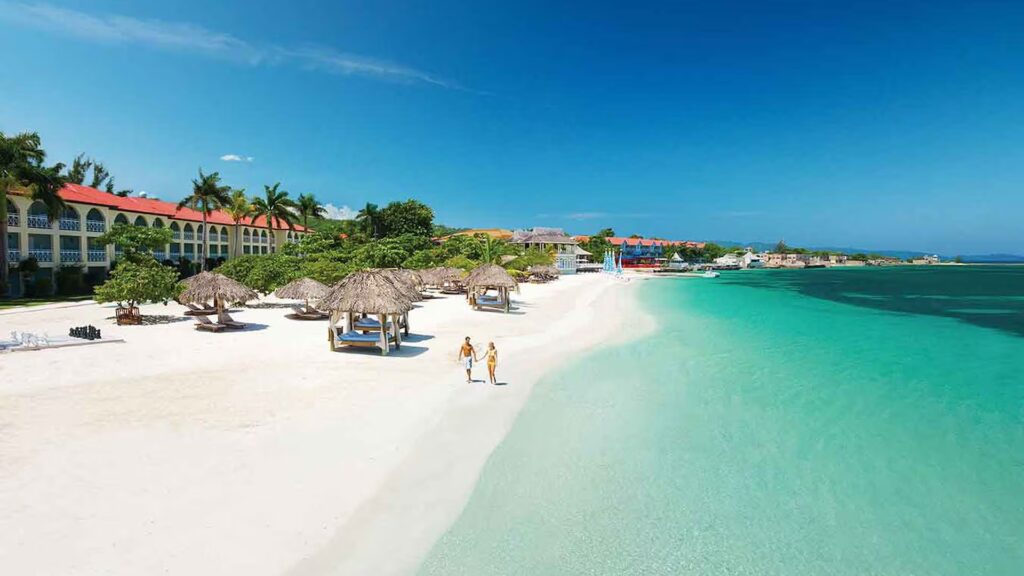
Jamaica’s largest wedding hub sits on the north coast, with a walkable Hip Strip, the highest concentration of all-inclusive resorts, and the country’s busiest international airport (MBJ). North-coast positioning keeps sargassum minimal year-round. Best for couples wanting variety, energy, and a wide range of resort price points.
Negril
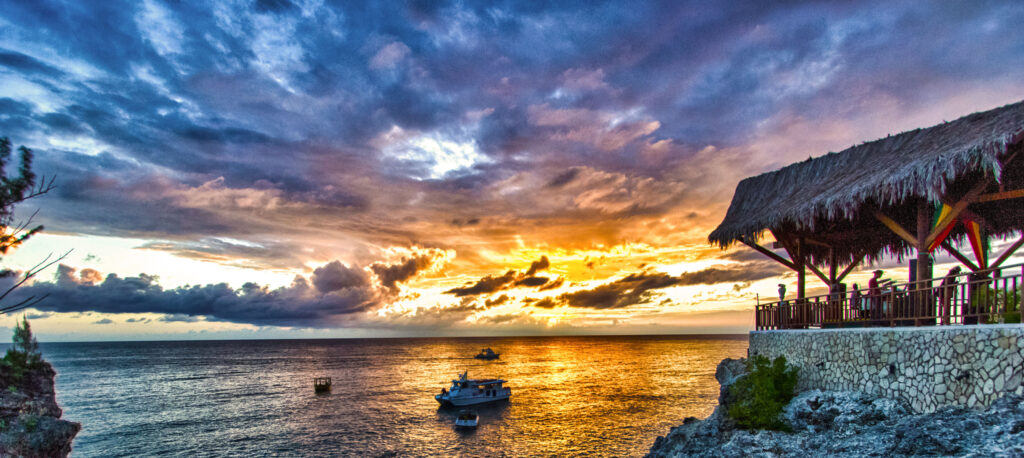
The seven-mile beach on Jamaica’s west coast, plus the famous cliffs at Rick’s Café, make Negril the country’s signature sunset wedding spot. Faces west toward the open Caribbean, has virtually no sargassum impact, and a slower, more bohemian pace than Montego Bay. Best for sunset ceremonies, smaller weddings, and couples wanting Jamaica’s most photogenic horizon.
Ocho Rios
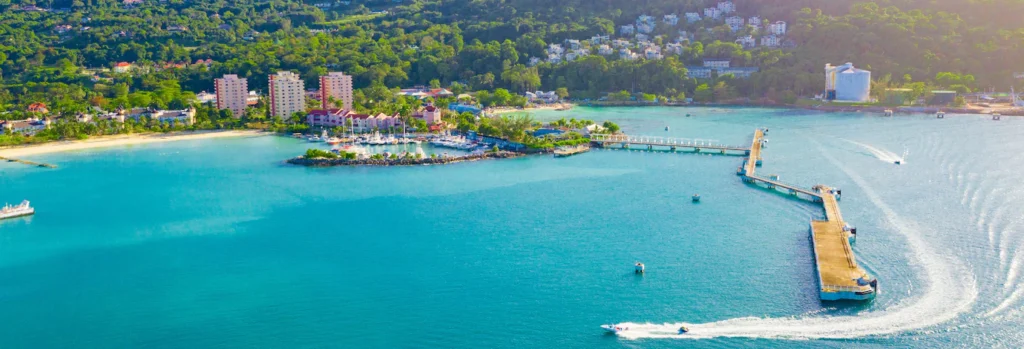
North-coast Ocho Rios brings lush mountain backdrops, Dunn’s River Falls within driving distance, and a family-friendly resort scene with strong mid-tier all-inclusive options. Slightly cooler than Montego Bay because of the surrounding hills, with minimal sargassum exposure. Best for family-heavy guest lists and couples wanting more of Jamaica’s natural scenery in the background.

Month-by-Month Wedding Weather in Jamaica
January
Crisp by Caribbean standards, breezy, and reliably sunny. Daytime temperatures sit in the high 70s, evenings drop into the high 60s, and rain is almost nonexistent. The first week stays busy with holiday overflow; mid- to late January is one of the calmest peak windows.
February
More of January’s dry, breezy magic. Valentine’s week books out fast and rates climb across all three wedding hubs. Trade winds stay strong enough for a wrap at outdoor receptions.
March
Reliably beautiful weather with daytime highs in the low 80s. Spring Break crowds appear at some Montego Bay resorts, especially along the Hip Strip. For a quieter celebration, lean toward Negril or Ocho Rios in March.
April
Dry season’s last reliable month. Easter and Holy Week bring a regional travel surge worth checking against your guest list. Daytime temperatures push into the mid-80s and humidity stays comfortable.
May
Humidity ticks up, the first thunderstorms appear (usually as short afternoon bursts), and pricing softens noticeably. Sargassum starts to drift in lightly, mostly on the south coast.
June
Atlantic hurricane season opens, though early-season storms are rare. Daytime temperatures hold in the high 80s, afternoon showers become more frequent, and rates drop. A smart shoulder pick for budget-conscious couples.
July
Hot and humid, with daily afternoon thunderstorms. Ceremonies after 4 p.m. become essential. Tropical storm risk is low but rising. The lushness of the island peaks in July, making for striking inland photography.
August
A near-twin to July with slightly higher humidity and a meaningfully elevated tropical storm risk. Get your hurricane rebooking policy in writing if August is your target.
September
The wettest, riskiest month on Jamaica’s calendar and the statistical peak of Atlantic hurricane season. Discounts are real, but it’s the month we’d most actively steer couples away from.
October
Hurricane risk continues through the first three weeks, then begins to wind down. By the last week of October, the air dries out and shoulder-season pricing returns. A gambler’s pick with strong upside late in the month.
November
A quietly perfect wedding month. After mid-November, hurricane risk drops sharply, sargassum is gone, dry-season weather returns, and rates haven’t yet climbed into peak territory.
December
Peak season opens. The first two weeks stay relatively calm and beautiful; Christmas and New Year’s bring the year’s highest demand and rates. Outdoor ceremonies are reliable across the month.
The Best Time of Day to Say “I Do”
For outdoor ceremonies in Jamaica, aim for 1.5 to 2 hours before sunset. The Caribbean light turns honey-gold, the trade winds cool the air, and your photographer catches every late-day color.
Approximate sunset times and ideal ceremony windows by month (Eastern Standard Time, no daylight saving):
| Month | Sunset | Ideal Ceremony Time |
|---|---|---|
| January–February | 5:45–6:00 p.m. | 4:00 p.m. |
| March–April | 6:10–6:25 p.m. | 4:30 p.m. |
| May–August | 6:45–7:00 p.m. | 5:00 p.m. |
| September–October | 5:50–6:25 p.m. | 4:30 p.m. |
| November–December | 5:25–5:45 p.m. | 3:45 p.m. |
*Avoid scheduling ceremonies between 11 a.m. and 3 p.m. The sun is harsh, the heat is real, and your photos will fight squinting eyes.
When to Start Planning Your Jamaica Wedding
For peak-season dates (December through April), most couples book 12 to 18 months in advance. The top Montego Bay and Negril resorts, Saturday dates, and holiday weeks (Christmas, New Year’s, Easter) all need the longest lead times.
For shoulder-season dates (May, June, and late November), nine to twelve months is usually enough. Low-season weddings (July through early October) can sometimes come together in six to nine months if you’re flexible on resort and date.
Whatever month you’re considering, the most useful first step is a call with a Certified Destination Wedding Specialist who knows Jamaica’s resort landscape, the differences between Montego Bay, Negril, and Ocho Rios, and how to read the season’s trade-offs.
RELATED: Jamaica Wedding Packages Under $3,000
Jamaica Wedding Timing FAQs
What is the best month to get married in Jamaica?
January, February, and March deliver the most reliably perfect wedding weather: dry, sunny, breezy, and comfortable. Late November runs a close second, with similar weather and softer pricing before the December surge. November and early December are the smartest picks if you want peak weather without peak prices.
What is the cheapest month to get married in Jamaica?
September delivers the deepest discounts, but it’s also peak Atlantic hurricane season and Jamaica’s wettest month. For real savings without the storm risk, look at early June, mid- to late October, or the first week of December.
Does Sargassum affect Jamaica weddings?
Much less than other Caribbean destinations. Jamaica’s north coast (Montego Bay, Ocho Rios, Runaway Bay) gets minimal sargassum because the island’s positioning and trade winds keep most of the drift south. Negril, on the west coast, faces away from the Atlantic and is virtually unaffected. For most Jamaica weddings, sargassum is not a meaningful planning factor.
Is hurricane season really risky for a Jamaica wedding?
Less than in many Caribbean destinations. Jamaica sits south of the typical Atlantic hurricane track, with Cuba acting as a partial buffer. The island is brushed by a nearby hurricane on average about once every five years, with a direct landfall closer to once every ten years. That said, tropical storms and brief flight delays during the June through November window are realistic, so travel insurance and a covered backup venue are smart additions for any low-season date.
Montego Bay, Negril, or Ocho Rios: which is best for a wedding?
Montego Bay has the largest resort lineup, the busiest airport, and walkable nightlife along the Hip Strip; it suits a wide range of budgets and group sizes. Negril is the country’s signature sunset wedding spot, with the seven-mile beach, the famous cliffs at Rick’s Café, and the slowest pace of the three. Ocho Rios brings lush mountain scenery, Dunn’s River Falls nearby, and a family-friendly resort scene with strong mid-tier all-inclusive options.
Start Planning Your Dream Jamaica Wedding!
The right month sets the entire tone for your celebration: the temperature, the light, the energy of your guests’ week. Once you’ve narrowed your window, the rest of the planning, the resort, the ceremony venue, and the rehearsal dinner under the palms, fall into place around it.
Our Certified Destination Wedding Specialists know every Jamaica resort, every wedding hub, and every shortcut to a celebration that feels uniquely yours. Fill out our destination wedding planning form and we’ll match you with a Specialist who can lock in your perfect Jamaica date.

About the Author

Maggie Sabin
Maggie started as the SEO Manager at DestinationWeddings.com in 2024, where she works to drive organic traffic and conversions while creating meaningful, SEO-optimized content for the website. Previously, Maggie's career spanned from Human Resources & Recruitment to teaching at international schools for almost 10 years. Maggie spends her free time traveling, learning new languages, reading non-fiction books, working out, going to the beach and spending time cuddling her dog, Lola!