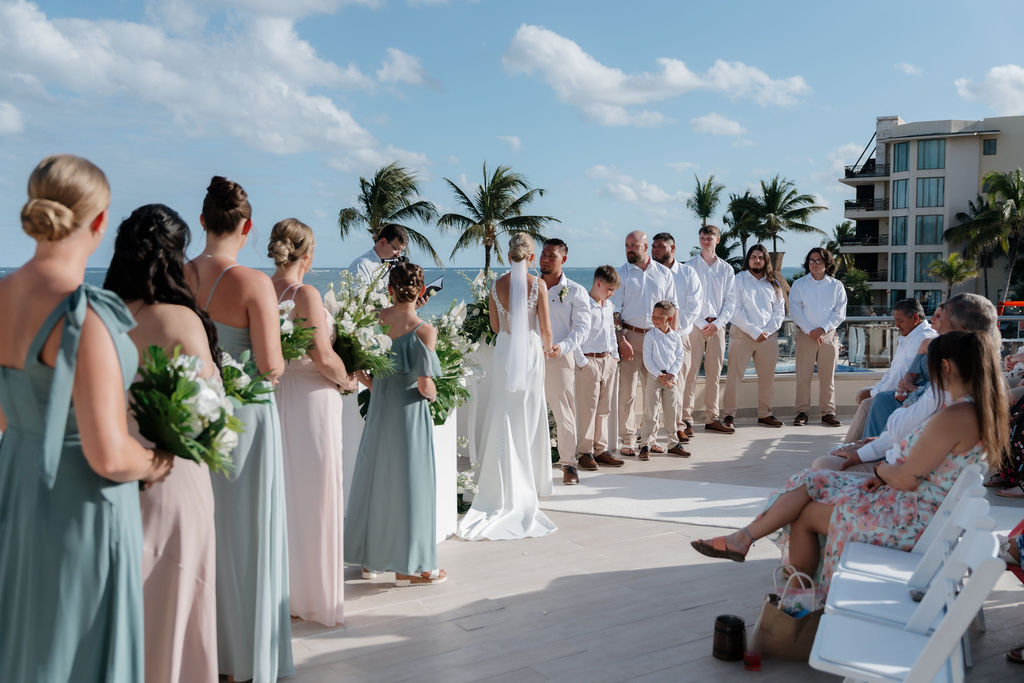


You booked the resort eleven months ago for your destination wedding. The contract is signed, the deposit is paid, and forty people have flights. Then an email arrives saying the property is changing brands, closing for renovation, or that the venue you chose is no longer available.
It’s a genuinely awful feeling, and the first thing worth knowing is that it happens more often than the wedding industry likes to admit. Resorts change hands, rebrand, renovate, and reposition constantly, and a destination wedding planning window of twelve to eighteen months is plenty of time for one of those things to land on you.
The second thing worth knowing is that most of these situations resolve fine, and several of them turn out better than the original plan. Here’s how to work out which kind of change you’re dealing with and what to do about it.

This Is More Common Than You’d Expect
All-inclusive resorts trade between hotel groups regularly. A rebrand is when a property changes the brand name it operates under, usually because ownership or the management contract changed, while the building, the staff, and often the wedding team stay exactly where they are. It’s the most common change couples encounter and usually the least disruptive.
Renovations are the next most common, and they’re seasonal. Properties close or partially close in low season, and a project that was scheduled for one window has a way of extending into the next.
None of this means you picked badly. It means you’re planning far enough ahead that the world had time to move, which is the same reason you got a good rate.
The Five Kinds of Change and What Each Means for You
These are not equivalent, and the right response is completely different depending on which one you’re facing. Work out where you are before you do anything.
| Type of change | What usually happens to your wedding | How worried to be |
|---|---|---|
| Rebrand or ownership change | Usually honored. Same building, often the same wedding team | Low, but confirm in writing |
| Package or pricing terms revised | Existing contracts often grandfathered | Low to moderate. Check your contract |
| Your specific venue removed or closed | Rehoused in another venue on the property | Moderate. Depends on how attached you were |
| Renovation overlapping your date | Noise, closed areas, or a full relocation | High. Push hard for specifics |
| Closure or storm damage | Move to a sister property or a full rebook | High, and usually resolvable with help |
The top two rows cover the large majority of cases, and both are far less serious than the email announcing them tends to feel. A rebrand in particular is mostly a signage change from your point of view.

What to Do in the First Few Days
Resist the urge to fire off an angry email or start looking at other resorts. Work the problem in order.
- Call your Specialist before you contact the resort. If you booked through our Certified Destination Wedding Specialists, this is exactly the situation they exist for. They frequently know about transitions before couples are notified; they know what the property has done for other weddings in the same position, and they have a commercial relationship the resort actually values.
- Get the specifics in writing. Vague reassurance is the enemy here. You want to know precisely: is the date honored, is the price honored, is the venue available, is the room block intact, and what is changing.
- Re-read your contract before you negotiate. Your position depends on what you signed, and it’s worth knowing that before you ask for anything.
- Don’t tell your guests yet. Not until you know what’s actually happening. Forty people asking you questions you can’t answer makes the next two weeks considerably worse.
- Write down what you’d accept. Same date at a sister property? A different venue on site? A discount to stay put? Knowing your own answer before the conversation is most of the negotiation.
Step four is the one couples most often get wrong, usually out of a reasonable instinct to be transparent. Give yourself a week to establish the facts first.
What to Look For in Your Contract
Wedding contracts vary, and we can’t tell you what yours says, but there are specific provisions worth finding before you have the conversation.
Look for language about whether the agreement transfers to a new owner or operator, which determines whether a rebrand affects your booking at all. Look for what the property is permitted to change unilaterally, which often includes substituting a venue of similar standard. Look for what triggers a refund and whether deposits are described as refundable, non-refundable, or transferable to another date or property, since transferable is common and materially better than it sounds.
Also check whether the price you were quoted is guaranteed against future increases and for how long. Rate guarantees frequently have expiry dates that couples don’t notice at signing.
If the situation is serious and the money involved is significant, this is a reasonable point to have someone qualified read the contract. Our Certified Destination Wedding Specialists know these agreements well and can tell you how a property has behaved in comparable situations, though for a formal opinion on your legal position you’d want a professional.
When You Can Reasonably Walk Away
Most changes don’t justify starting over, and starting over is expensive in time and often in money. There are exceptions.
A material change is different from a cosmetic one. If the resort will be under construction during your wedding week, if the venue you specifically chose is gone with no comparable replacement, if the price has increased substantially, or if the property can no longer accommodate your guest count, you have a genuine problem rather than an inconvenience.
In those cases, ask directly what the property will do to make it right. Reasonable outcomes we’ve seen include a move to a sister property at the same rate, an upgraded venue at no cost, a package upgrade, or a full refund of deposits with help transferring the room block. Properties would generally rather solve this than have a wedding party leave unhappy, and a Certified Destination Wedding Specialist asking on your behalf tends to get a better answer than a couple asking alone.
One practical note: if you’re rebooking, your guests’ flights are the constraint. Keeping the same dates and the same airport matters far more than keeping the same resort, because that’s what protects the bookings your guests have already made.
How to Reduce the Risk Before It Happens
You can’t prevent a resort from rebranding. You can be in a much better position when it does.
- Book through someone with a commercial relationship with the property. A resort weighs an individual couple’s booking differently from an ongoing partnership that sends weddings all year. That difference shows up precisely when something goes wrong.
- Get everything in writing at signing, including the specific venue name, the guest count, the rate, and what happens if the property changes hands.
- Take travel insurance and read what it covers. Many policies address supplier default or a property becoming uninhabitable, and many exclude a change you simply dislike. Know which yours is before you need it.
- Be wary of brand-new properties for a firm date. Openings slip, and a resort that hasn’t hosted a wedding yet has no track record to check.
- Ask about planned renovations at booking. It’s a normal question, and the answer is often more forthcoming than you’d expect.
That last one is quietly the most useful. Properties usually know their capital plans a year or two out, and asking directly at the contract stage puts the answer on the record.
Two habits our Certified Destination Wedding Specialists recommend to every couple turn out to matter most in exactly this situation. The first is constant communication with the resort’s wedding team, because a relationship built over months gets you a faster and more forthcoming answer than a cold email in a crisis. The second is always having a backup plan, which couples tend to interpret as being about weather and which applies just as well to a venue that stops existing.
They also list attempting to handle the planning entirely alone as the single biggest mistake couples make. This is the scenario where that shows up most sharply: a resort transition is one of the few problems in destination wedding planning where having someone with a commercial relationship acting for you changes the outcome rather than just the workload.

Destination Wedding Resort Change FAQs
Can a resort cancel your wedding after you’ve signed a contract?
It’s rare, and contracts generally set out what happens if it occurs, including refund terms. Far more common is a property changing something about the booking rather than cancelling it outright. If cancellation is genuinely on the table, get the terms in writing immediately and involve whoever booked it on your behalf.
What happens to your wedding if the resort rebrands?
Usually very little. The building, the venues, and often the wedding coordinator stay the same, and existing contracts are typically honored through the transition. Confirm in writing that your date, rate, venue, and room block are unchanged, and expect the paperwork to be reissued under the new name.
Should you rebook if the resort is being renovated during your wedding?
Ask for specifics first: which areas, what hours, and whether your ceremony and reception venues are affected. Some renovations are genuinely invisible to guests; others mean scaffolding in your photographs. If the property can’t give you clear answers, treat that as its own answer.
Does travel insurance cover a destination wedding resort change?
Sometimes, and it depends heavily on the policy and the reason. Policies more often cover a supplier ceasing operations or a property becoming unusable than they cover a change you’re unhappy with. Read the specific wording rather than assuming, ideally at the point you buy it rather than at the point you need it.
Get Ready to Plan a Destination Wedding With Someone in Your Corner
A resort changing mid-planning is unsettling and rarely fatal. What decides how it goes is whether you’re negotiating alone or with someone the property already works with, and whether you took the time to establish the facts before reacting to them.
Fill out our online wedding planning form, and one of our Certified Destination Wedding Specialists will help you book somewhere solid and stay with you if anything shifts along the way.

About the Author

Maggie Sabin
Maggie started as the SEO Manager at DestinationWeddings.com in 2024, where she works to drive organic traffic and conversions while creating meaningful, SEO-optimized content for the website. Previously, Maggie's career spanned from Human Resources & Recruitment to teaching at international schools for almost 10 years. Maggie spends her free time traveling, learning new languages, reading non-fiction books, working out, going to the beach and spending time cuddling her dog, Lola!