
The Caribbean doesn’t really have a single wedding season. The region sprawls from the Bahamas in the north to Aruba just off the coast of Venezuela in the south, with islands that face the open Atlantic, others tucked against the Gulf of Mexico, and a small group sitting safely below the hurricane belt entirely. Each pocket has its own weather rhythm, its own sargassum profile, and its own hurricane risk. The question for most couples planning a Caribbean wedding isn’t whether the region will deliver. It’s understanding which island and which month line up with the destination wedding you’re picturing.
Short answer: December through April. Almost every Caribbean island is in its peak dry season during that window, with reliably warm temperatures, low humidity, minimal sargassum, and minimal hurricane risk. Late November is a shoulder sweet spot region-wide. The summer through early fall stretch is the time to weigh carefully, with risks that vary meaningfully by sub-region.
This guide breaks down the Caribbean’s wedding calendar by sub-region and links to our destination-specific Best Time guides for deeper detail on the islands we cover. Our Certified Destination Wedding Specialists can help you plan every detail of your big celebration.
Caribbean Wedding Season at a Glance
| Sub-Region | Best Months | Hurricane Risk | Sargassum | Pricing |
|---|---|---|---|---|
| Northwest Caribbean (Bahamas, Turks and Caicos) |
December–April | Atlantic belt; peak September | Low | Highest in peak |
| Greater Antilles (Jamaica, Dominican Republic) |
December–April | Jamaica low; Dominican Republic moderate | Jamaica minimal; Dominican Republic east coast moderate | Highest in peak |
| Eastern Caribbean (Barbados, Antigua, St. Lucia) |
December–April | Atlantic belt; less than the northern islands | Moderate (east-facing) | Highest in peak |
| Southern Caribbean (Aruba, Curacao, Bonaire) |
Year-round (peak December–April) | Below the hurricane belt, minimal | Minimal | Highest December–March |
The Three Variables That Decide Your Caribbean Wedding Month
Across the region, three factors do most of the work in shaping which month fits which island. Lining them up against your priorities is the fastest way to land on a date.
Hurricane Risk
Atlantic hurricane season runs June 1 through November 30 region-wide, with peak storm activity in September and the first half of October. The risk isn’t uniform across the Caribbean. The northern islands (Bahamas, Turks and Caicos) and the central islands (Dominican Republic, Puerto Rico) sit in the most active part of the belt. Jamaica is shielded by Cuba and historically sees lower direct-hit frequency. The southern islands (Aruba, Curacao, Bonaire) sit below the hurricane belt entirely and rarely see direct hurricane impacts.
Sargassum
Sargassum is the seasonal seaweed that drifts in from the Atlantic between roughly May and October, peaking in June through August. East-facing Caribbean islands catch the most: the Dominican Republic’s east coast (Punta Cana), Barbados, Antigua, the eastern Yucatan, and parts of the eastern Bahamas. West-facing and protected islands fare much better: Jamaica’s north coast, the southern Caribbean (Aruba and Curacao), and the leeward sides of most other islands. The sargassum forecast is a regional variable, not a regional rule.
Crowds and Pricing
December through April is region-wide peak season, with the highest rates and the most booking competition. Christmas and New Year’s are the highest of the high. Easter and Spring Break (varying weeks in March and April) drive secondary surges. May through November brings lower rates, fewer crowds, and shoulder-season package perks at almost every Caribbean wedding hub.
Best Time to Get Married by Caribbean Sub-Region
Northwest Caribbean: Bahamas and Turks and Caicos
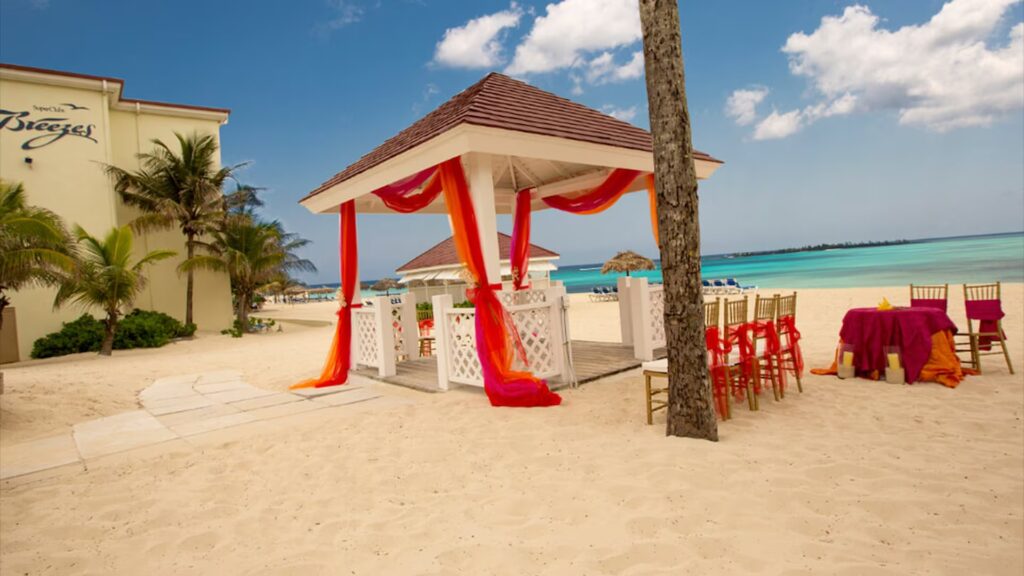
The northern stretch of the Caribbean sits squarely in the Atlantic hurricane belt with peak risk in September. Both destinations have a strong dry-season window, December through April, with reliable warm sunshine and low sargassum impact. Turks and Caicos’s Grace Bay catches some sargassum drift in peak months, but typically less than the Mexican Caribbean. The Bahamas’s western islands (especially Nassau and Paradise Island) are shielded by the island chain itself and see minimal sargassum.
Greater Antilles: Jamaica and the Dominican Republic
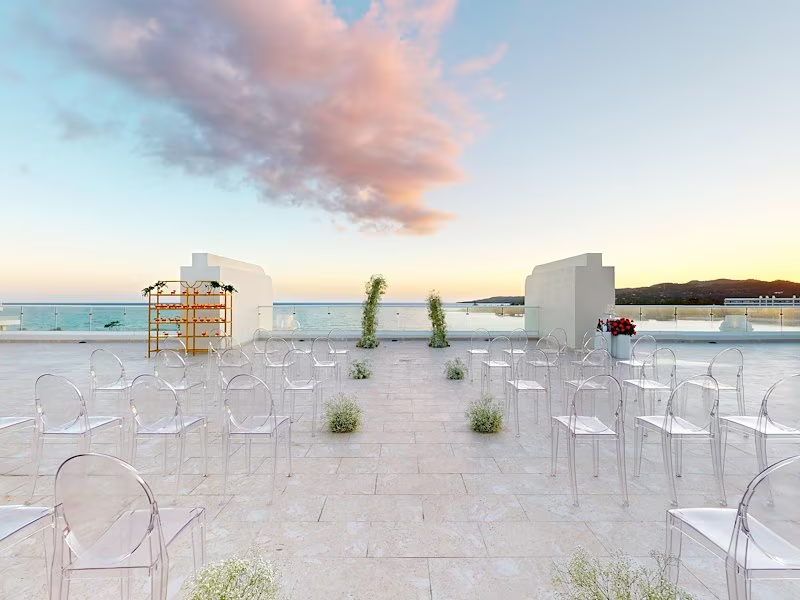
The Caribbean’s two biggest wedding-volume islands sit in the middle of the belt geographically, but with very different hurricane and sargassum profiles. Jamaica is south of the typical Atlantic storm track and shielded by Cuba, with minimal sargassum impact on its north coast. The Dominican Republic’s east coast (Punta Cana) catches moderate sargassum from May through October and sits more squarely in the hurricane track. Both deliver excellent December through April weather.
For destination-specific timing, see our deep-dive guides:
- Best Time to Get Married in Jamaica
- Best Time to Get Married in Montego Bay
- Best Time to Get Married in the Dominican Republic
- Best Time to Get Married in Punta Cana
Mexican Caribbean: Cancun, Riviera Maya, Tulum

Mexico’s Caribbean coast (Cancun, Playa del Carmen, Riviera Maya, Tulum) is geographically Caribbean and operates on the same Atlantic hurricane and sargassum rhythms. December through April is the peak dry window. Sargassum impact runs heaviest in Riviera Maya and Tulum (the southern stretch of the coast catches more drift than Cancun proper).
For destination-specific timing, see our deep-dive guides:
- Best Time to Get Married in Cancun
- Best Time to Get Married in Riviera Maya
- Best Time to Get Married in Tulum
Eastern Caribbean: Barbados, Antigua, St. Lucia
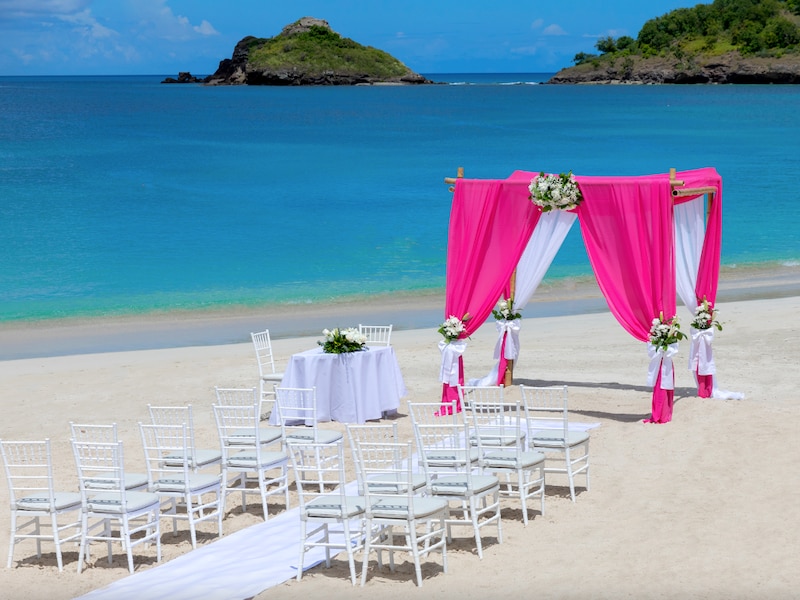
The eastern Caribbean’s island arc (Barbados to Antigua) sits at the edge of the Atlantic. These islands are east-facing, which means meaningful sargassum exposure between May and October, but they also sit slightly outside the heart of the Atlantic hurricane track. Direct hurricane hits in any given year are less frequent than in the northern Caribbean. Barbados specifically sits on the southeastern edge of the belt with even lower direct-hit risk than its neighbors. December through April is the universal peak window across the eastern Caribbean.
Southern Caribbean: Aruba, Curacao, Bonaire
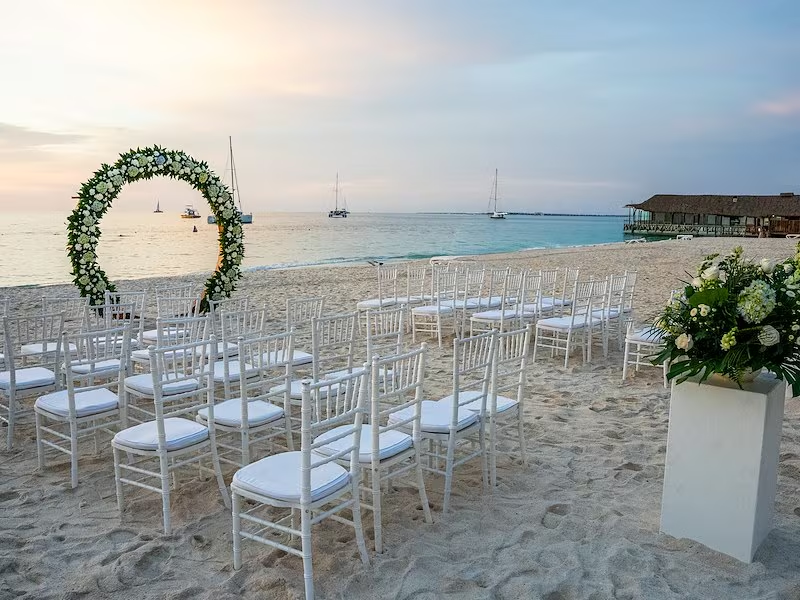
The “ABC islands” (Aruba, Bonaire, Curacao) sit just off the Venezuelan coast, well below the Atlantic hurricane belt. Direct hurricane hits are statistically almost negligible. Sargassum impact is minimal thanks to the geography and the constant easterly trade winds. The weather stays warm, dry, and breezy almost year-round. December through April is still peak pricing and demand, but the trade-off of waiting until shoulder months (May, June, November) is much smaller here than anywhere else in the Caribbean.

Caribbean Hurricane Season: What’s Worth Knowing
Atlantic hurricane season runs June 1 through November 30, with peak storm activity in September and the first half of October. Two facts that often surprise couples:
- Direct hits are rare on any given island in any given year. Most named storms in the Atlantic basin don’t make landfall, and many that do strike Florida, the U.S. Gulf coast, or open water rather than Caribbean wedding hubs.
- Risk varies dramatically by sub-region. Aruba and Curacao rarely see a hurricane. Jamaica is hit by a nearby storm once every five years on average. The Dominican Republic and Puerto Rico see more direct impacts. The Bahamas and Turks and Caicos vary year to year.
If you’re considering a date in this window, get your resort’s hurricane rebooking policy in writing, encourage every guest to buy travel insurance with weather coverage, and plan a covered backup venue into your contract from day one.
Caribbean Sargassum: A Sub-Regional Map
Sargassum’s seasonal pattern is consistent across the Caribbean (May through October, peak June through August), but where it lands varies dramatically:
- Heaviest impact: Riviera Maya, Tulum, Dominican Republic east coast (Punta Cana), Barbados east coast, Antigua east coast.
- Moderate impact: Cancun, Bavaro Beach, Turks and Caicos’s Grace Bay, St. Lucia’s east coast.
- Minimal impact: Jamaica (north coast), Negril, Dominican Republic north coast, Bahamas, the leeward sides of most islands.
- Virtually unaffected: Aruba, Curacao, Bonaire.
To work around sargassum entirely, choose December through April or pick an island in the “minimal” or “virtually unaffected” group above.
The Best Time of Day to Say “I Do”
For outdoor ceremonies anywhere in the Caribbean, aim for 1.5 to 2 hours before sunset. The light turns honey-gold, the trade winds cool the air, and your photographer catches every late-day color.
Approximate sunset times by month across the Caribbean (most islands run on Atlantic Standard Time or Eastern Standard Time, no daylight saving):
| Month | Approximate Sunset | Ideal Ceremony Time |
|---|---|---|
| January–February | 5:50–6:20 p.m. | 4:15 p.m. |
| March–April | 6:20–6:45 p.m. | 4:45 p.m. |
| May–August | 6:50–7:20 p.m. | 5:15 p.m. |
| September–October | 6:00–6:40 p.m. | 4:30 p.m. |
| November–December | 5:30–5:50 p.m. | 3:45 p.m. |
Exact times shift by 10 to 30 minutes depending on the specific island’s longitude. See our destination-specific Best Time guides for precise sunset windows.
When to Start Planning Your Caribbean Wedding
For peak-season dates (December through April), most couples book 12 to 18 months in advance across any Caribbean destination. Holiday weeks (Christmas, New Year’s, Easter) often need 18 months or more, especially at the most popular all-inclusive properties.
For shoulder-season dates (May and late November), nine to twelve months is usually enough. Low-season weddings (June through October) can sometimes come together in six to nine months if you’re flexible on the island and date. The southern Caribbean (Aruba, Curacao) has the most flexible booking landscape year-round because the weather is so dependable.
A Certified Destination Wedding Specialist can map your wedding-week vision against the region’s seasonal trade-offs and recommend specific islands and resorts that fit.

Caribbean Wedding Timing FAQs
What is the best month to get married in the Caribbean?
January, February, and March deliver the most reliably perfect wedding weather region-wide: dry, sunny, comfortable temperatures, minimal sargassum, and minimal hurricane risk. November is another favorite, with similar weather and softer pricing before the December holiday surge.
Which Caribbean island has the best wedding weather year-round?
Aruba, Curacao, and Bonaire. The ABC islands sit below the Atlantic hurricane belt, get minimal sargassum, and have trade winds that keep the air comfortable almost every month. For couples wanting maximum date flexibility, the southern Caribbean is the safest bet.
When is hurricane season in the Caribbean, and how risky is it?
Atlantic hurricane season runs June 1 through November 30, with peak storm activity in September. Direct hits on any given island in any given year are rare, but the risk varies dramatically by sub-region. Aruba and Curacao rarely see hurricanes; the northern Caribbean (Bahamas, Turks and Caicos) and central Caribbean (Dominican Republic, Puerto Rico) sit in the most active stretch of the belt.
Which Caribbean islands have the least sargassum?
Aruba, Curacao, and Bonaire are virtually unaffected. Jamaica’s north coast and Negril see minimal impact. The Bahamas’s western islands fare well. East-facing islands and the Mexican Caribbean’s southern stretch catch the heaviest sargassum drift between May and October.
How does a Caribbean wedding compare to a Mexican Caribbean wedding?
Geographically, the Mexican Caribbean (Cancun, Riviera Maya, Tulum) operates on the same Atlantic hurricane and sargassum rhythms as the rest of the Caribbean. The main differences are non-weather-related: Mexico has different legal wedding requirements (blood tests, 3 to 4 days’ residency, an apostille) compared to the no-residency processes in places like the Dominican Republic and the Turks and Caicos. Pricing and resort lineups also differ. See our destination-specific Best Time guides for specifics.
Ready to Pick Your Caribbean Wedding Date?
The right island and the right month decide everything about a Caribbean wedding: the color of the water, the energy of your guests’ week, the cost of the wedding package line item, and whether outdoor ceremonies feel like a near-sure thing. Once you’ve narrowed the sub-region and the window, the rest of the planning takes shape around it.
Our Certified Destination Wedding Specialists know every Caribbean island, every sub-regional weather pattern, and every shortcut to a wedding week that feels uniquely yours. Fill out our online wedding planning form to get started.

About the Author

Maggie Sabin
Maggie started as the SEO Manager at DestinationWeddings.com in 2024, where she works to drive organic traffic and conversions while creating meaningful, SEO-optimized content for the website. Previously, Maggie's career spanned from Human Resources & Recruitment to teaching at international schools for almost 10 years. Maggie spends her free time traveling, learning new languages, reading non-fiction books, working out, going to the beach and spending time cuddling her dog, Lola!