A Jamaica destination wedding sounds simple from the outside (pick a Negril or Montego Bay resort, get on a plane, say your vows in front of the Caribbean) and it can be. Jamaica’s legal process is actually one of the easiest in the Caribbean: 24 hours of in-country residency, no apostille required, no translation, and a marriage license issued within a day.
But the broader planning still has more moving pieces than couples typically expect: choosing your region, sizing the resort, locking in a room block, and coordinating with the on-site team. This guide walks you through every step, in order, so you know exactly what’s coming and when.
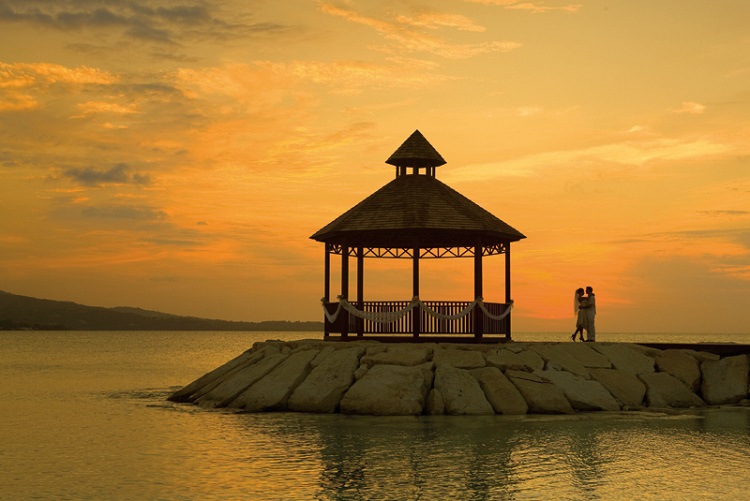
The Jamaica Wedding Process at a Glance
Most Jamaica weddings follow the same path. Total planning timeline runs roughly 12 to 18 months from “we’re getting married in Jamaica” to the wedding day itself. Here’s the broad shape:
- Months 12–18 out: Decide on legal vs symbolic ceremony, set a budget, choose a date, pick your wedding region, connect with a Specialist, choose your resort.
- Months 6–12 out: Lock in room block, customize your package, send save-the-dates, gather legal paperwork if applicable.
- Months 2–6 out: Send formal invitations, finalize vendors, plan group activities (Dunn’s River Falls, YS Falls, Rick’s Cafe, Blue Mountains coffee tours), and confirm details with the on-site coordinator.
- Wedding week: Arrive in Jamaica, complete the 24-hour residency window if legal, host welcome events, and exchange vows.
- After the wedding: File your Jamaican marriage certificate with your local county clerk back home (if you had a legal ceremony).
For the full destination-feel breakdown of each Jamaican wedding region, see our destination travel guides. This piece focuses on the how.
The Full Step-by-Step Process
Phase 1: Decisions Before You Book
Step 1: Choose Between a Legal and a Symbolic Ceremony
Jamaica’s legal process is one of the simplest in the Caribbean. A legal civil ceremony in Jamaica is binding internationally and requires only 24 hours of in-country residency, a marriage license from the Registrar General’s Department (typically arranged by the resort coordinator), and basic documents (passports, birth certificates, divorce or death certificates if applicable). No apostille, no translation, no blood test. A symbolic ceremony has none of those requirements at all: the couple exchanges vows, rings, and intentions, then handles the legal piece quietly at a courthouse back home. Both options work well in Jamaica because the legal lift is so light.
Step 2: Set Your Budget
A typical Jamaica destination wedding runs roughly $6,000 to $12,000 all-in for the couple, covering wedding package, accommodations, airfare, and add-ons. The couple traditionally covers their own travel and the wedding-specific costs; guests typically cover their own airfare and rooms (with resort group discounts dropping guest rates significantly when you book a block). Decide early how the math works for your group, then size the resort tier and guest list to that number.
Step 3: Pick Your Wedding Date
December through April is Jamaica’s sweet spot, with dry warm sunshine, reliable trade winds, and stable outdoor ceremonies. September is the statistical peak of Atlantic hurricane season and the month most couples skip. Holiday weeks (Christmas, New Year’s, Easter, Spring Break) command the highest rates and need the longest lead times. For the full month-by-month breakdown, see our Best Time to Get Married in Jamaica guide.
Step 4: Decide on Your Wedding Region
Jamaica’s wedding scene clusters across the island’s north and west coasts. Montego Bay on the northwest coast is the country’s largest wedding hub, with the deepest resort lineup and the most direct flight access (Sangster International, MBJ, is Jamaica’s primary entry airport). Negril, on the far western tip, delivers the iconic Seven Mile Beach, cliffside ceremony venues at Rick’s Cafe and the West End, and the country’s most laid-back wedding atmosphere. Ocho Rios on the north coast pairs lush jungle and waterfall scenery (Dunn’s River Falls) with cruise-port energy and a strong all-inclusive resort lineup. Runaway Bay and Falmouth offer quieter, more boutique-feeling alternatives. Port Antonio on the remote northeast coast is the off-the-beaten-path pick.
Phase 2: Booking and Planning
Step 5: Connect with a Certified Destination Wedding Specialist
Working with a Certified Destination Wedding Specialist from this point forward is free for the couple (Specialists are paid by the resort partners) and significantly streamlines the rest of the process. Specialists know the Jamaica resort lineup, the regional trade-offs, and the timing quirks (Spring Break in Negril, the December high season in Montego Bay, hurricane risk along the north coast). Plan for 12 to 18 months of lead time for peak-season dates.
Step 6: Choose Your Resort and Ceremony Venue
Match your resort to your guest count, your budget, and your wedding-week energy. Most Jamaican all-inclusive resorts have multiple ceremony venues (beachfront gazebo, garden, terrace, occasionally a chapel or cliffside platform) and at least one indoor backup space. Your Specialist will walk you through the resort lineup; popular anchors include Sandals Montego Bay, Sandals Negril, Sandals Royal Caribbean, Iberostar Grand Rose Hall, Secrets Wild Orchid Montego Bay, Royalton White Sands Montego Bay, Hyatt Ziva Rose Hall, Azul Beach Resort Negril, and Luxury Bahia Principe Runaway Bay.
Step 7: Lock In Your Room Block
A room block is a group reservation that holds rooms at a negotiated rate for your wedding guests. Most Jamaican resorts unlock complimentary wedding-package benefits at five rooms (basic upgrades, complimentary ceremony setup) and higher-value perks (private receptions, complimentary cake, extended photography) at 10 rooms or more. Lock the block in alongside your resort contract; deposits are typically due 30 to 60 days after signing.
Step 8: Customize Your Wedding Package
The on-site resort wedding coordinator handles the day-of details: ceremony setup, florals, music, photography, dinner, and bar service. Jamaican resort packages typically tier from a basic ceremony-only option (around $500 to $2,500) up through full-celebration tiers ($4,000 to $10,000+). Customizations like reggae bands, premium florals, photography upgrades, and cocktail-hour bars are usually priced as add-ons. If a live reggae welcome or a Blue Mountain coffee favor station is part of your vision, book it here.
Phase 3: Pre-Travel Prep
Step 9: Gather Legal Documents (If You’re Having a Civil Ceremony)
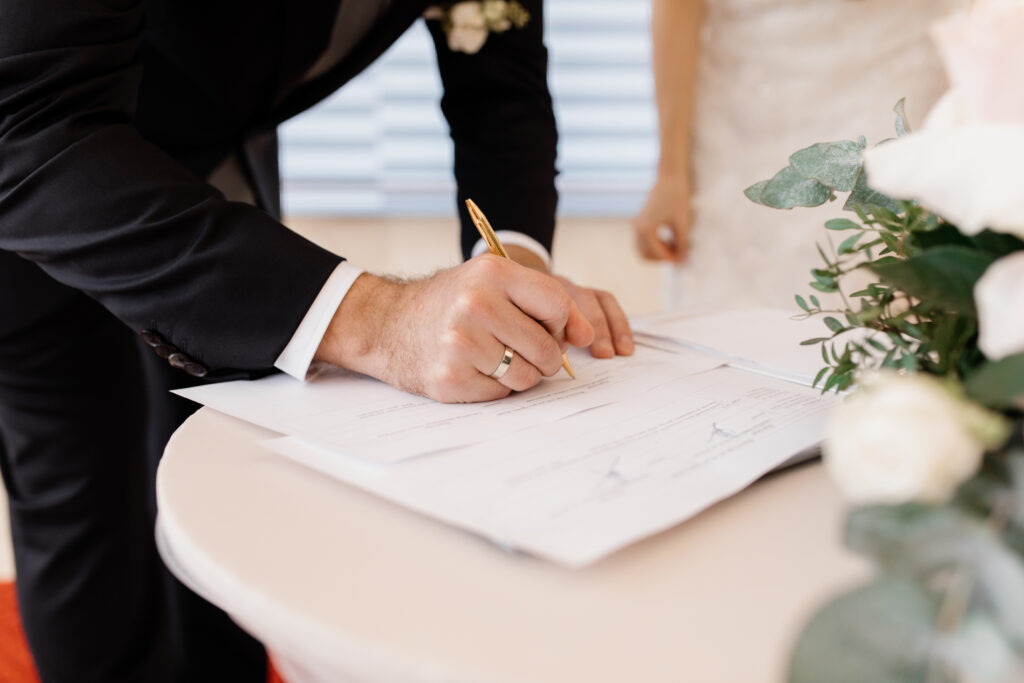
If you’re going legal in Jamaica, this step happens 4 to 8 weeks before travel and is one of the lightest legal lifts in the Caribbean. You’ll need passports, birth certificates, divorce decrees or death certificates if applicable, parental consent letters if either party is under 18, and the marriage license application (the resort coordinator typically arranges the license through the Registrar General’s Department once you submit copies of your documents). All documents are in English, no apostille is required, and no translation is needed. Symbolic ceremonies skip this step entirely.
Step 10: Send Invitations and Coordinate Guest Logistics
Send save-the-dates 9 to 12 months out so guests can request time off and book travel. Formal invitations follow 3 to 4 months before the wedding, with the room-block reservation deadline clearly noted. Include practical info: direct-flight options to Montego Bay (MBJ) or Kingston (KIN), the resort’s location and amenities, suggested attire, and group excursion options (Dunn’s River Falls, YS Falls, Rick’s Cafe sunset, Blue Mountains coffee tour, Luminous Lagoon, Black River safari). Many couples create a simple wedding website to centralize the information.
Step 11: Finalize the Details
2 to 4 months out, work with your on-site coordinator to finalize: ceremony scripting, florals, photography and videography, music selection (reggae, DJ, live band, steel drums), bridal hair and makeup, attire (Jamaica is hot and humid; lighter fabrics matter), welcome bags, and the day-of timeline. If you’re folding in cultural elements (reggae welcome, Jamaican rum tasting, jerk-cuisine cocktail-hour stations, Blue Mountain coffee favors), confirm bookings now.
Phase 4: In Destination
Step 12: Arrive in Jamaica and Complete Final Paperwork
If you’re having a legal ceremony, plan to arrive at least 24 hours before the wedding to satisfy the in-country residency requirement. Your wedding coordinator will confirm the marriage license has been issued by the Registrar General’s Department. For symbolic weddings, no advance arrival is required, but most couples land two to three days early for welcome events.
Step 13: The Ceremony
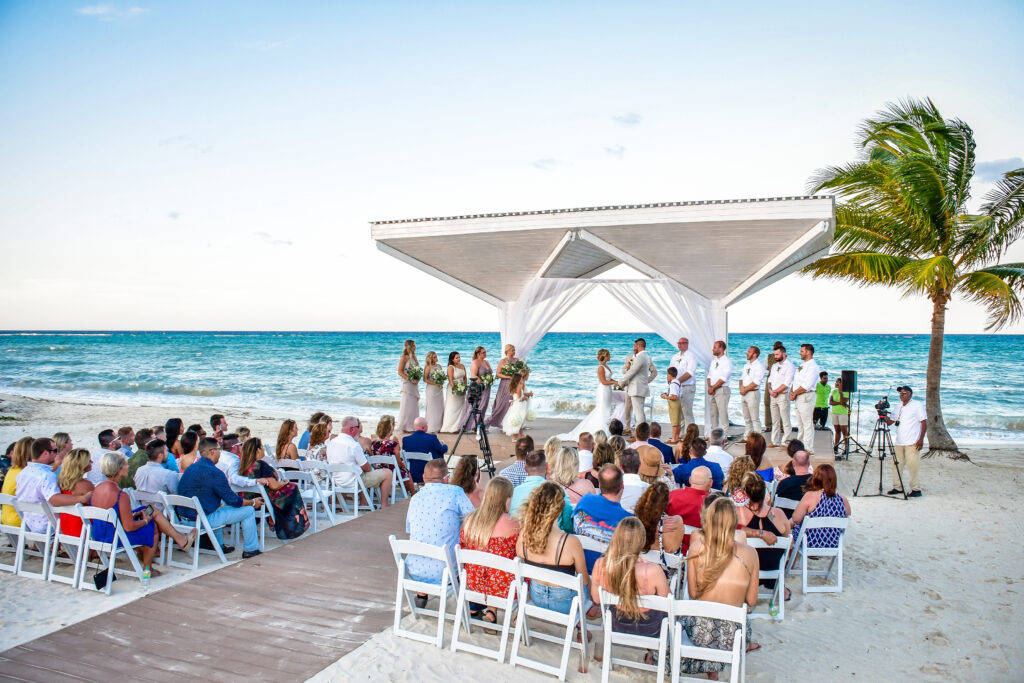
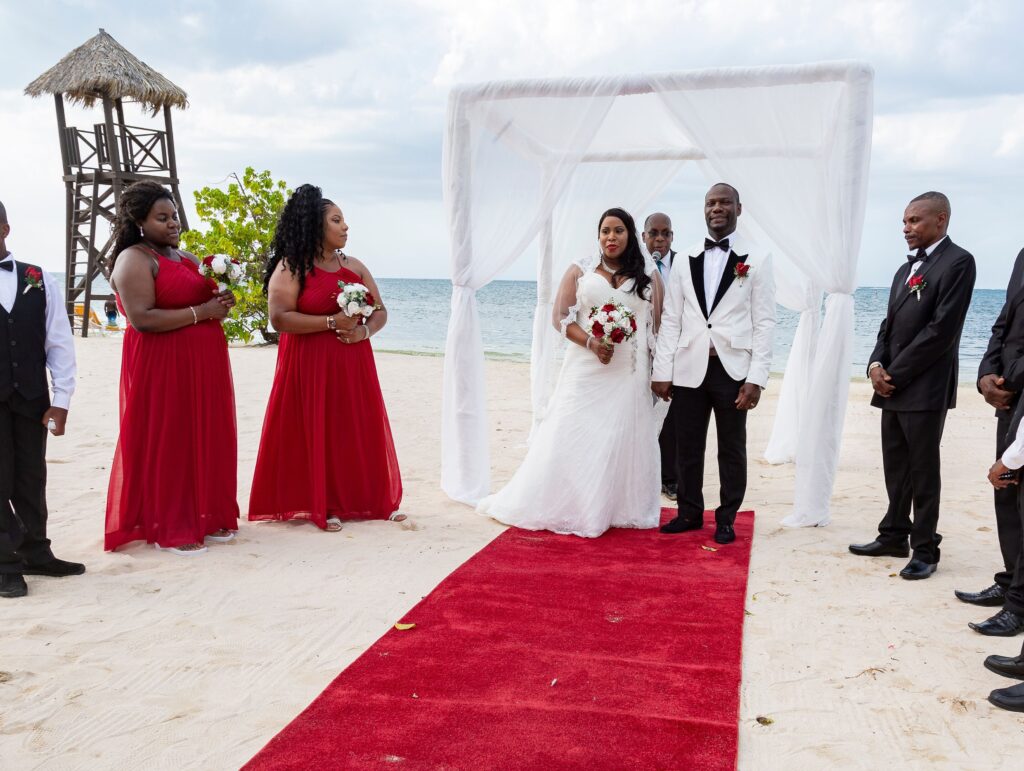
On the wedding day, the on-site coordinator runs the timeline. For a legal civil ceremony, a Marriage Officer or Justice of the Peace performs the 20- to 30-minute ceremony (in English), and your witnesses sign the marriage register. For symbolic ceremonies, the resort’s officiant or your chosen celebrant handles the vows. The reception follows: dinner, toasts, first dance, dancing, and often a surprise reggae or steel-drum appearance partway through the night.
Phase 5: After the Wedding
Step 14: Register Your Marriage at Home (If Legal)
If you had a civil ceremony, your Jamaican marriage certificate is issued in English by the Registrar General’s Department. There’s no apostille requirement for use in the United States, the UK, Canada, or most other common-law jurisdictions. Once home, file the certificate with your local county clerk or vital records office. Keep multiple certified copies for name changes, tax filings, and immigration paperwork.
Jamaica’s Main Wedding Regions
Jamaica’s wedding scene clusters across the island’s north and west coasts, with several distinct hubs that each offer a different personality.
Montego Bay
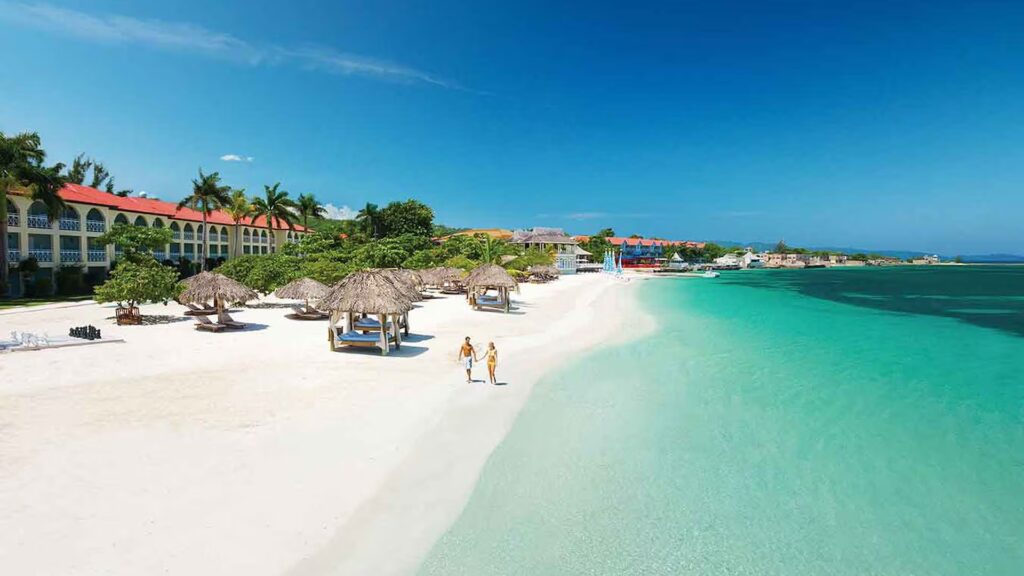
Jamaica’s largest wedding hub by volume, with the deepest all-inclusive resort lineup and the widest legal-coordination experience. The Hip Strip’s walkable energy, Doctor’s Cave Beach, and direct flights into Sangster International (MBJ) from across the US East Coast make Montego Bay the most logistically simple of Jamaica’s wedding regions. The Rose Hall corridor anchors the higher-end resort scene.
Negril
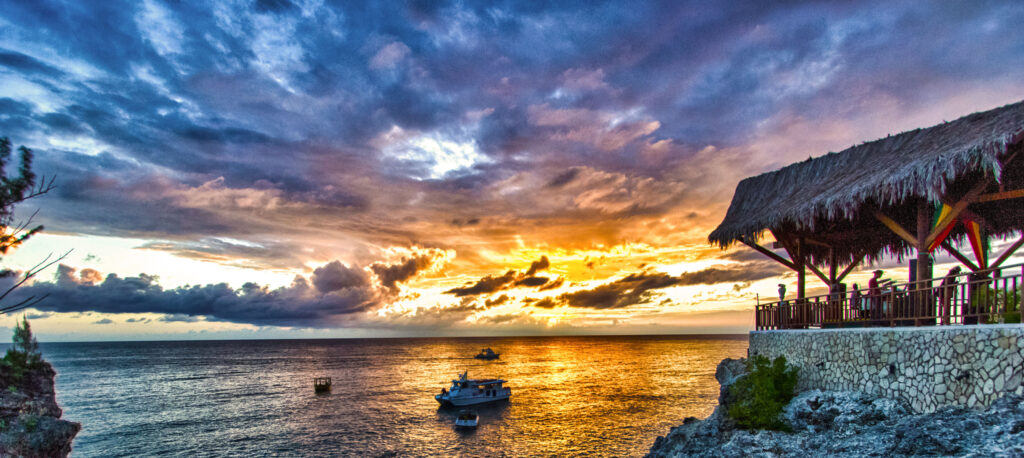
The far western tip of Jamaica, home to the iconic Seven Mile Beach and the cliffside West End sunset scene (Rick’s Cafe is the famous cliff-jumping sunset venue). Negril’s vibe is more laid-back, bohemian, and reggae-forward than Montego Bay, and the resort lineup leans toward couples-only and adults-only properties.
Ocho Rios
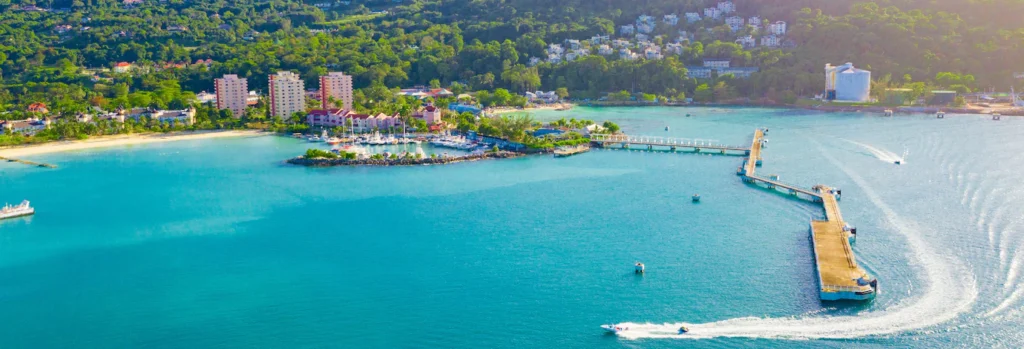
The north-coast wedding hub that pairs lush jungle scenery (Dunn’s River Falls, Mystic Mountain, Konoko Falls) with a strong all-inclusive resort lineup. Ocho Rios is the cruise-port capital of Jamaica, which gives the town a busier vibe than Negril, but the resort properties themselves stay private and self-contained.
Runaway Bay and Falmouth
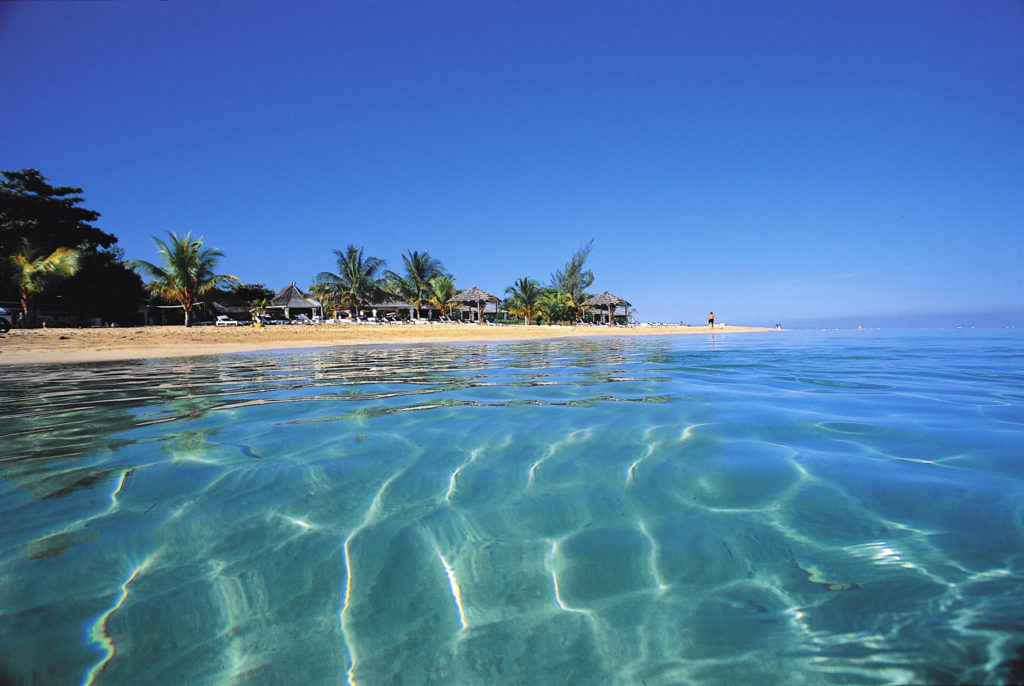
The quieter north-coast alternatives between Montego Bay and Ocho Rios, with smaller resort scenes and a more boutique-feeling wedding atmosphere. Best for couples wanting Jamaica’s natural beauty without the resort-corridor energy.
Port Antonio
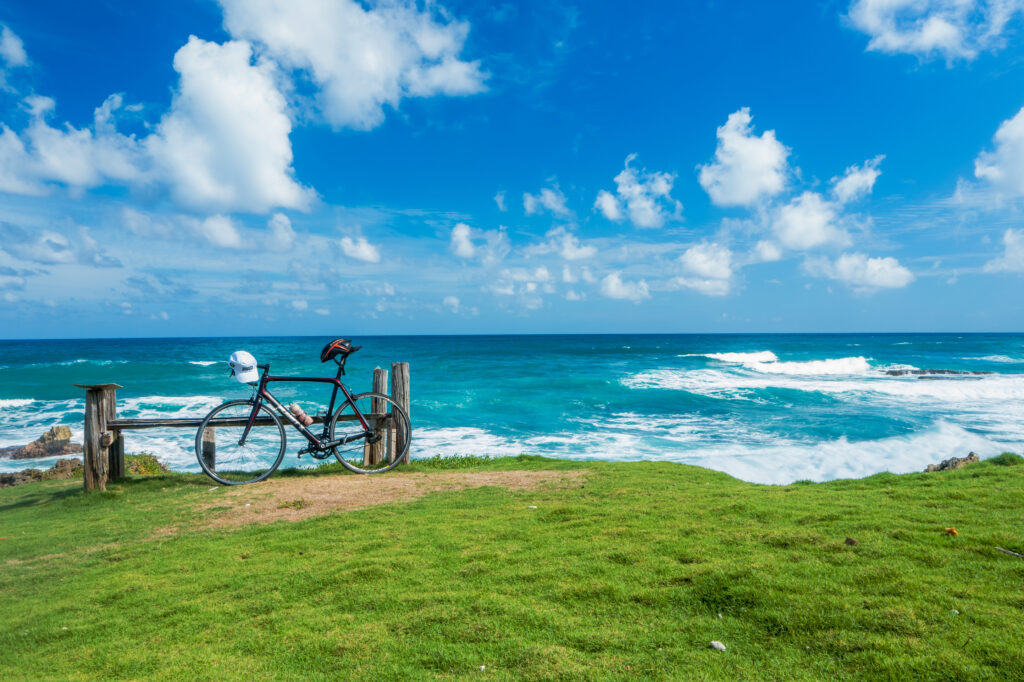
The remote northeast coast, the original 1950s Jamaican resort destination, with rainforest waterfalls, the Blue Lagoon, and a quieter, more off-the-beaten-path wedding feel. The smallest resort lineup but the most distinctive natural scenery.
Ceremony Options in Jamaica
There are three ways to say “I do” in Jamaica. Only one is legally binding, but all three can stand alone as the wedding moment itself.
Civil Ceremony (Legally Binding)
A civil ceremony performed by a Marriage Officer or Justice of the Peace is the legally binding option in Jamaica. It requires 24 hours of in-country residency, a marriage license from the Registrar General’s Department, and standard documents (passports, birth certificates, divorce or death certificates if applicable). The legal lift is one of the simplest in the Caribbean. Same-sex civil marriage isn’t currently performed in Jamaica; same-sex couples typically choose a symbolic ceremony here and handle the legal piece at home. For the full Jamaican legal requirements, see our Jamaica legal marriage guide.
Symbolic Ceremony
Many Jamaican destination weddings are symbolic. Couples exchange vows, rings, and intentions without the paperwork, and handle the legal piece quietly at a courthouse back home before or after the trip. Symbolic ceremonies have no document, residency, or marriage-license requirements, and full flexibility on ceremony scripting. Because Jamaica’s civil process is so light, symbolic is less common here than in places like Mexico or the Dominican Republic, but still a popular option.
Religious Ceremony
Some couples add a Christian, Rastafarian, or other religious ceremony. Religious ceremonies aren’t legally binding in Jamaica unless paired with a civil ceremony, but many resorts have on-site chapels or relationships with local clergy. Plan for longer lead times if you want a religious element.
Jamaica Wedding Planning FAQs
How long does the entire Jamaica wedding planning process take?
Plan for 12 to 18 months from the initial decision to the wedding day for peak-season dates (December through April). Holiday weeks (Christmas, New Year’s, Easter, Spring Break) need 18 months or more. Shoulder months can sometimes come together in 9 to 12 months; low-season dates can sometimes work in 6 to 9 months if you’re flexible.
Do we have to be in Jamaica before our wedding?
For a legal civil ceremony, yes: 24 hours in the country (one of the shortest residency windows in the Caribbean). For a symbolic ceremony, no advance arrival is required, but most couples land two to three days early for welcome events.
What’s the simplest way to get married in Jamaica?
Jamaica’s legal civil process is itself one of the simplest paths in the Caribbean: 24-hour residency, no apostille, no translation, no blood test. Many couples choose the civil ceremony for that reason. Couples wanting maximum flexibility instead choose a symbolic ceremony at the resort and handle the legal piece at home.
Will our Jamaica marriage be legal back home?
Yes, if you complete a civil ceremony with a Marriage Officer or Justice of the Peace. Jamaican marriage certificates are recognized in the United States, the UK, Canada, and other common-law jurisdictions without an apostille. Once home, file your certificate with your local county clerk or vital records office.
How much should we expect to spend on a Jamaica wedding?
A typical Jamaica destination wedding runs roughly $6,000 to $12,000 all-in for the couple, with smaller and larger options at either end. The wedding package itself usually runs $500 to $7,000, depending on tier; accommodations, airfare, and add-ons make up the rest. Complimentary packages with a qualifying room block can bring the wedding package line to zero.
Can same-sex couples legally marry in Jamaica?
Same-sex civil marriage isn’t currently performed in Jamaica. Same-sex couples typically choose a symbolic ceremony at their Jamaican resort and handle the legal civil ceremony at home before or after the trip. Resort policies vary on how openly same-sex symbolic ceremonies are hosted; your Certified Destination Wedding Specialist can match you with a resort that’s an established and welcoming host.
Start Planning Your Jamaica Wedding Today
Jamaica has been a top destination wedding hub for decades because the process works. Reliable Caribbean weather, direct flights from across the US, a deep all-inclusive resort scene, one of the easiest legal processes in the Caribbean, and a wedding-coordination ecosystem that handles almost everything for you. The 14-step path above is the same one our Certified Destination Wedding Specialists walk every couple through, and the heavy lifting is on us.
Fill out our online wedding planning form and we’ll match you with a Specialist who knows the Jamaica resort landscape inside and out.

About the Author

Maggie Sabin
Maggie started as the SEO Manager at DestinationWeddings.com in 2024, where she works to drive organic traffic and conversions while creating meaningful, SEO-optimized content for the website. Previously, Maggie's career spanned from Human Resources & Recruitment to teaching at international schools for almost 10 years. Maggie spends her free time traveling, learning new languages, reading non-fiction books, working out, going to the beach and spending time cuddling her dog, Lola!