
An Indian wedding is not one event; it’s a sequence of richly meaningful ceremonies that unfold across multiple days, each one carrying centuries of symbolism. From the intimate Roka that announces an engagement to the joyful Vidaai that sends the couple off to begin their new life together, every ritual tells a part of the love story.
For couples planning an Indian destination wedding, or for guests trying to follow along, understanding the meaning behind each ceremony makes the celebration that much more memorable. The good news is that you don’t have to memorize every Sanskrit phrase. You just need a sense of what’s happening, why it matters, and how to honor each moment.
Below are the 15 most significant Indian destination wedding ceremonies and traditions, organized by when they happen across the multi-day celebration. Whether you’re attending your first South Asian wedding or planning your own at a tropical resort, this guide gives you the foundation.
For more on what to expect across the celebration, see our guide to what to expect at an Indian wedding.
Pre-Wedding Ceremonies
The pre-wedding ceremonies set the tone for the celebration. They’re typically warm, family-centered, and full of music, food, and ritual. Some happen weeks or months before the wedding day; others fall in the final days of the wedding week itself.
1. Roka
The Roka is the formal engagement ceremony. The bride’s family visits the groom’s family (or vice versa), gifts are exchanged, and the couple’s union is officially blessed. It’s an intimate gathering of close family that establishes the foundation for the wedding to come.
2. Tilak (Sagai)
The Tilak is a smaller engagement ceremony where the bride’s family visits the groom and applies a tilak (vermillion mark) to his forehead, symbolizing acceptance and blessing. Gifts and sweets are exchanged. In some traditions, the Sagai (formal ring exchange) happens during this ceremony.
3. Mehndi
The Mehndi is the henna ceremony, and one of the most visually striking pre-wedding events. Intricate henna designs are applied to the bride’s hands and feet, often by a professional mehndi artist. Female guests can join in for their own henna designs. The ceremony is filled with music, dancing, and snacks. Tradition holds that the deeper the henna stains, the deeper the couple’s love.
4. Sangeet
The Sangeet is the music and dance celebration, usually the most energetic event of the entire wedding week. Both families perform choreographed dances, often spending weeks rehearsing in advance. Guests are pulled onto the dance floor, the food keeps flowing, and the celebration runs late. For destination weddings, the Sangeet is often held the night before the wedding ceremony at the resort’s reception venue or beachfront ballroom.
5. Haldi
The Haldi ceremony involves applying a paste of turmeric, sandalwood, and rose water to the bride and groom (separately or together) before the wedding day. The yellow paste is meant to bless the couple, ward off evil, and give the skin a glowing pre-wedding radiance. It’s playful, messy, and full of laughter. Wear something you don’t mind getting stained.
Wedding Day Ceremonies
The wedding day itself is a sequence of rituals built around the sacred fire (in Hindu ceremonies) or the Guru Granth Sahib (in Sikh ceremonies). Each ritual carries layers of meaning that make the marriage spiritually complete.
6. Baraat
The Baraat is the groom’s processional. The groom traditionally arrives at the wedding venue on a decorated horse (or, increasingly, in a luxury car or even an elephant for grand celebrations) accompanied by a parade of family and friends dancing to a live dhol (drum) and band. It’s energetic, joyful, and one of the most photographed parts of the day. For destination weddings, the Baraat often winds through resort gardens or down the beach.
7. Milni
The Milni is the formal greeting between the two families. The groom is welcomed by the bride’s family with floral garlands, sweets, and traditional aartis (a circular waving of light). It’s a brief but meaningful ritual that formally unites the two families before the marriage ceremony begins.
8. Jaimala (Varmala)
The Jaimala is the exchange of floral garlands between the bride and groom, the moment when they accept each other publicly. The garlands symbolize their commitment, and the playful act of exchanging them (sometimes the groomsmen will lift the groom to make it harder for the bride to reach his neck) sets a celebratory tone for the ceremony to come.
9. Kanyadaan
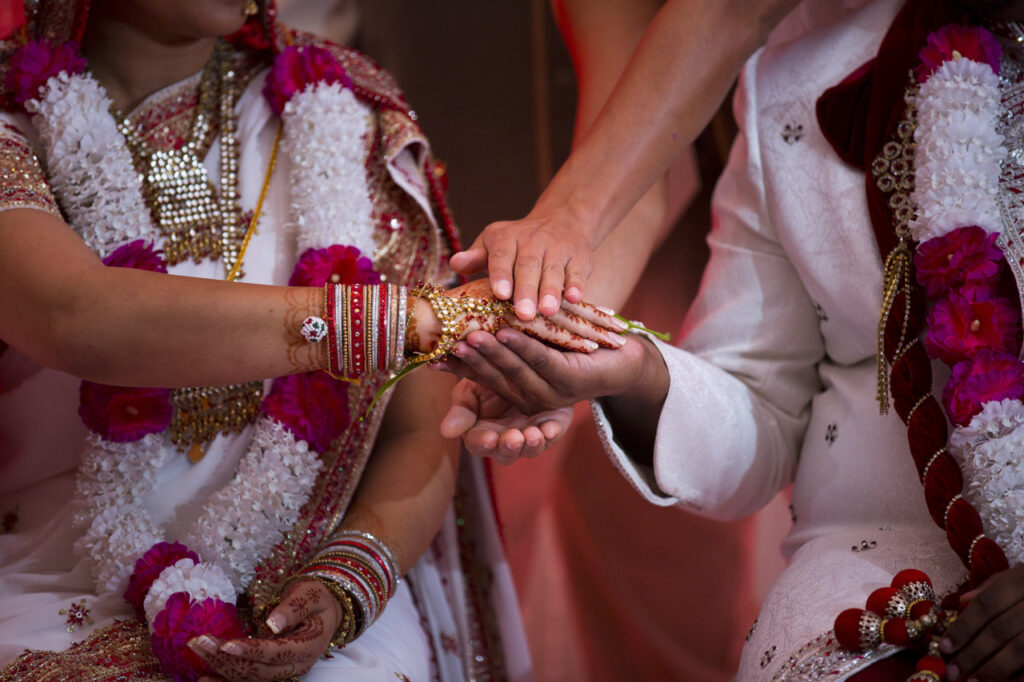
The Kanyadaan is one of the most emotional moments of the wedding day. The bride’s father formally gives her hand to the groom, marking the transition from one family to the next. For many parents, it’s a moment of bittersweet joy. The ritual reflects deep respect for the institution of marriage and the role of family.
10. Saat Phere (Saptapadi)
The Saat Phere, or seven circles, is the centerpiece of a Hindu wedding ceremony. The bride and groom walk seven times around the sacred fire (the agni), with each circle representing a vow they take to each other. The seven vows cover health, wealth, harmony, family, devotion, friendship, and love. After the seventh circle, the marriage is spiritually complete.
11. Sindoor and Mangalsutra
After the Saat Phere, the groom applies sindoor (red vermillion powder) to the parting of the bride’s hair and ties a mangalsutra (sacred necklace, typically with black and gold beads) around her neck. Both are visible symbols of marriage in Hindu tradition. The mangalsutra is worn by the bride for the rest of her marriage.
12. Ashirwad
The Ashirwad is the final blessing of the wedding ceremony. Elders from both families come forward to bless the newly married couple, often placing rice, flowers, or sandalwood paste on their heads. It’s a deeply meaningful close to the marriage rituals before the celebration shifts into the reception.
Post-Wedding Ceremonies
The post-wedding ceremonies mark the bride’s transition into her new family and home. They tend to be more intimate than the wedding day itself, but no less meaningful.
13. Vidaai
The Vidaai is the bride’s emotional farewell to her family before leaving with her new husband. The bride traditionally throws three handfuls of rice over her shoulder as a gesture of gratitude and good fortune for the family she’s leaving. It’s an emotional ritual, even at destination weddings where the “leaving” is more symbolic, and tears are welcome.
14. Griha Pravesh
The Griha Pravesh marks the bride’s first entry into her new home (or hotel suite, for destination weddings). She typically kicks over a kalash (small pot) of rice with her right foot before stepping inside, symbolizing prosperity for the new household. The ritual welcomes her formally as the lady of her new home.
15. Reception
The reception is the final celebration of the wedding week. Unlike Western receptions that follow the ceremony immediately, Indian receptions often happen the night after the wedding. The newly married couple is introduced to extended guests, dinner is served, and the dancing runs late into the night. Many destination wedding couples host their reception on a resort’s beachfront terrace or oceanview ballroom for a stunning final memory.

Regional and Religious Variations
India is enormous and diverse, and wedding traditions vary significantly across regions and religions. A few quick notes on what you may see depending on the couple’s background:
- North Indian Hindu weddings typically feature the rituals described above, Mehndi, Sangeet, Baraat, Saat Phere, etc., with particular emphasis on the sacred fire and the Saat Phere.
- South Indian Hindu weddings often include unique rituals like the Kashi Yatra (a symbolic journey of the groom) and emphasize different ceremonies like the Nalangu (a playful pre-wedding ritual). Tamil, Telugu, Kannada, and Malayali traditions all have variations.
- Sikh weddings are called Anand Karaj and take place at a gurdwara or wedding venue with hymns from the Guru Granth Sahib. The couple walks four laavan (rounds) around the holy book rather than seven phere around fire.
- Muslim weddings (Nikah) center on the marriage contract, are typically shorter, and may include events like the Mehndi and a Walima reception hosted by the groom’s family.
- Jain weddings are similar to Hindu ceremonies but include rituals like the Vinayakyantra Sthapana and emphasize non-violence (no leather, no meat at the celebration).
Couples often blend regional and religious traditions, especially for intercultural weddings. Don’t assume; ask the couple what their celebration will include.
How These Ceremonies Translate to a Destination Wedding
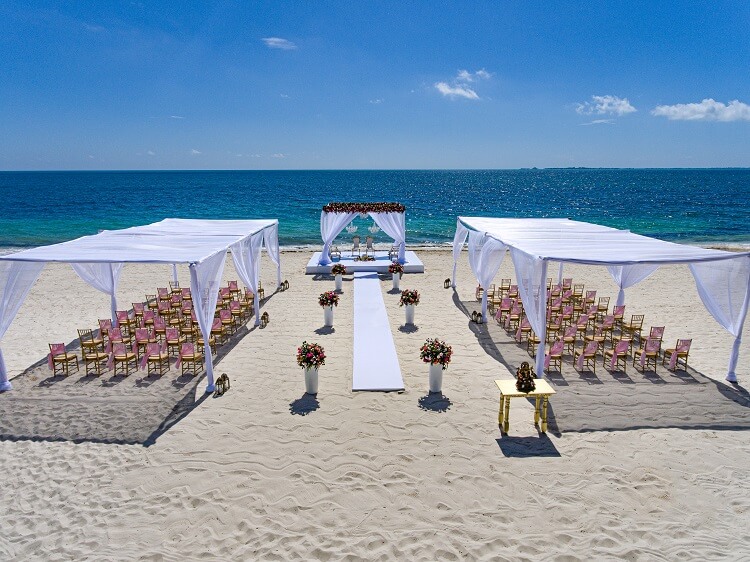
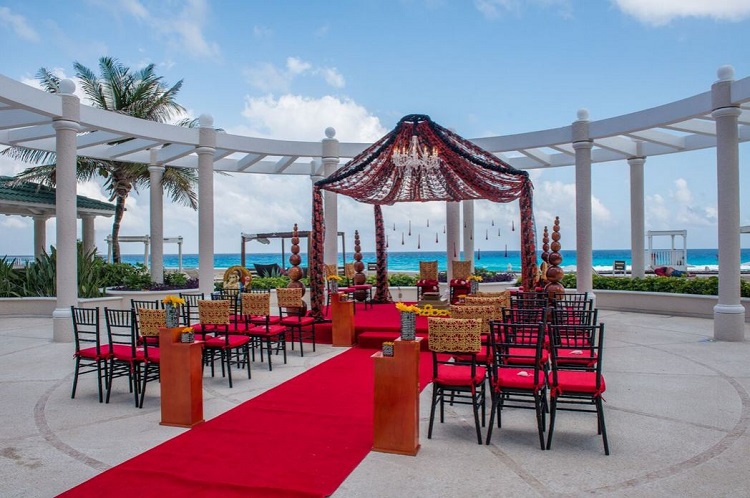
An Indian destination wedding doesn’t compress these traditions; it stretches them across a destination’s natural canvas. The Mehndi happens in a beachside cabana. The Sangeet runs in the resort’s ballroom or oceanfront terrace. The Baraat winds down a palm-tree-lined path to a mandap on the sand. The Saat Phere takes place around a sacred fire with the Caribbean as the backdrop.
Resorts that specialize in Indian destination weddings (particularly in Cancun, Riviera Maya, and Punta Cana) come equipped with: dedicated mandap installation, vegetarian and Jain catering options, ceremony spaces that can accommodate 200 to 500 guests, and wedding planning teams who genuinely understand the rituals. Working with a Certified Destination Wedding Specialist who has experience with South Asian weddings is the difference between a celebration that honors tradition and one that simply checks boxes.

Indian Destination Wedding FAQs
How many days does an Indian wedding last?
Traditional Indian weddings span three to seven days. Pre-wedding events (Roka, Tilak, Mehndi, Sangeet, Haldi) typically run across the days leading up to the wedding day itself. The wedding day includes the Baraat, the ceremony, and often a reception that night or the following night. Destination weddings often condense this into a 4 to 5-day wedding week to make travel logistics manageable.
Do all Indian weddings include all of these ceremonies?
No. Couples and families pick which traditions to include based on their religion, region, and personal preferences. A modern South Asian wedding might emphasize the Mehndi, Sangeet, ceremony, and reception, while skipping or simplifying others. Always check with the couple to know which events you’re invited to.
What’s the most important ceremony in an Indian wedding?
In Hindu weddings, the Saat Phere (seven circles around the sacred fire) is the moment the marriage becomes spiritually complete. In Sikh weddings, it’s the four laavan (rounds around the Guru Granth Sahib). In Muslim weddings, it’s the signing of the Nikah contract. Each tradition has its own central ritual that defines the marriage.
Can non-Indian guests participate in these ceremonies?
Yes, and you’re encouraged to! Non-Indian guests can apply mehndi, dance at the Sangeet, follow the Baraat procession, and observe the wedding ceremony with respect. Showing genuine interest and curiosity is welcomed by Indian families. Just follow the lead of the family on when to participate versus observe.
Plan Your Indian Destination Wedding Today!
Whether you’re planning a 200-guest celebration in Cancun or a more intimate 50-person wedding in Tulum, our team has decades of experience coordinating Indian and South Asian destination weddings across Mexico, the Caribbean, and beyond. We match couples with resorts that genuinely understand the rituals, including dedicated mandap setup, vegetarian and Jain catering, ceremony spaces sized for larger guest counts, and wedding planning teams who’ve handled Saat Phere ceremonies dozens of times.
Fill out our online wedding planning form, and let’s plan a destination wedding that honors every tradition beautifully!

About the Author

Maggie Sabin
Maggie started as the SEO Manager at DestinationWeddings.com in 2024, where she works to drive organic traffic and conversions while creating meaningful, SEO-optimized content for the website. Previously, Maggie's career spanned from Human Resources & Recruitment to teaching at international schools for almost 10 years. Maggie spends her free time traveling, learning new languages, reading non-fiction books, working out, going to the beach and spending time cuddling her dog, Lola!