
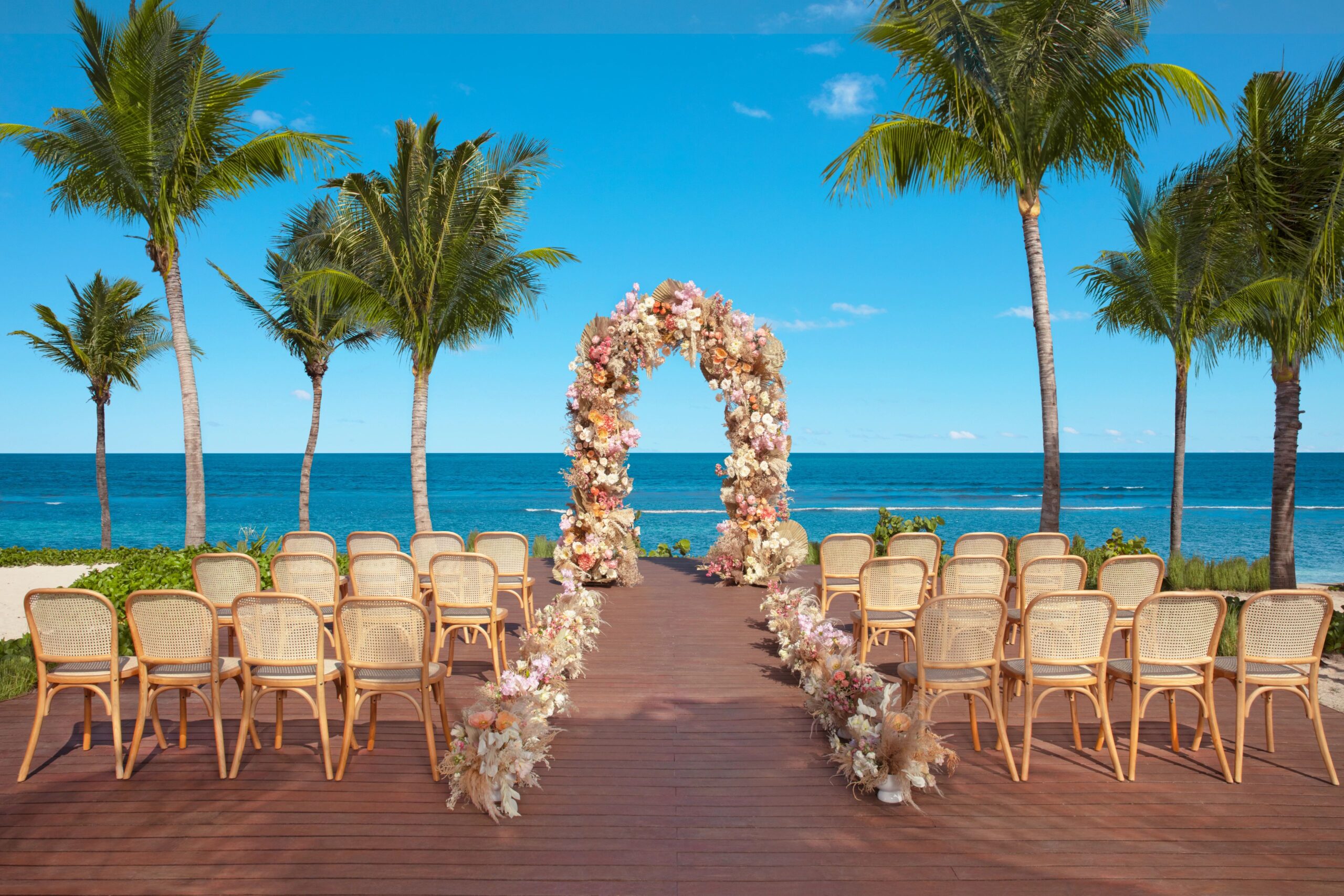
When you start planning a destination wedding, one of the first decisions you’ll face is whether to have a legal ceremony abroad or a symbolic one. The two look almost identical on the day itself, same vows, same setting, same emotional impact, but they differ significantly in what you do before, during, and after the ceremony.
Most couples ultimately choose one over the other based on cost, paperwork, and how they want their wedding day to actually unfold. Below is the quick answer; we then provide a deeper comparison so you can decide which format best fits your destination wedding dreams.
Quick Answer: Legal vs. Symbolic Ceremonies
Symbolic ceremony = non-legally binding, flexible, highly personalized.
Legal ceremony = binding, requires paperwork and government recognition.
Costs and requirements vary by wedding destination. Some countries (like Mexico or Jamaica) make legal ceremonies more accessible than others. Most destination wedding couples opt for a symbolic ceremony abroad and handle the legal paperwork at home.
From our Specialists: Our Certified Destination Wedding Specialists most often recommend a symbolic ceremony abroad with the legal step handled at home, since it preserves total flexibility on ceremony content (vows, religious rituals, blended cultural traditions) and avoids the paperwork load, waiting periods, and added costs of a foreign legal ceremony. The legal step at home is typically a 15-minute courthouse appointment that no one needs to know about unless you tell them.
Symbolic vs. Legal Ceremonies Explained
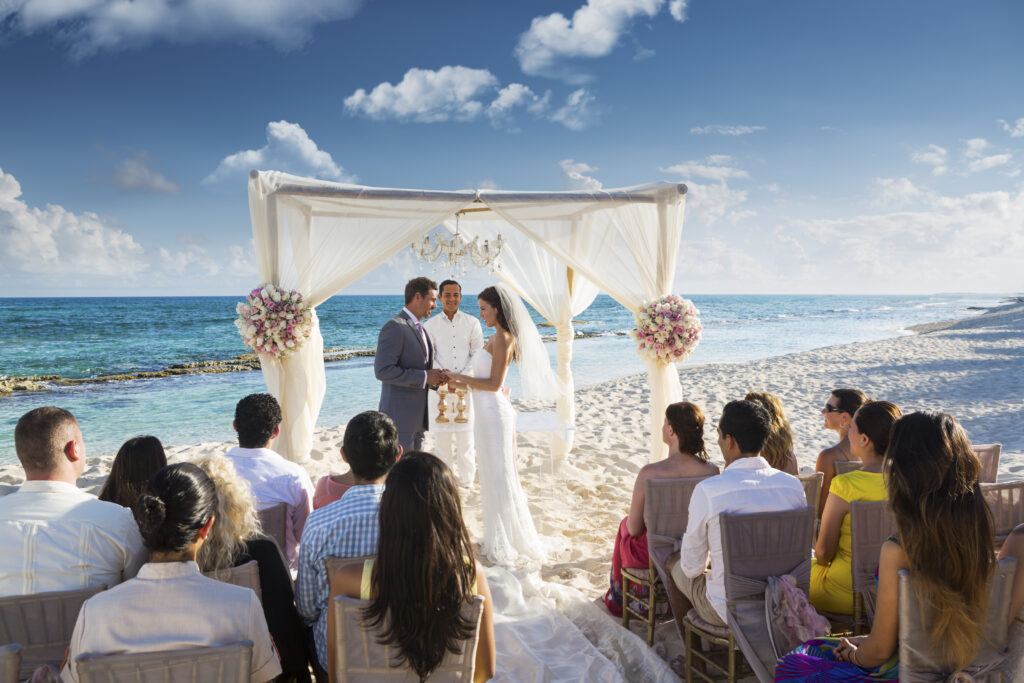
Both ceremony types deliver a beautiful, meaningful wedding moment. The differences come down to paperwork, government recognition, and what’s required to make the marriage official.
What Is a Symbolic Ceremony?
A symbolic ceremony is a wedding that looks and feels exactly like a traditional ceremony, but does not legally bind the couple. There’s no marriage license issued by the destination country, no witness signatures filed with a government office, and no legal paperwork tied to the ceremony itself. The couple simply exchanges vows, rings, and any personal or religious rituals they want, in front of their guests.
Couples who choose a symbolic ceremony abroad typically handle the legal paperwork at home, either before they travel (most common) or after they return. The legal step is often a 15-minute appointment at a local courthouse with two witnesses; it doesn’t replace the wedding, just makes the marriage official with your home country’s government.
Symbolic ceremonies are by far the most popular choice for destination weddings. They’re simpler, faster, and almost always included in standard resort wedding packages. They also give couples maximum flexibility on ceremony content; you can write your own vows, include religious rituals from any tradition, blend cultures, and design the ceremony around your relationship rather than government requirements.
What Is a Legal Ceremony?
A legal ceremony is a wedding that’s officially recognized by the destination country’s government and produces a legally valid marriage certificate. The ceremony usually has to follow the country’s specific legal requirements (officiant credentials, ceremony script language, paperwork submitted in advance, etc.), and the couple receives a marriage certificate from the destination country, which they then register at home for full international recognition.
Legal ceremonies abroad usually require:
- Apostilled copies of birth certificates and divorce decrees (if applicable).
- Translation of documents into the destination country’s language.
- Government-approved officiant (often a judge or registrar, not the resort’s wedding minister).
- Witnesses (usually 2 to 4) with valid ID.
- Sometimes, a blood test or medical exam (still required in some Caribbean countries).
- A waiting period before or after arrival in the country.
The administrative load is real, and the costs add up: translation services, apostille fees, government fees, and sometimes additional travel days to satisfy waiting periods. Legal ceremonies abroad work best for couples who don’t want to handle a separate legal step at home, or whose home jurisdiction makes legal marriage particularly cumbersome.

Side-by-Side Comparison
| Factor | Symbolic Ceremony | Legal Ceremony |
| Legally binding? | No (handle separately at home) | Yes |
| Paperwork required | Minimal | Substantial (apostille, translation, IDs) |
| Officiant | Anyone (resort minister, friend, family) | Government-approved only |
| Ceremony flexibility | Total — write your own vows, blend traditions | Limited — must follow legal script in many countries |
| Typical added cost | $0 (included in package) | $300–$1,500+ depending on country |
| Waiting period | None | Often 24 hrs to 4 days in-country |
| Best for | Couples wanting flexibility and simplicity | Couples wanting one-and-done legal status abroad |
Cost and Timeline Differences
Symbolic ceremonies are almost always cheaper. Most all inclusive resort wedding packages include the symbolic ceremony as part of the base offering, from complimentary tiers up through luxury packages, you’re not paying extra for the format itself. The legal step at home (a courthouse appointment) typically costs $30 to $100 in license fees, plus potentially a small officiant fee if you’d like to formalize the home ceremony with a friend or judge.
Legal ceremonies abroad add real costs:
- Apostille fees: $20 to $100 per document, plus expedited shipping.
- Translation services: $50 to $300 per document.
- Government registration fees: $100 to $500, depending on the country.
- Officiant fees: $200 to $700 for legal officiants versus included resort ministers.
- Blood tests or medical exams (where required): $50 to $200.
- Waiting period costs: 1 to 4 extra nights at the resort if a waiting period requires it.
Total: roughly $300 to $1,500+ for a legal ceremony abroad, depending on the destination and complexity. That’s why most couples opt for symbolic.
Country-Specific Notes
Legal ceremony requirements vary significantly by wedding destination. A few quick notes on the most popular destination wedding regions:
- Mexico: Legal ceremonies in Mexico are accessible but require apostilled and translated documents, blood tests in most states, and a 24 to 48-hour in-country waiting period. Expect $500 to $1,200 in added costs. Symbolic ceremonies are very common.
- Jamaica: A destination wedding in Jamaica is one of the easier Caribbean destinations for legal ceremonies. 24-hour in-country residency required, no blood tests, $100 to $300 in marriage license fees. Apostille and translation requirements are lighter than those in Mexico.
- Dominican Republic: Legal ceremonies are possible but paperwork-heavy. Apostille, translation, and a Dominican notary are all required. Expect $500 to $1,000 in added costs.
- Caribbean (general): Each Caribbean island has its own requirements. The British Virgin Islands, Cayman Islands, Antigua, and Barbados are relatively friendly to legal ceremonies. The weddings in the U.S. Virgin Islands work like a U.S. (no passport, simpler paperwork).
- Costa Rica: Legal ceremonies in Costa Rica are possible but less common; most couples opt for a symbolic.
When in doubt, a Certified Destination Wedding Specialist can walk you through the specific requirements for the country you’re considering and help you weigh whether legal-abroad is worth the added work for your particular wedding.
How to Decide Which Is Right for You
A few quick questions to help you choose:
- Do you want maximum flexibility on ceremony content? → Symbolic.
- Are you comfortable doing a quick legal step at home? → Symbolic.
- Do you want religious or cultural rituals (Hindu, Sikh, Catholic, interfaith) in your ceremony? → Symbolic, since legal ceremonies often constrain the ceremony script language.
- Do you want one wedding to handle everything—no separate legal step? → Legal.
- Is your home jurisdiction’s legal marriage process complicated? → Possibly legal abroad, depending on the destination.
- Are you on a tight wedding budget? → Symbolic almost always wins on cost.
For more on how the entire destination wedding process works, see our guide to how destination weddings work and our overall destination wedding guide.

Legal vs. Symbolic Ceremony FAQs
Will my friends and family know it’s a symbolic ceremony?
Only if you tell them. Symbolic ceremonies look and feel identical to legal ones, same vows, same officiant performing the ceremony, same emotional weight. Most guests have no idea whether the ceremony they’re attending is the legal one or not. The legal step at home (or before traveling) is typically a private, non-event courthouse moment.
If I do a symbolic ceremony, when do I get legally married?
Most couples handle the legal step in the weeks before they travel. You apply for a marriage license at your local courthouse, sign the paperwork with two witnesses (often family members), and you’re legally married. Then you travel and have your symbolic ceremony as the “real” wedding. Some couples wait until after they return home to handle the legal step. Either approach works.
Is a symbolic ceremony recognized as a wedding by my home country?
As a wedding, yes, it’s a meaningful, real ceremony. As a legal marriage, no, unless you also do the legal paperwork separately. The distinction is purely legal: your marriage is officially recorded based on the legal step (whether that happens at home or abroad), not based on the ceremony itself.
Can I have a religious ceremony as a legal ceremony?
In some countries, yes. Catholic ceremonies in Mexico can be legally recognized if performed by a credentialed priest with the proper paperwork. But this is the exception. In most wedding destinations, legal ceremonies must be performed by a government official, separate from any religious or cultural rituals you want to include. Most religious destination weddings end up symbolic for that reason.
Do same-sex couples have additional considerations?
Yes. Same-sex marriage is legal in some destination wedding countries (Mexico, U.S. Virgin Islands, Costa Rica, Aruba, parts of the Caribbean) and not in others. For couples wanting a legal ceremony abroad, check the current legal status carefully.
Most same-sex couples opt for symbolic ceremonies abroad and legal marriage at home, which simplifies the question entirely. The U.S. Virgin Islands are particularly couple-friendly because they’re U.S. territory with full federal recognition.
Plan Your Destination Wedding Today
Whether you’re leaning toward a symbolic ceremony with maximum flexibility or a legal ceremony abroad to keep everything in one place, our Certified Destination Wedding Specialists can walk you through the specific requirements for any destination and help you choose the format that fits your celebration. We’ll handle the paperwork, research, resort coordination, and guest logistics so you can focus on the ceremony itself.
Fill out our online wedding planning form, and we’ll work with you to plan the destination wedding you’ve always dreamed of. Let’s plan a wedding that feels right—legal step and all.

About the Author

Maggie Sabin
Maggie started as the SEO Manager at DestinationWeddings.com in 2024, where she works to drive organic traffic and conversions while creating meaningful, SEO-optimized content for the website. Previously, Maggie's career spanned from Human Resources & Recruitment to teaching at international schools for almost 10 years. Maggie spends her free time traveling, learning new languages, reading non-fiction books, working out, going to the beach and spending time cuddling her dog, Lola!