
Getting legally married in Punta Cana is meaningfully simpler than in many other Caribbean destinations. There’s no blood test, no residency requirement, and no mandatory pre-ceremony waiting period. The trade-off is paperwork upfront: documents need to be apostilled, translated, and sent to the Dominican Republic 30 to 60 days before your wedding so your resort or planner can submit everything to the Civil Registry on your behalf.
Short answer: a civil ceremony performed by a Juez del Tribunal de la Familia (Family Court Judge), no in-country waiting period required, apostilled and Spanish-translated documents sent 30 to 60 days ahead, and roughly $500 to $1,500 in legal-only costs.
This guide walks through Punta Cana’s legal wedding process step by step, with a frank note up front: same-sex civil marriage is not legal in the Dominican Republic. We cover that in detail in its own section below so couples can plan accordingly.

Civil vs. Symbolic Ceremony in Punta Cana: At a Glance
| Civil Ceremony | Symbolic Ceremony | |
|---|---|---|
| Legally binding? | Yes, internationally recognized | No, marry legally at home before or after |
| Days in Punta Cana before ceremony | None required (arrive any time) | None required |
| Health screening | None required | None required |
| Documents | Passports, apostilled birth certs, single status affidavits, divorce/death decrees, sent 30–60 days ahead | Passport only |
| Typical legal-only cost | $500–$1,500 | Included in most resort wedding packages |
Your Ceremony Options in Punta Cana
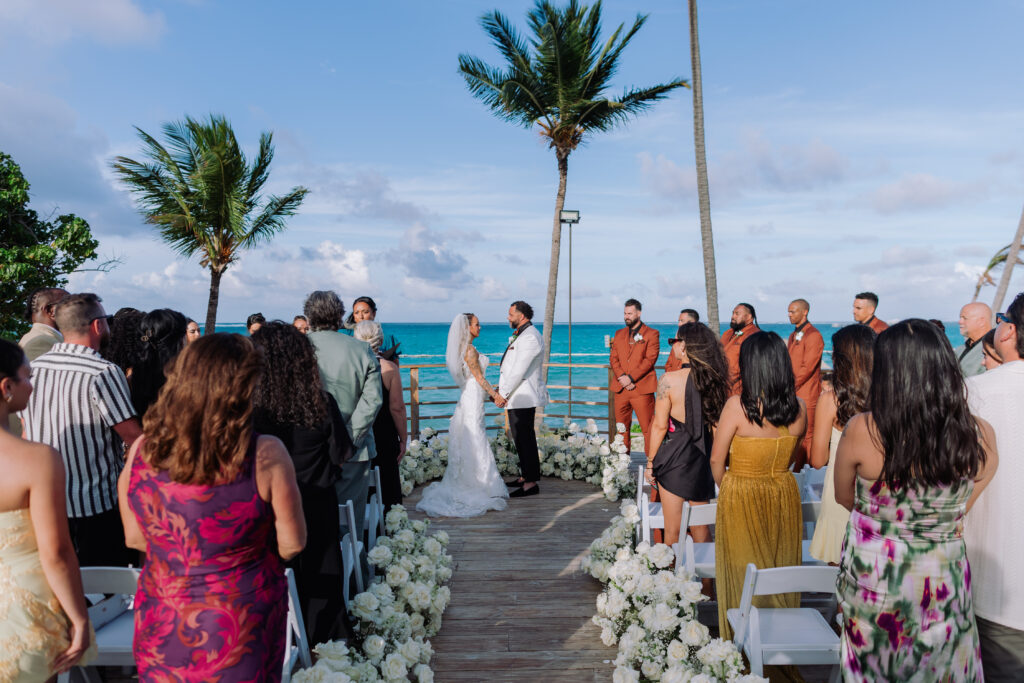
There are three ways to exchange vows in Punta Cana. Only one is legally binding, but all three can stand alone as the wedding moment itself.
Civil Ceremony (Legally Binding)
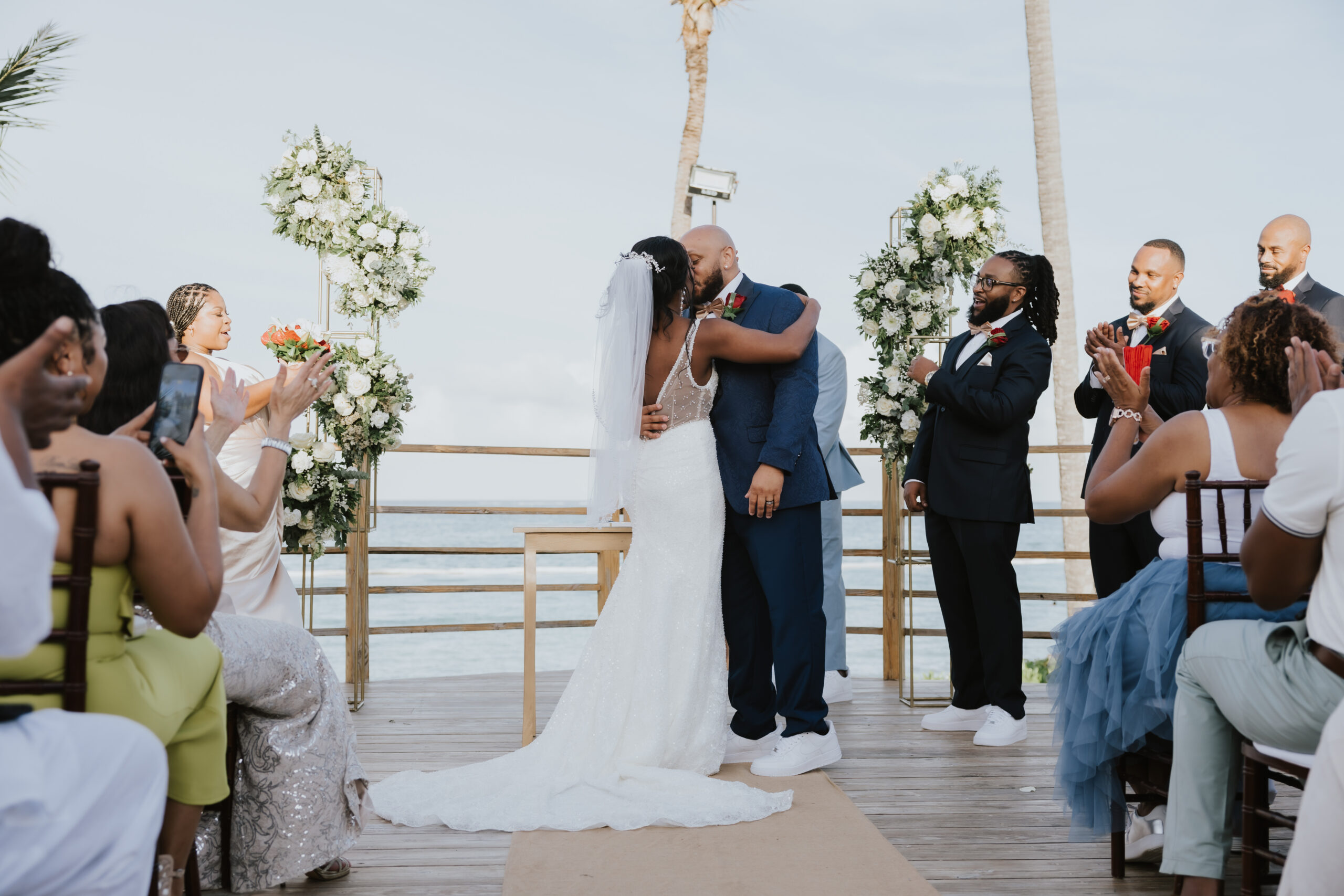
A civil ceremony is performed by a Juez del Tribunal de la Familia (Family Court Judge). The judge can perform the ceremony at the local Civil Registry office or, more commonly for foreign couples, travel to your resort, beach, or chosen venue. You’ll need passports, apostilled birth certificates, single status affidavits, and any prior divorce or death decrees, all submitted 30 to 60 days before the wedding date. The civil ceremony itself is brief (typically 20 to 30 minutes) and conducted in Spanish; most resorts arrange an English interpreter. Once your acta de matrimonio (marriage certificate) is signed, your marriage is recognized internationally under the Hague Convention.
Symbolic Ceremony (Most Popular)
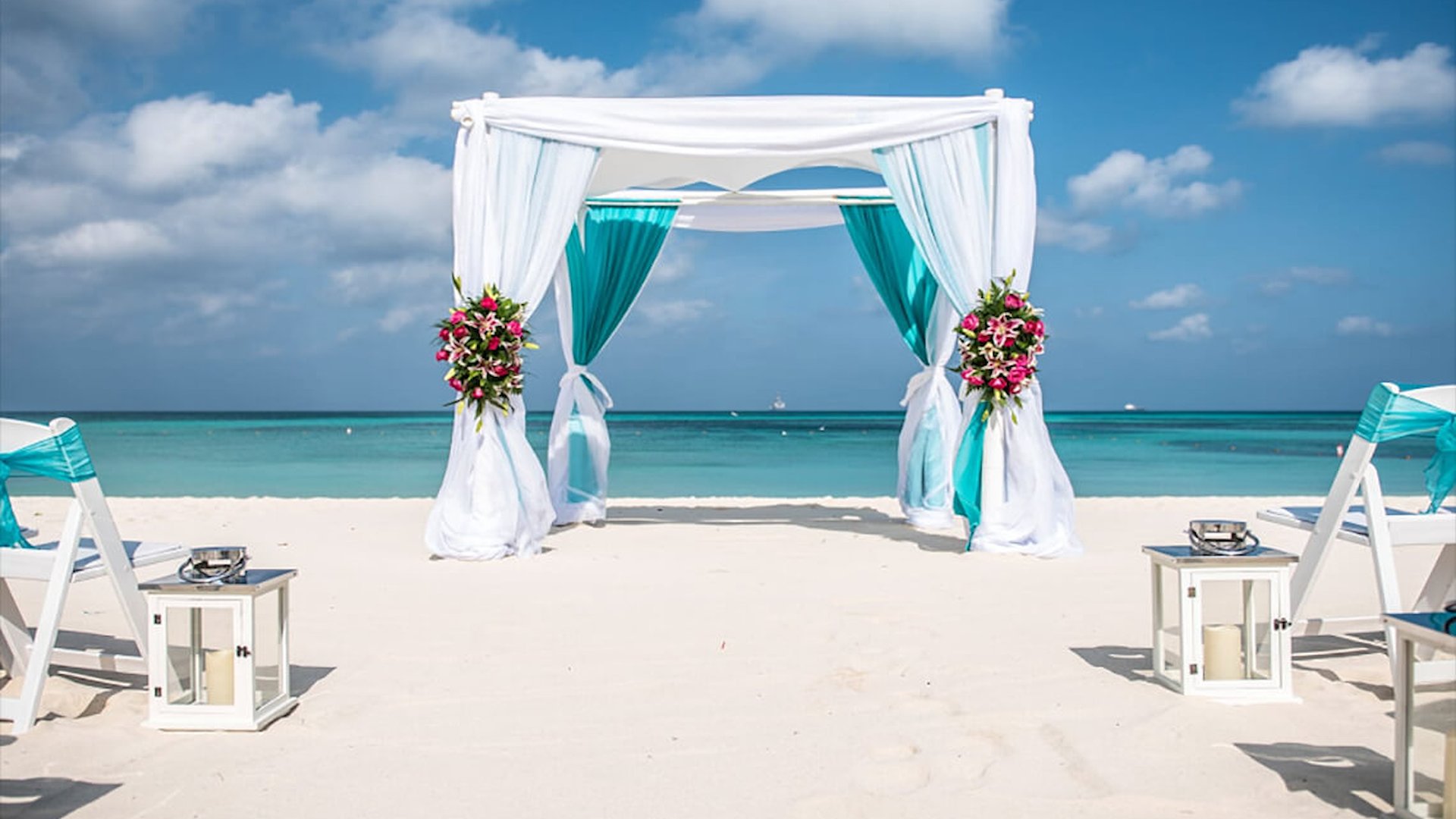
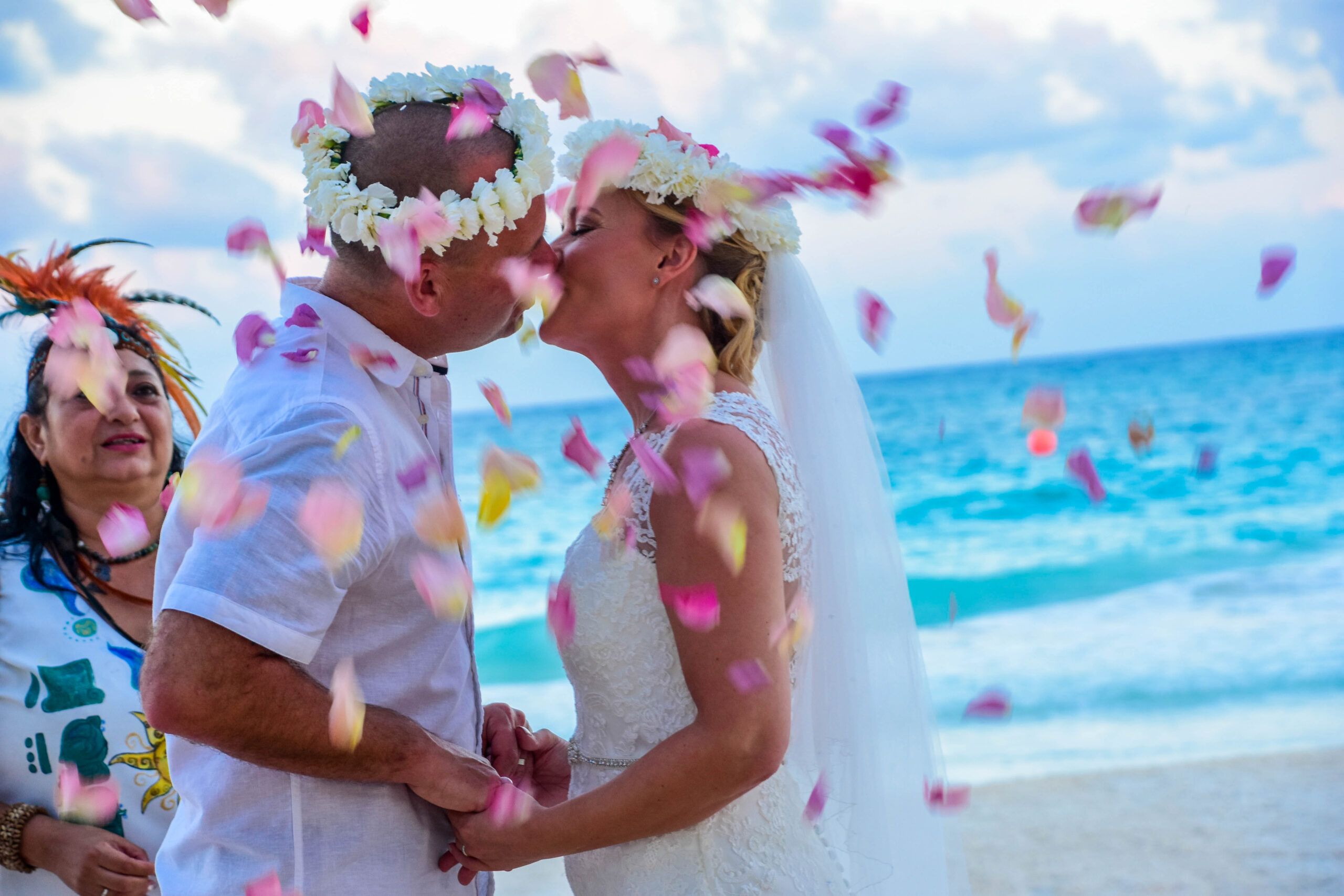
The vast majority of Punta Cana destination weddings are symbolic. Couples exchange vows, rings, and intentions without the paperwork, and handle the legal piece quietly at a courthouse back home before or after the trip. Symbolic ceremonies in Punta Cana have endless venue options: Bavaro Beach at sunset, the dramatic cliff edges of Cap Cana overlooking the Caribbean, the quieter palm-fringed coves of Uvero Alto, an oceanfront gazebo, or a private resort terrace at golden hour. With no documents, no waiting period, and no advance paperwork, most all-inclusive wedding packages default to this option.
Religious Ceremony
Some couples add a religious ceremony, conducted by a Catholic priest, Protestant minister, rabbi, or other officiant. Religious ceremonies are not legally binding in the Dominican Republic unless paired with a civil ceremony. Several Punta Cana resorts have on-site chapels (the Iberostar properties’ chapels and some Bahia Principe locations are popular for Catholic ceremonies) or can arrange a visiting religious officiant. Lead times are longer for religious ceremonies, so start the conversation with your Specialist at least nine months out.
No Blood Test, No Residency: How Punta Cana Compares to Mexico
If you’re weighing Punta Cana against a Mexican Caribbean destination (Cancun, Riviera Maya, Tulum) for a legal wedding, the Dominican Republic’s process is noticeably faster on the ground. Mexico requires a 14-day-valid health screening (HIV and syphilis tests) completed in the country, plus a 3- to 4-business-day in-country waiting period. Punta Cana requires neither.
The trade-off is upfront timing. Mexico’s documents can be handled relatively close to the trip (3 to 6 months); Punta Cana requires your apostilled documents to arrive in the Dominican Republic 30 to 60 days before the ceremony for the Civil Registry to review and approve. For couples who can plan ahead but can’t take a full week off pre-wedding, the Dominican Republic’s process is the easier fit.

Required Documents for a Legal Punta Cana Wedding
Every foreign document needs to be apostilled in your home country and translated into Spanish by a certified translator. Allow 4 to 8 weeks for apostille processing and another 1 to 2 weeks for translation and shipping to the Dominican Republic.
- Valid passports for both partners (minimum six months remaining validity), presented at the ceremony.
- Original birth certificates, both partners, apostilled in your home country and translated into Spanish.
- Single status affidavits, sworn statements that you are legally single and free to marry. Each partner needs their own, notarized and apostilled. Some US states call this a Single Status Affidavit; others issue it as a Certificate of No Impediment.
- Apostilled divorce decrees or death certificates, if applicable, for any previous marriage. Divorces typically must be finalized at least one year prior.
- Two witnesses who are not blood relatives, each with a valid passport or government-issued photo ID. Witnesses can be wedding-party members, guests, or resort staff.
The Dominican Republic joined the Hague Apostille Convention in 2009, so apostilled documents from any Hague-Convention country (including the US, Canada, the UK, and most of Europe) are accepted. Older guides may reference consular legalization through the Dominican Consulate, which is no longer required for Hague-country documents.
Pre-Travel Legal Timeline
- 6 to 8 months before the wedding: Begin gathering documents. Order fresh certified copies of birth certificates and any divorce or death decrees. Locate or draft single status affidavits.
- 4 to 6 months before the wedding: Notarize the single status affidavits. Submit all documents (birth certificates, single status affidavits, divorce/death decrees) to your home-country authority for apostille processing.
- 2 to 3 months before the wedding: Send originals or certified copies of all apostilled documents to your resort wedding coordinator or Certified Destination Wedding Specialist, who arranges certified Spanish translation through a Dominican Republic-licensed translator and submits the packet to the Civil Registry for approval.
- On arrival in Punta Cana: Hand-deliver your original passports and any backup documents to your wedding coordinator. Confirm the ceremony details, witnesses, and judge schedule.
The Civil Ceremony Process in Punta Cana, Step by Step
Step 1: Gather and Apostille Documents at Home (6–8 Months Before Travel)
Request fresh certified copies of all required documents. Notarize and apostille each through your home-country Secretary of State or equivalent authority. US documents are apostilled by the Secretary of State of the issuing state; federal documents are processed by the US Department of State.
Step 2: Send Documents to the Dominican Republic (2–3 Months Before Travel)
Mail your apostilled originals (or certified copies) to your resort wedding coordinator or Specialist. They arrange Spanish translation by a Dominican Republic-certified Intérprete Judicial (Judicial Interpreter) and submit the packet to the local Civil Registry. The Registry reviews and approves within 30 to 60 days.
Step 3: Arrive in Punta Cana
No mandatory waiting period and no health screening to complete. Most couples arrive a few days before the ceremony for guest welcome events, but the legal process itself doesn’t require advance days in-country.
Step 4: The Civil Ceremony
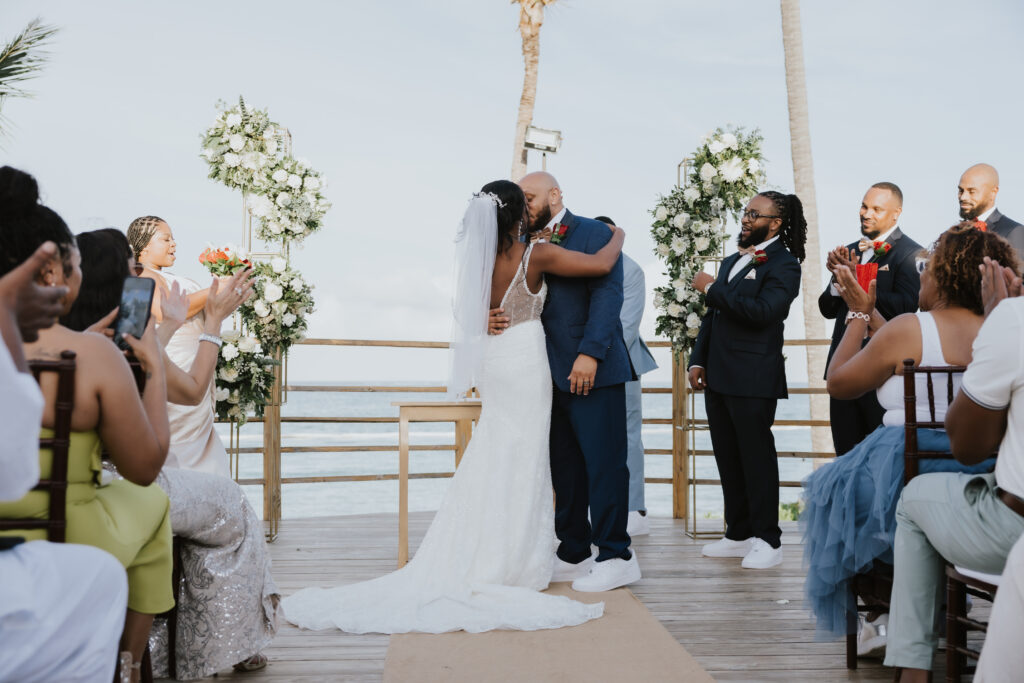
A Juez del Tribunal de la Familia performs the ceremony at your resort, beach, or off-site venue (or at the Civil Registry office for the lowest-fee option). Two witnesses sign your acta de matrimonio alongside you and your partner. The ceremony runs 20 to 30 minutes in Spanish; an English interpreter is typically arranged.
Step 5: Apostille and Recognize the Marriage at Home
After the ceremony, your acta de matrimonio is issued in Spanish. Your resort coordinator typically arranges the Dominican Republic apostille of the certificate. Once home, translate the apostilled certificate to English (or your home language) and file the translated copy with your local county clerk or vital records office to register the marriage.
Legal Wedding Costs in Punta Cana
Punta Cana’s legal-only costs are slightly higher than Mexico’s on a per-line-item basis but offset by the absence of health-screening fees and a shorter required stay. Here’s the breakdown:
| Item | Typical Cost (USD) | Notes |
|---|---|---|
| Apostille (per document, home country) | $20–$100 | Through your state Secretary of State |
| Certified Spanish translation (per page) | $15–$30 | Dominican Republic-certified Intérprete Judicial |
| Civil ceremony fee (foreign couples) | $300–$400 | Standard fee for foreign-couple civil ceremony |
| Judge fee | $300–$600 | Higher for off-site or remote venues |
| Apostille of Dominican marriage certificate | $50–$100 | Done in the Dominican Republic after the ceremony |
| Resort legal wedding package (bundled) | $1,350–$1,700 | Includes coordinator, judge, translation, apostille, shipping |
| Total legal-only cost | $500–$1,500 | Separate from resort wedding package, dining, and decor |
RELATED: Punta Cana Destination Wedding Cost Guide
Bavaro, Uvero Alto, and Cap Cana: Choosing Your Resort Area
Punta Cana’s wedding market splits across three main resort areas, each with its own personality and pace. All three handle legal civil ceremonies; the difference is the venue feel, the resort lineup, and the price tier.
Bavaro Beach

The largest and most popular Punta Cana resort area, with the deepest all-inclusive lineup and the widest range of legal-coordination experience. Resorts known for handling legal weddings include Iberostar Bavaro and Punta Cana, Hard Rock Hotel & Casino Punta Cana, Bahia Principe Grand Bavaro, Majestic Colonial, Riu Republica, Excellence Punta Cana, and Now Onyx Punta Cana. Best for larger weddings, varied budgets, and couples wanting walkable resort options.
Uvero Alto

A quieter stretch north of Bavaro with newer, often more luxurious resorts and a slower, more secluded feel. Top legal-wedding resorts include Excellence El Carmen, TRS Turquesa, and Dreams Onyx. Best for couples wanting a more peaceful resort experience with full legal coordination support.
Cap Cana
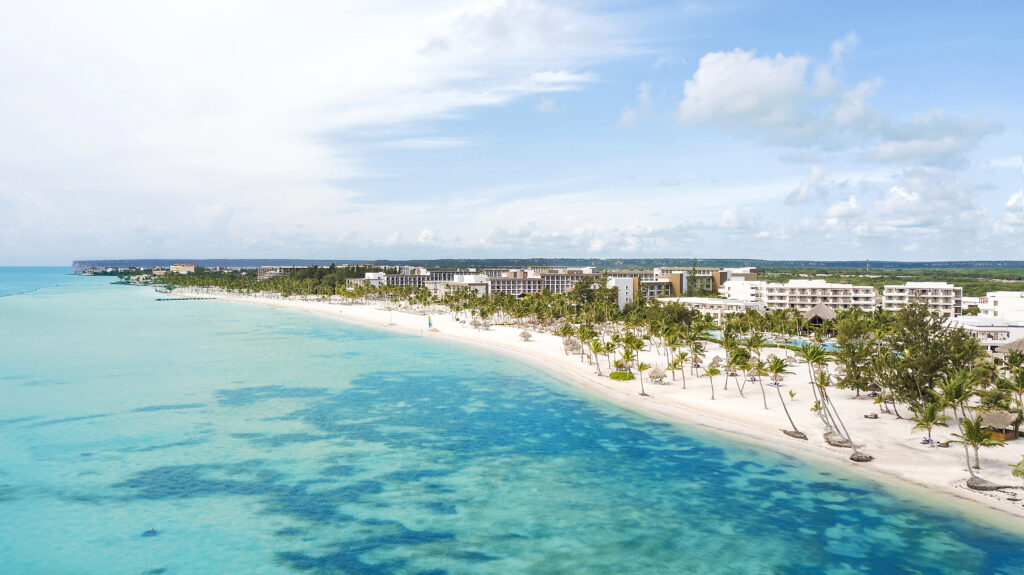
The gated, more exclusive southern enclave with luxury anchors and dramatic cliff-meets-Caribbean scenery. Properties known for legal weddings include Sanctuary Cap Cana, Secrets Cap Cana Resort & Spa, and Margaritaville Island Reserve Cap Cana. Best for smaller, more elevated celebrations with a higher price tier.
Same-Sex Marriage in the Dominican Republic
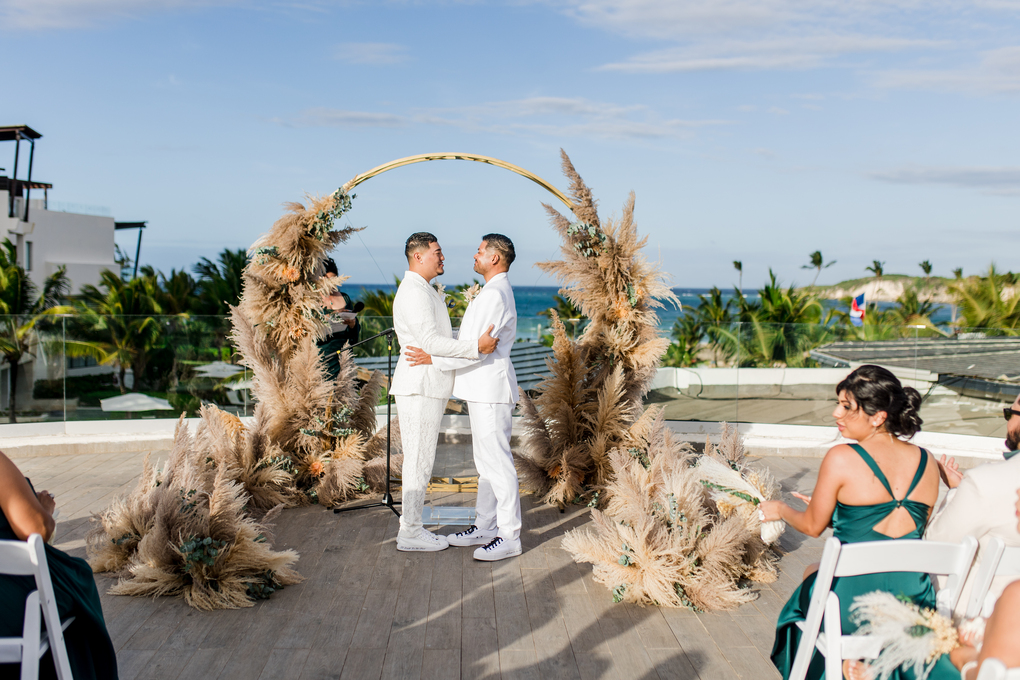
Same-sex civil marriage is not legal in the Dominican Republic. Article 55 of the Dominican Constitution defines marriage as between a man and a woman, and the country does not recognize same-sex civil unions or foreign same-sex marriages for legal purposes within the Dominican Republic. Same-sex couples can absolutely have a beautiful symbolic ceremony in Punta Cana, with the same venue options, resort partnerships, and warmth of celebration as any other couple, but the ceremony will not be legally binding in the Dominican Republic.
For LGBTQ+ couples seeking a legal Caribbean or Mexican destination wedding, several alternatives are worth exploring:
- Mexico: Same-sex civil marriage has been legal nationwide since 2022, with full recognition in every state. See our Mexico legal hub.
- US Caribbean territories: Puerto Rico and the US Virgin Islands recognize same-sex marriage under US federal law.
- Other LGBTQ+-friendly Caribbean destinations: Aruba, Curacao, and several other islands recognize same-sex marriages performed elsewhere; some allow legal ceremonies. Your Certified Destination Wedding Specialist can map current options.
Many same-sex couples plan a legal civil ceremony at home or in one of the destinations above and then host a symbolic celebration in Punta Cana for the full destination wedding experience.
What to Do When You Return Home
Your Dominican marriage certificate (acta de matrimonio), when apostilled by the Dominican Republic’s authorities, is recognized in the United States, Canada, the UK, and most other countries under the Hague Convention. Once home, get the apostilled certificate translated into English (or your home language) by a certified translator and file the translated copy with your local county clerk or vital records office to record the marriage.
For tax filings, name changes on passports and social security records, and immigration paperwork, your translated and apostilled certificate is the document of record. Keep multiple certified copies, as you’ll need several across different filings.
Punta Cana Legal Wedding FAQs
How is a legal Punta Cana wedding different from a legal Mexico wedding?
The Dominican Republic doesn’t require a blood test or any in-country waiting period; Mexico requires both (14-day-valid health screening plus 3 to 4 business days in-country before the ceremony). The Dominican Republic does require documents to be apostilled and sent to the country 30 to 60 days before the ceremony, while Mexico’s documents can be handled closer to the trip. Both produce internationally recognized civil marriages.
Can same-sex couples legally marry in Punta Cana?
No. Same-sex civil marriage is not legal in the Dominican Republic, and the Dominican Republic does not recognize same-sex civil unions. Same-sex couples can still have a beautiful symbolic ceremony in Punta Cana, but the ceremony will not be legally binding. For a legal LGBTQ+ destination wedding, Mexico (legal nationwide since 2022), Puerto Rico, or the US Virgin Islands are common alternatives.
Do we need a blood test to get married in Punta Cana?
No. Unlike Mexico, the Dominican Republic does not require any health screening or blood test for a civil marriage. This is one of the reasons many couples choose Punta Cana for a legal destination wedding.
How long must our documents be sent to the Dominican Republic in advance?
Plan for 30 to 60 days before the ceremony date. Apostilled documents are mailed to your resort wedding coordinator or Specialist, who arranges certified Spanish translation through a Dominican Republic-licensed Intérprete Judicial and submits the packet to the Civil Registry for review. The Registry typically approves within that window.
Bavaro Beach or Cap Cana: which is better for a legal wedding?
Both are equally capable of handling a legal civil ceremony; the legal process itself is identical. Bavaro has the largest resort lineup and the deepest pool of all-inclusive properties with experienced legal-coordination teams; Cap Cana brings a more exclusive, luxury-anchored experience with cliff-edge venues and smaller, more elevated celebrations. Bavaro tends to fit larger weddings and broader budgets; Cap Cana suits intimate luxury celebrations.
A Note on Verifying Current Requirements
Legal requirements can change, and the Dominican Civil Registry adjusts fees and documentation periodically. Before booking, confirm current requirements with your resort’s wedding coordinator, your Certified Destination Wedding Specialist, or the US Embassy in the Dominican Republic.
Start Planning Your Legal Punta Cana Wedding
A legal Punta Cana wedding is one of the most efficient destination-wedding processes in the Caribbean: a few months of careful paperwork, then a stress-free arrival with no required tests, no required waiting period, and a beautiful Caribbean ceremony ready to go. For couples who can plan ahead but can’t take a full pre-wedding week off, it’s hard to beat.
Our Certified Destination Wedding Specialists coordinate the legal piece (apostille tracking, translation, civil registry submission, judge scheduling, marriage certificate apostille) so you can focus on the celebration. Fill out our online wedding planning form to get started.

About the Author

Maggie Sabin
Maggie started as the SEO Manager at DestinationWeddings.com in 2024, where she works to drive organic traffic and conversions while creating meaningful, SEO-optimized content for the website. Previously, Maggie's career spanned from Human Resources & Recruitment to teaching at international schools for almost 10 years. Maggie spends her free time traveling, learning new languages, reading non-fiction books, working out, going to the beach and spending time cuddling her dog, Lola!