
Congratulations on your engagement! Planning your wedding is one of the most exciting things you’ll do in life, but the process can often be overwhelming. You’re choosing a venue, planning your invitations, booking vendors and more, and your list of responsibilities can seem never-ending.
The key to a joyful and stress-free journey to your big day is organization. A solid plan keeps everything on track and helps you focus on what truly matters: celebrating your love.
We’ve created this guide to help you navigate the process with ease as you learn how to create a planning system that works for you, from building a master checklist to managing your budget. We’ll explore essential tools, share practical strategies, and offer tips to keep everything running smoothly. Think of this as your reassuring roadmap to a beautifully organized wedding, whether you’re getting married in your backyard or in a tropical paradise.
Why Staying Organized Is Essential For Wedding Planning
A well-organized approach to wedding planning is your secret weapon against stress. When you have a clear planning system, you can say goodbye to last-minute scrambles and hello to peaceful progress. Organization brings a sense of calm and control, enabling you to make decisions with confidence instead of panic. It helps prevent costly mistakes, such as forgetting a vendor payment or missing a booking deadline, which can add unnecessary strain to your budget and your relationship.
Staying organized also ensures that you and your partner are on the same page. A shared plan keeps communication open and transparent so you can work together as a team. You’ll have a clear view of what’s been accomplished and what’s next, which makes the entire experience more enjoyable.
From a logistical standpoint, it means that all the details are accounted for. Emotionally, you’re free to savor every moment of your engagement without being weighed down by a chaotic planning process.
Creating a Wedding Planning System That Works for You
There is no one-size-fits-all solution for wedding planning. The best system is the one that best fits your personal style, your schedule, and the unique details of your wedding. Are you a digital native who loves spreadsheets and apps? Or do you prefer the satisfaction of a physical binder with printed checklists? Perhaps a combination of both is your perfect system. The goal is to choose tools that you will actually use consistently.
Consider creating a central hub for all the wedding-related information. This could be a shared digital folder, a dedicated email address, or a physical planner. Flexibility is key. Your needs will change as you move through the planning stages.
For example, what works for booking big vendors might not be ideal for tracking RSVPs. It’s vital to establish your system early and stick with it. An online wedding planner template can be a fantastic starting point, giving you a framework you can customize.

Wedding Planning Tips and Strategies to Help You Stay Organized
Along with specific tools, helpful strategies can make a huge difference in staying organized. First, learn to prioritize. Not every task is urgent. Identify your top priorities for each month, and focus on those first to avoid feeling overwhelmed.
Task batching is another great strategy. Instead of making one vendor call today and another tomorrow, set aside a block of time to handle all your vendor communications at once. This approach helps you stay focused and efficient.
Schedule regular planning check-ins with your partner. These discussions, whether weekly or bi-weekly, create dedicated time to discuss progress, make decisions, and divide tasks. It keeps both of you involved and ensures that nothing falls through the cracks.
Remember, this is a marathon, not a sprint. By adopting these organizational habits, you create a sustainable pace that reduces stress and makes the entire process more manageable and fun.
How To Create A Wedding Checklist From Start To Finish
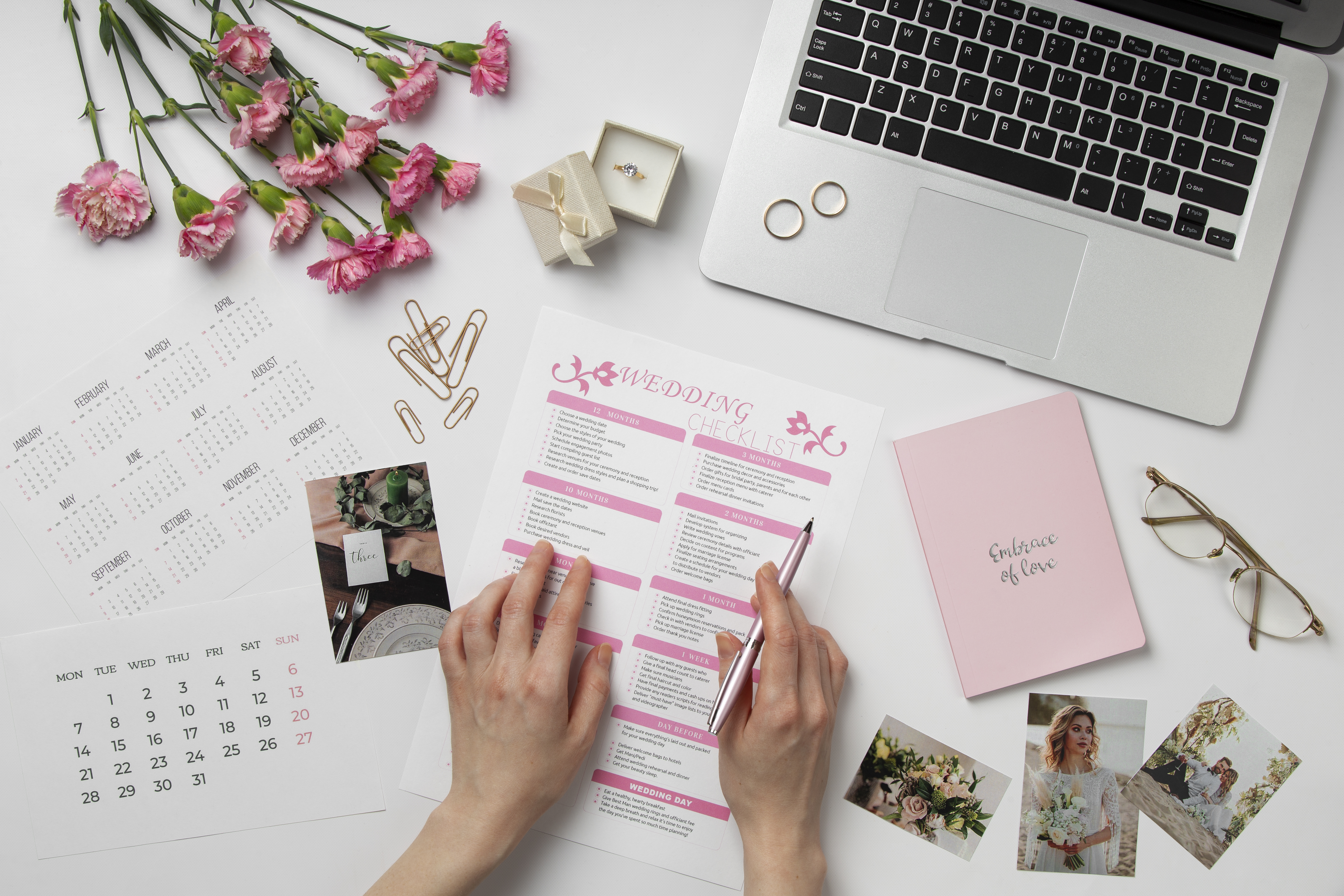
A master wedding checklist is the backbone of your planning. It acts as your guide from the moment you say “yes” to the moment you say “I do.” Start by breaking down the planning process into major phases.
You can think in terms of timelines, like “12+ Months Out,” “9-11 Months Out,” and so on. Within each phase, list the major tasks that need to be completed. For example, your first phase might include setting a budget, creating a guest list, and choosing a wedding date and venue.
Your checklist is a living document that will grow and evolve as you make decisions and new tasks arise. Don’t try to list every single tiny detail from the very beginning. Instead, start broadly and add more specific items as you get closer to the date.
For instance, under “Hire vendors,” you’ll eventually add sub-tasks such as “Sign contract with photographer” and “Schedule tasting with caterer.” Using a customizable wedding planner online template can simplify this process immensely.
How to Build A Wedding Planning Timeline That Keeps You On Track
A wedding planning timeline is your roadmap for managing deadlines and expectations. It takes your master checklist and puts it on a calendar. The most effective way to build your timeline is to work backward from your wedding date. This ensures that every task is scheduled with enough time for completion, preventing any last-minute rushes. Start by plotting the major milestones, such as booking your venue, sending save-the-dates and mailing formal invitations.
Once the big items are in place, you can fill in the smaller details. For example, schedule your final dress fitting for about a month before the wedding, and plan to apply for your marriage license within the required timeframe.
Your timeline should also build in some buffer room. Unexpected delays can happen, and having extra time provides a safety net. An online wedding planner template often includes a pre-built timeline that you can adjust to fit your specific needs, keeping you on track and stress-free.
Staying Organized With Vendors, Contracts and Communication
Managing your team of wedding vendors is a project in itself. The key to success is meticulous tracking. Create a dedicated space, either digitally or in a binder, to store all vendor information.
For each vendor, you should have contact details, a copy of the signed contract, payment schedules, and a record of all your conversations. This central hub will become your go-to resource whenever you have a question or need to confirm a detail.
When communicating with vendors, it’s a great practice to keep everything in writing. After a phone call, send a quick email to summarize what was discussed and any decisions that were made. This creates a paper trail and prevents misunderstandings. Proactive follow-ups are also crucial.
A few weeks before the wedding, reach out to every vendor to confirm arrival times, final details, and any outstanding balances. This simple step ensures that everyone is aligned for a flawless wedding day.
RELATED: Engagement Checklist: How to Prepare for the Big Day
How To Stay Organized With Your Wedding Budget
Your wedding budget is the financial foundation of your entire plan. Keeping it organized is essential for making smart, informed decisions. Start by creating a detailed spreadsheet or using a budgeting tool to list all potential expenses. Research average costs in your area to set realistic estimates for each category, from the venue and catering to the flowers and entertainment. This initial breakdown will help you see where your money is going and where you might need to make adjustments.
As you start booking vendors and making purchases, track every single expense against your budget. This will give you a real-time view of your spending and help you stay on track. It’s also wise to set aside a contingency fund, typically 5-10% of your total budget, for unexpected costs that may pop up along the way. Diligent budget tracking will help you prioritize what’s most important to you as a couple, ensuring that you can have your dream wedding without financial stress.
Organizing Your Guest List, Invitations and RSVPs
Managing the guest list can be one of the more complex parts of wedding planning. A well-organized spreadsheet is your best friend here. Create columns for guest names, mailing addresses, email addresses, and relationships to the couple.
As you move through the process, you can add more columns to track sent invitations, RSVP responses, meal choices, and even table assignments. Using a digital tool makes it easy to sort and filter your list as needed. A free online wedding planner template can be a great resource for this.
Establish a clear timeline for your invitations. Send save-the-dates about six to eight months in advance, especially for a destination wedding. Formal invitations should follow about eight to 12 weeks before the big day. Make the RSVP process as easy as possible for your guests, whether you use a mail-in card or a wedding website. As responses come in, update your master spreadsheet immediately.
This accuracy is crucial for giving final headcounts to your caterer and creating a seamless seating chart.
Additional Organization Tips for Destination Weddings
Planning a destination wedding adds a few extra layers of complexity, but staying organized can make it a breeze. Communication is paramount. Since you’re planning from a distance, you’ll rely heavily on email and video calls with your on-site coordinator and vendors. Keep all correspondence neatly filed and confirm every detail in writing.
It’s also important to create a detailed timeline that accounts for booking flights and accommodations for you and your guests.
Guest management is another key area. Provide your guests with a comprehensive information packet that includes travel details, accommodation options, a weekend itinerary, and tips for local points of interest. A wedding website is an excellent tool for this, serving as a central hub for all guest-related information.
Finally, be sure to research the marriage license requirements of your chosen destination well in advance. Some locations have residency requirements or specific documentation needs you’ll want to prepare for.

Staying Organized During the Countdown to the Wedding
The final weeks before your wedding are all about confirming details and preparing for a smooth celebration. This is when you’ll lean on your organizational systems. Create a “final weeks” checklist that includes tasks such as confirming final vendor payments, submitting your final guest count, and creating a detailed day-of timeline. This timeline should be shared with your venue coordinator, the wedding party, and key family members, so everyone knows the schedule.
This is also the perfect time to delegate. Assign small, specific tasks to trusted friends or family members, such as picking up the wedding dress and assembling welcome bags. Letting others help frees you from last-minute panic and brings them into the wedding process.
Pack a wedding day emergency kit with items such as safety pins, pain relievers, and stain remover.
By finalizing details ahead of time and trusting your plan, you can shift your focus from planning to pure excitement and anticipation for the amazing day ahead.
How Organization Leads to a More Enjoyable Wedding Experience
Ultimately, every checklist you create and every spreadsheet you update serves one purpose: to help you have a calm, present, and joyful wedding day. When you know that every detail has been handled and every vendor is confirmed, you can be free from worry. You can immerse yourself in the moment, soak in the love of your friends and family, and focus entirely on the incredible commitment you and your partner are making.
The effort you put into organizing your wedding is a gift to your future self. It paves the way for a seamless, stress-free experience, not just for you but for everyone involved. Planning your wedding is likely the first major project you’ll tackle as a couple, and a well-organized approach sets a wonderful precedent for your life together. It all leads to a beautiful result: a day filled with happy memories, not logistical headaches.
Ready to Start Planning Your Dream Destination Wedding in Paradise?
You’ve seen how the right tools and a little organization can transform wedding planning from a stressful chore into an exciting journey. By creating a solid plan, you can navigate every step with confidence and grace, leaving you free to dream about your perfect day.
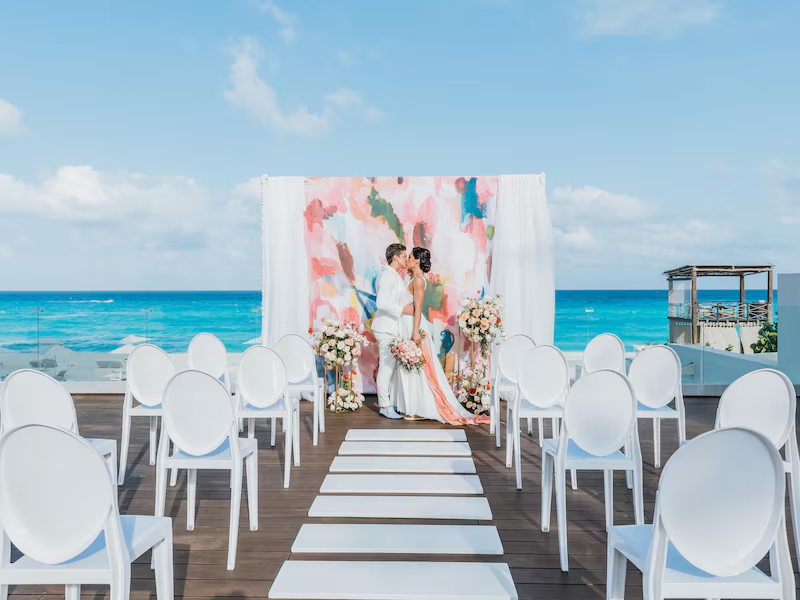
Imagine saying “I do” on a beautiful beach with turquoise water as your backdrop, surrounded by your closest friends and family. That dream is closer than you think.
Let us help you bring that vision to life. Our Certified Destination Wedding Specialists are experts at crafting unforgettable celebrations in paradise. We take the stress out of planning so you can focus on the excitement.
To get personalized guidance and start your journey, fill out our online wedding planning form today. Let’s begin planning the destination wedding you’ve always dreamed of.

About the Author

Maggie Sabin
Maggie started as the SEO Manager at DestinationWeddings.com in 2024, where she works to drive organic traffic and conversions while creating meaningful, SEO-optimized content for the website. Previously, Maggie's career spanned from Human Resources & Recruitment to teaching at international schools for almost 10 years. Maggie spends her free time traveling, learning new languages, reading non-fiction books, working out, going to the beach and spending time cuddling her dog, Lola!